Live Brazilian Cattle Reach Iraq Through Syria as Regional Trade Corridor Expands
Thousands of Brazilian cattle enter Iraq via Syria, highlighting evolving regional trade routes, food security priorities and the balance between imports and domestic livestock production.
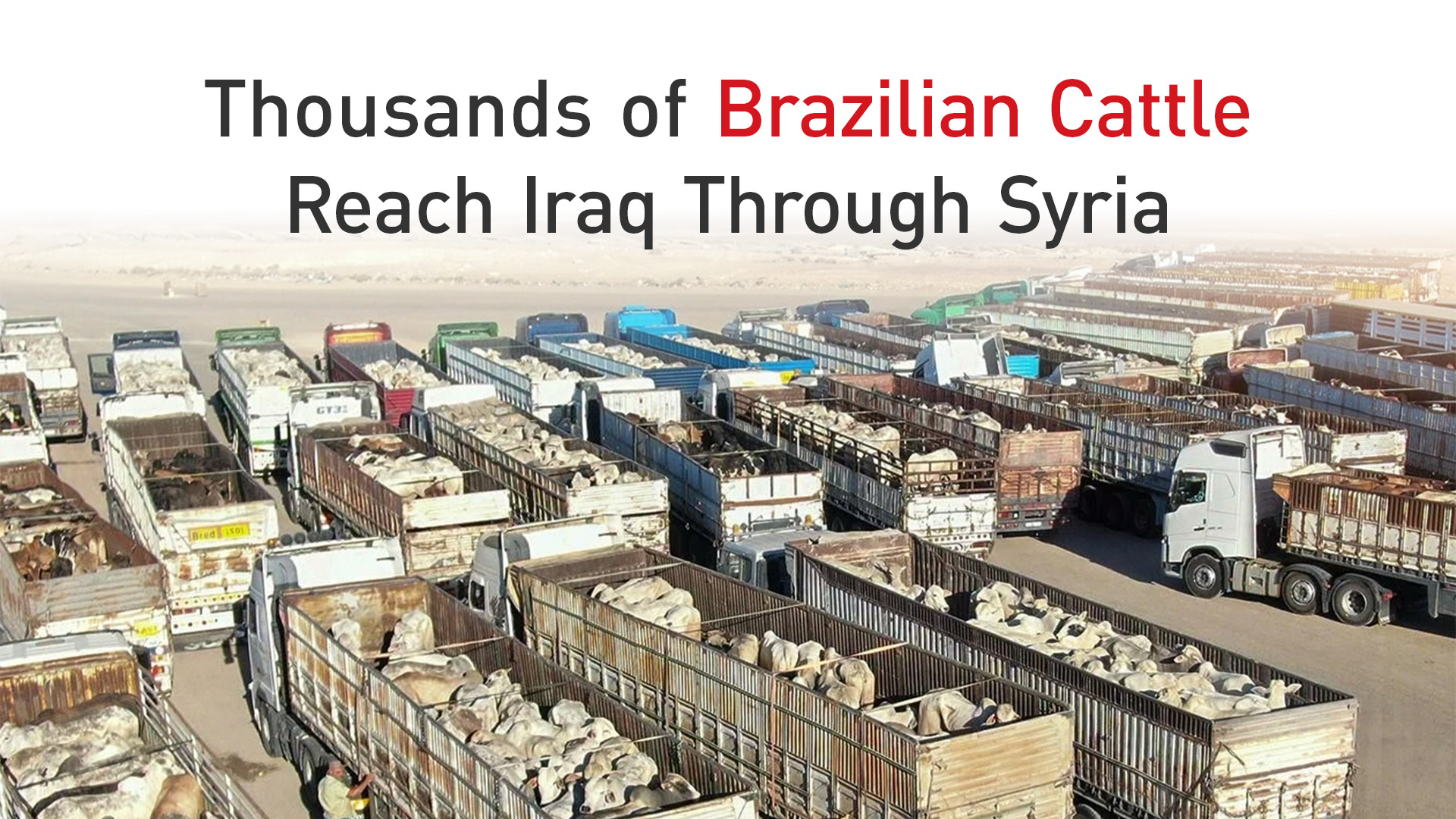
ERBIL (Kurdistan24) - The arrival of thousands of live Brazilian cattle in Iraq through Syrian territory marks more than another livestock import. It reflects the emergence of a changing regional supply chain, one that is increasingly shaping how Iraq secures fresh meat for a growing population while adapting to mounting agricultural and environmental pressures at home.
According to the Syrian Arab News Agency (SANA), the shipment arrived by sea at the port of Tartus before continuing overland through the Al-Tanf border crossing into Iraq.
Syrian authorities have indicated that the delivery is intended to be part of a broader transport corridor, with future livestock movements along the same route expected to total roughly 50,000 head.
The shipment comes as Iraq continues to navigate a complex food-security landscape. Rising demand for animal protein, coupled with population growth, prolonged water scarcity and increasing production costs for domestic farmers, has intensified reliance on imported livestock to help stabilize supplies of fresh meat.
While imported meat has long played a role in Iraqi markets, the growing movement of live cattle reflects a distinct segment of consumer demand.
Many households continue to favor meat processed through local slaughterhouses, viewing freshly slaughtered livestock as preferable to frozen alternatives.
Meeting that preference requires extensive logistical planning, including maritime transport, veterinary inspections, quarantine procedures and coordinated cross-border movement.
The route through Syria also signals an evolving commercial geography. Historically associated primarily with regional transit trade, Syrian territory is increasingly being used as a logistical corridor linking overseas suppliers with neighboring markets.
The use of Tartus as the shipment's entry point, followed by overland transportation into Iraq, illustrates how regional trade routes are adapting to changing commercial requirements and infrastructure availability.
At the center of this supply chain is Brazil, whose livestock industry occupies a dominant position in global beef markets.
The country is the world's largest beef exporter and one of its leading producers, benefiting from expansive grazing land, competitive production costs and an export-oriented agricultural sector.
According to data cited by the U.S. Department of Agriculture, Brazil's international competitiveness has also been reinforced by currency movements that have enhanced the attractiveness of its agricultural exports.
Industry figures from the Brazilian Association of Meat Exporters show the country's beef exports reached record levels in 2025, underscoring Brazil's expanding role in supplying markets across the Middle East, where demand for affordable protein continues to grow.
That commercial success has also attracted international scrutiny.
Environmental organizations and some importing markets have increasingly called for stronger assurances that exported cattle are not linked to deforestation in the Amazon, encouraging wider adoption of certification systems designed to verify sustainable production practices.
Trade figures also highlight the different roles played by imported livestock and imported meat within Iraq's food market.
World Bank and World Integrated Trade Solution (WITS) data for 2024 indicate that Brazil was Iraq's leading supplier of live animals by value, while India remained the country's largest source of frozen meat.
The distinction reflects differing consumer needs rather than competing products.
Frozen meat generally serves restaurants, food processors and other commercial buyers seeking lower-cost supplies, whereas live cattle are imported to support domestic slaughter and retail distribution of fresh meat, a market segment that continues to command strong consumer demand.
Moving live animals across international borders, however, requires considerably more than commercial coordination. Veterinary oversight remains central to protecting both imported livestock and Iraq's domestic herds from contagious diseases capable of causing widespread agricultural losses.
According to local media outlet 964, Syrian agricultural authorities conducted veterinary examinations of the Brazilian cattle before the shipment continued toward Iraq.
Such inspections form part of broader biosafety measures intended to reduce the risk of transmitting infectious animal diseases through international livestock trade.
Disease prevention has become an increasingly important consideration for Iraqi authorities.
Previous import restrictions imposed at the Trebil border crossing with Jordan following detections of foot-and-mouth disease demonstrated the government's willingness to suspend livestock movements when animal health concerns arise.
Those experiences have reinforced the importance of quarantine procedures, veterinary certification and continuous monitoring throughout the import process.
The economic implications of expanding livestock imports present a more complex picture. Larger supplies of imported cattle could help ease pressure on meat prices by increasing availability, particularly during periods of elevated demand.
At the same time, domestic livestock producers continue to contend with drought, high feed costs and limited water resources, factors that have steadily increased production expenses across many farming regions.
Balancing those competing realities has become one of Iraq's central agricultural policy challenges.
Imports can provide short-term market stability and supplement domestic production when supply falls short of demand, but long-term food security also depends on strengthening local livestock production through investments in water management, veterinary services and agricultural infrastructure.
The arrival of thousands of Brazilian cattle through Syria therefore illustrates more than the expansion of a trade route. It reflects the interconnected nature of food security, regional logistics and agricultural resilience in a changing economic environment.
As Iraq continues to diversify its supply chains while supporting domestic producers, policymakers will face the continuing task of ensuring that imported livestock complements, not replaces, the long-term development of a sustainable national livestock sector capable of meeting future demand under increasingly challenging climatic and economic conditions.
|
Summary The arrival of thousands of Brazilian cattle in Iraq through Syria highlights changing regional trade routes and Iraq's evolving food-security strategy. The shipment reflects rising demand for fresh meat while underscoring the challenge of balancing imports with stronger domestic livestock production. |