Rare Hulegu-Era Artifact Unearthed at Major Erbil Archaeological Site
The excavation is being conducted entirely by local archaeological teams and specialists, using advanced equipment and scientific methods.
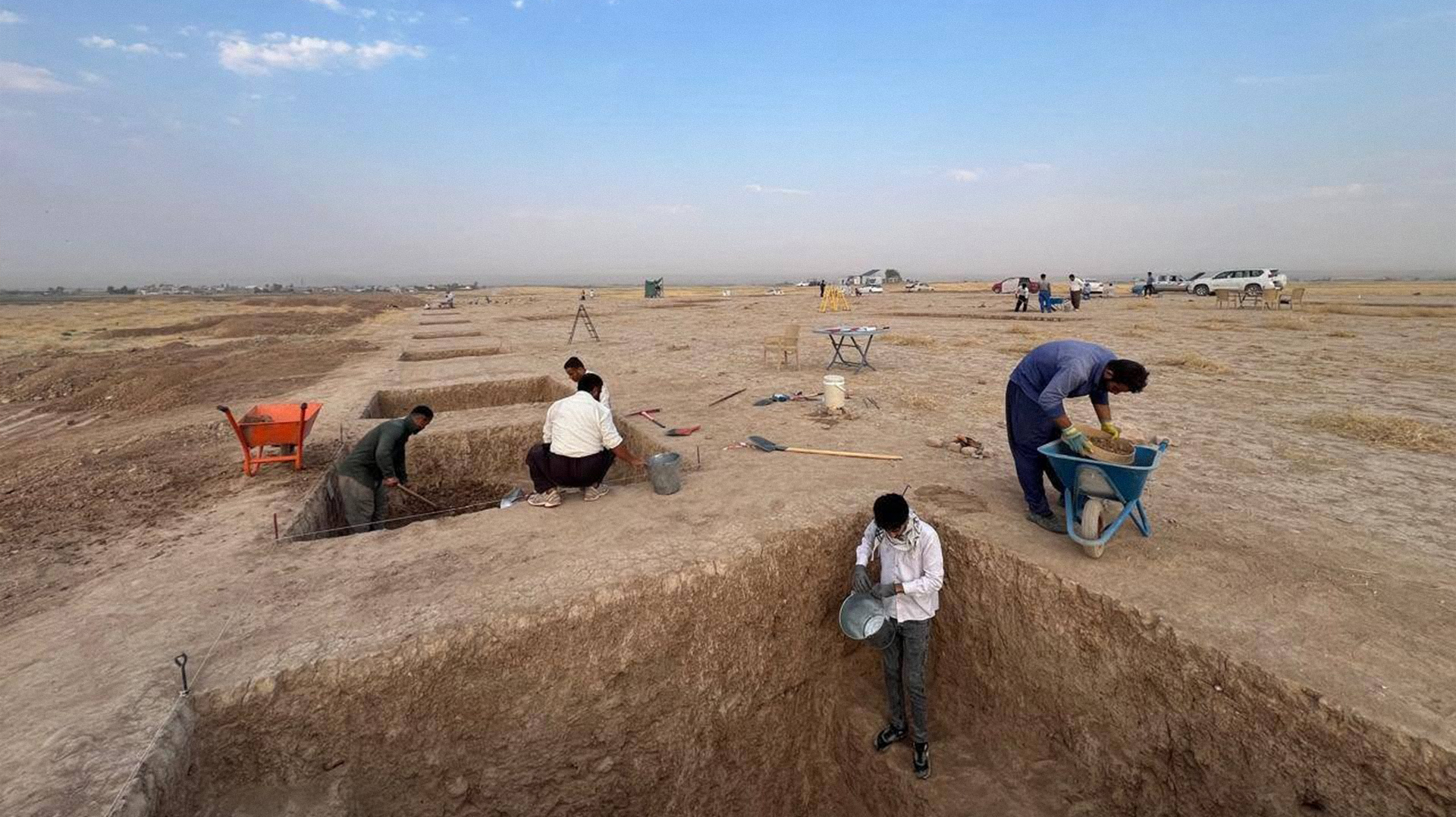
ERBIL (Kurdistan24) — The Erbil Directorate of Antiquities, in cooperation with the General Directorate of Antiquities and Salahaddin University-Erbil’s Department of Archaeology, has launched a large-scale rescue excavation at the Haza (215) archaeological site in Erbil.
The excavation is being conducted entirely by local archaeological teams and specialists, using advanced equipment and scientific methods.
Nader Babakr, Director of Antiquities in Erbil, told Kurdistan24 on Sunday, that the project represents the first excavation of its scale to be carried out at both the provincial and Kurdistan Region levels using trained local personnel and advanced archaeological equipment.
He said the project demonstrates the high level of expertise and technical capabilities of local archaeological specialists.
Rare Artifact Dating to Hulegu's Era Discovered
Babakr said preliminary findings indicate that Haza contains a rich collection of historical remains, including dozens of seals, coins, pottery fragments, artifacts, and engravings dating to the Parthian and Sasanian periods.
Among the most notable discoveries is a rare copper artifact engraved with the name “Hulegu,” which dates to the period of Hulegu Khan’s rule.
He added that archaeological evidence also points to the existence of an important religious site in the area.
Archaeological Network Extends Toward Kirkuk
Babakr said recent archaeological surveys have shown that ancient Erbil consisted of numerous small settlements, mounds, and fortified sites that existed over long periods.
“We have even reached the conclusion that there is a vast archaeological and historical area extending from the Erbil Plain to the borders of Kirkuk,” he said.
Once the fieldwork is completed, the scientific findings will be made public, Babakr said, adding that the Haza site will then be officially registered as an important national archaeological site.
He said 1,200 archaeological sites have so far been registered in Erbil, along with 400 in Koya and another 200 in the Harir sub-district and Shaqlawa district.


