Trump Says U.S.-Iran Talks Will Resume in Doha as Tensions Ease
Reuters says mediators have built de-escalation channels as technical teams prepare to discuss the Strait of Hormuz and a fragile interim accord.
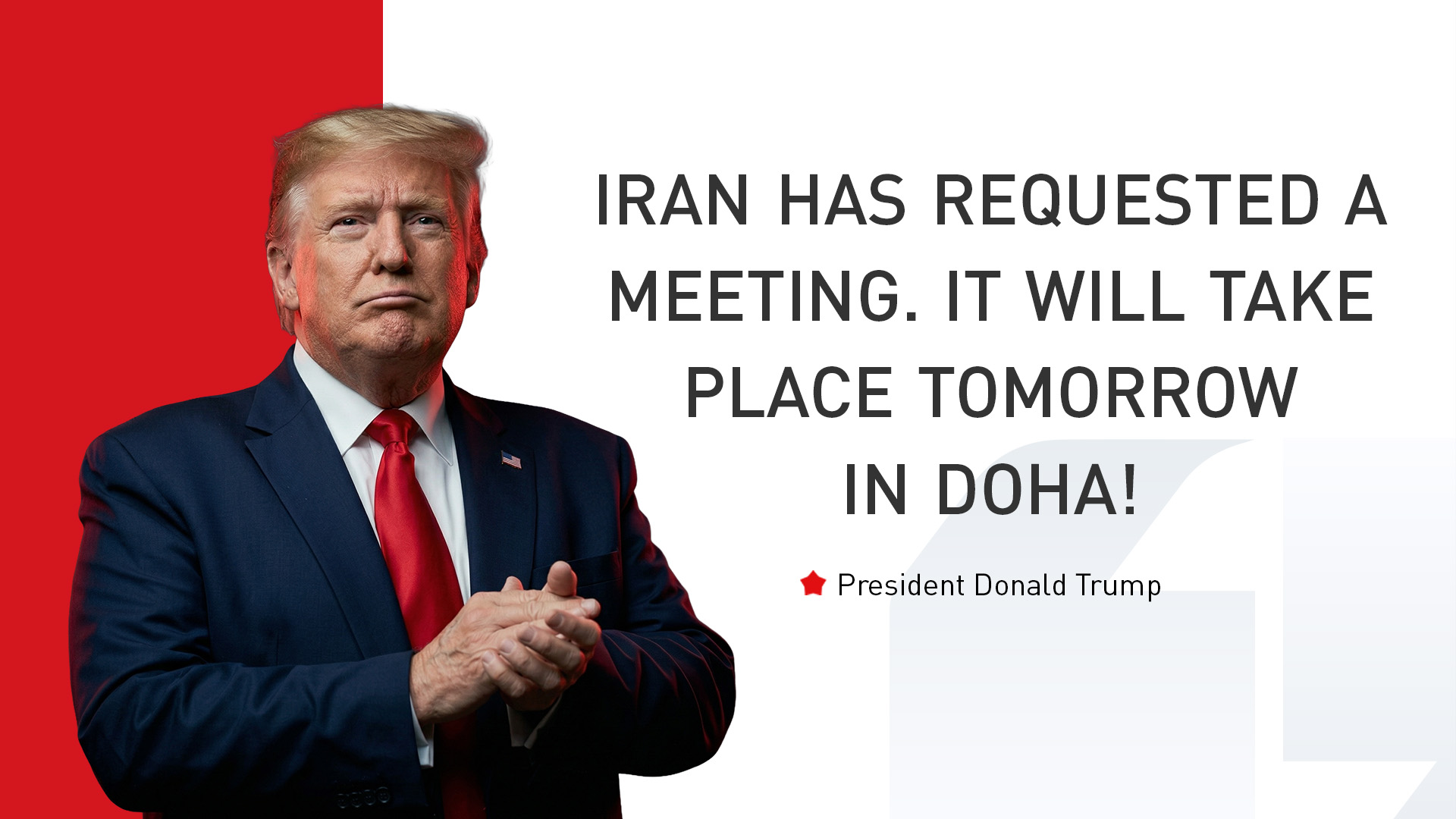
ERBIL (Kurdistan24) - Another round of U.S.-Iran engagement now appears to be moving toward Doha, after President Donald Trump said on Truth Social that Iran had requested a meeting there on Tuesday.
"IRAN HAS REQUESTED A MEETING. IT WILL TAKE PLACE TOMORROW IN DOHA!" the U.S. President posted on Truth Social on Monday.
The timing of this announcement matters. It comes after days of tit-for-tat strikes, repeated claims and counterclaims over ceasefire terms, and a renewed effort by mediators to keep a fragile diplomatic channel alive rather than let events at sea dictate the next phase of the conflict.
Reuters, in reporting by Andrew Mills and Parisa Hafezi, said technical teams from the two countries were expected to meet in Doha in the coming days to work on implementing an interim peace understanding reached earlier this month.
The same report said mediators had created communication channels designed to de-escalate incidents, a sign that diplomacy is now being paired with contingency management rather than left to chance.
Doha’s emergence as the venue reflects its growing role as a discreet diplomatic setting where rival sides can meet through intermediaries without turning every contact into a public spectacle.
In Reuters’ account, a senior Iranian source said the focus in Qatar would be narrower and more technical than previous discussions in Switzerland, centering on the Strait of Hormuz and on reducing the risk of a renewed confrontation.
That distinction matters: once talks move from declarations to implementation, the practical details often decide whether any understanding survives.
The Strait of Hormuz remains the core of the dispute because of its weight in global commerce.
Reuters said the waterway carries roughly one-fifth of the world’s oil and liquefied natural gas flows. That makes any interruption more than a bilateral issue; it becomes a market event.
When the strait was closed, Reuters reported, oil prices climbed above $100 a barrel, feeding inflation and creating a political problem for Trump by raising fuel costs in the United States.
That market response is part of what gives the Doha talks their urgency.
Reuters said Brent crude steadied at about $72 a barrel on Monday after news that diplomacy might resume, although ING analysts warned that such calm could be misleading given the remaining risks. Even the prospect of technical talks has been enough to cool some market anxiety, but the underlying volatility has not disappeared.
The accord now being discussed is not a full settlement.
Reuters described it as a 14-point memorandum signed on June 17, intended to end four months of conflict and open the way for 60 days of deeper negotiations on more difficult issues, including Iran’s nuclear program.
Yet both sides have given conflicting accounts of what was agreed, which leaves the current round vulnerable to the same ambiguity that has complicated earlier diplomatic efforts.
One of the few elements that appears to be moving forward is the question of frozen assets.
Reuters reported that Iranian President Masoud Pezeshkian said $6 billion of the $12 billion in Iranian assets frozen in Qatar would be released after the accord, and that the first tranche was being finalized.
Iranian state media portrayed the arrangement as a victory for Tehran, while the same Reuters report noted that the memorandum also included waivers for sanctions on Iran’s oil and petrochemical sectors.
Yet public statements from Tehran and Washington still do not fully align.
A senior Iranian source told Reuters that talks in Doha were set for Tuesday, while Iran’s deputy foreign minister, Kazem Gharibabadi, said technical working group meetings were not scheduled for the week and that discussions in Qatar were not confirmed.
He added that consultations with Qatar were continuing. That divergence suggests that even as mediators build channels, the diplomatic process remains sensitive to wording, timing and domestic signaling.
The military backdrop has made those details more consequential.
Reuters reported that an Iranian projectile hit a cargo vessel in the Strait of Hormuz on Thursday, followed by Iranian missile and drone strikes on U.S. military sites in Kuwait and Bahrain early Sunday.
U.S. and Iranian accusations that each side violated the interim ceasefire only underlined how quickly the situation could unravel.
In such a setting, technical meetings are not a routine follow-up; they are part of the effort to stop a maritime dispute from widening into something harder to contain.
There is also a wider regional thread running through the same story. Reuters noted uncertainty surrounding a separate ceasefire arrangement in Lebanon, where Speaker Nabih Berri cast doubt on a U.S.-brokered deal, while fighting linked to the broader conflict continued.
The message is that the Doha meeting is not happening in isolation. It is one node in a wider attempt to stabilize a region where diplomatic progress, shipping routes, and military escalation remain tightly entangled.
For now, the significance of the meeting is less about a breakthrough than about the preservation of a process.
Doha may become the place where technical officials try to keep the Strait of Hormuz open, frozen assets moving, and the language of ceasefire from collapsing under the weight of mutual distrust. Whether that holds will depend on whether the two sides can convert temporary restraint into something more durable.
|
Summary Trump says Iran has requested a meeting in Doha, while Reuters reports that technical teams are preparing talks aimed at preserving a fragile interim accord. The discussions center on de-escalation, the Strait of Hormuz, frozen assets and the risk of renewed strikes. |