Iraq Seizes Over $14 Million in Anti-Graft Probe as Oil Official Arrested
Judiciary says cash, properties confiscated from deputy oil minister in first major outcome of Prime Minister Ali al-Zaidi's anti-corruption campaign
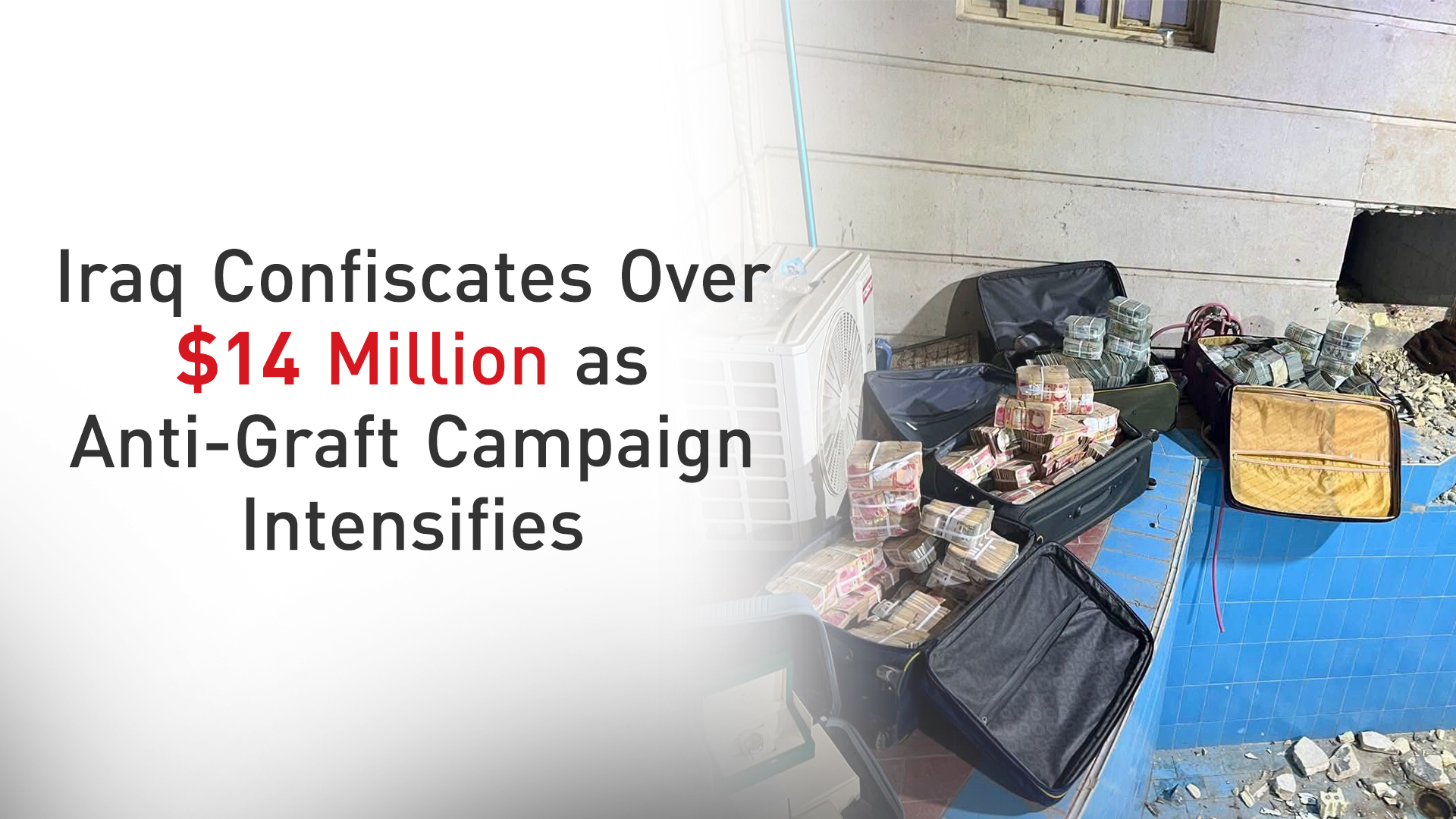
ERBIL (Kurdistan24) — Iraqi authorities have seized more than $14 million in cash and confiscated multiple properties belonging to a senior oil official as part of an expanding anti-corruption campaign launched by Prime Minister Ali al-Zaidi, the country's judiciary announced on Monday.
In a statement, Iraq's Supreme Judicial Council said initial investigations into Deputy Oil Minister for Distribution Affairs Ali al-Bahadli resulted in the seizure of $11 million and four billion Iraqi dinars—worth more than $3 million—bringing the total value of assets confiscated to more than $14 million.
The council added that several properties linked to Bahadli had also been seized and that investigations remain ongoing.
Bahadli was arrested on Sunday during a series of coordinated security operations targeting corruption suspects in Baghdad's heavily fortified Green Zone and other parts of the capital.
The asset seizure represents the first major result of Zaidi's anti-corruption drive, which began with sweeping raids carried out by Iraqi security forces.
Conflicting figures have emerged over the scale of the operation. Iraq's state news agency (INA) reported on Sunday, citing senior officials, that 47 suspects—including members of parliament and Bahadli—had been detained. However, government spokesman Haidar al-Aboudi said on Monday that the number of arrested officials stood at 21.
The latest arrests appear to be linked to an earlier corruption investigation involving Oil Ministry official Adnan al-Jumaili, who was detained last month. Earlier this month, Iraqi authorities announced the seizure of more than $85 million in assets connected to Jumaili's case.
According to INA, Sunday's arrests were carried out based on confessions reportedly made by Jumaili during the ongoing investigation.
Prime Minister Ali al-Zaidi said on Sunday that the recent actions against officials accused of abusing public office represent only the beginning of a broader anti-corruption effort.
"The recent measures against those who have compromised the public trust are merely in their infancy," Zaidi told his cabinet, describing the ongoing judicial and security operations as the "first stage" of a comprehensive strategy aimed at restoring the rule of law and strengthening state institutions.
Government spokesman Haider al-Aboudi announced on Monday that Zaidi had instructed the Ministry of Finance to establish a dedicated account to hold assets recovered from individuals implicated in illicit enrichment and corruption investigations.
According to al-Aboudi, the measure is intended to safeguard public wealth while reinforcing the role of state institutions responsible for financial oversight and accountability.
He added that protecting public resources is a constitutional obligation that must remain free from political or personal interests, stressing that the government's anti-corruption drive is part of a wider program of institutional reform rather than a series of isolated investigations.
Al-Aboudi also confirmed that the campaign—officially dubbed the "Dawn Campaign"—will continue as authorities pursue additional corruption cases.
Corruption has long been one of Iraq's most entrenched challenges, affecting public institutions across the country and undermining efforts to improve governance and public services.
Although successive Iraqi governments have pledged to combat graft, prosecutions have often focused on mid-level officials, while senior political figures have largely avoided accountability.
Zaidi, who recently assumed office with support from the United States, has made tackling corruption a central priority of his administration. Later this month, he is expected to visit Washington, where he aims to encourage greater U.S. investment in Iraq as the country seeks to revive its economy following substantial revenue losses caused by the suspension of oil exports during the recent Middle East conflict.