Kurdistan Region To Complete Unified 11-Division Peshmerga Force by September
A senior Peshmerga Ministry official says the force's unification has reached an advanced stage, with the final administrative issues expected to be resolved by September.
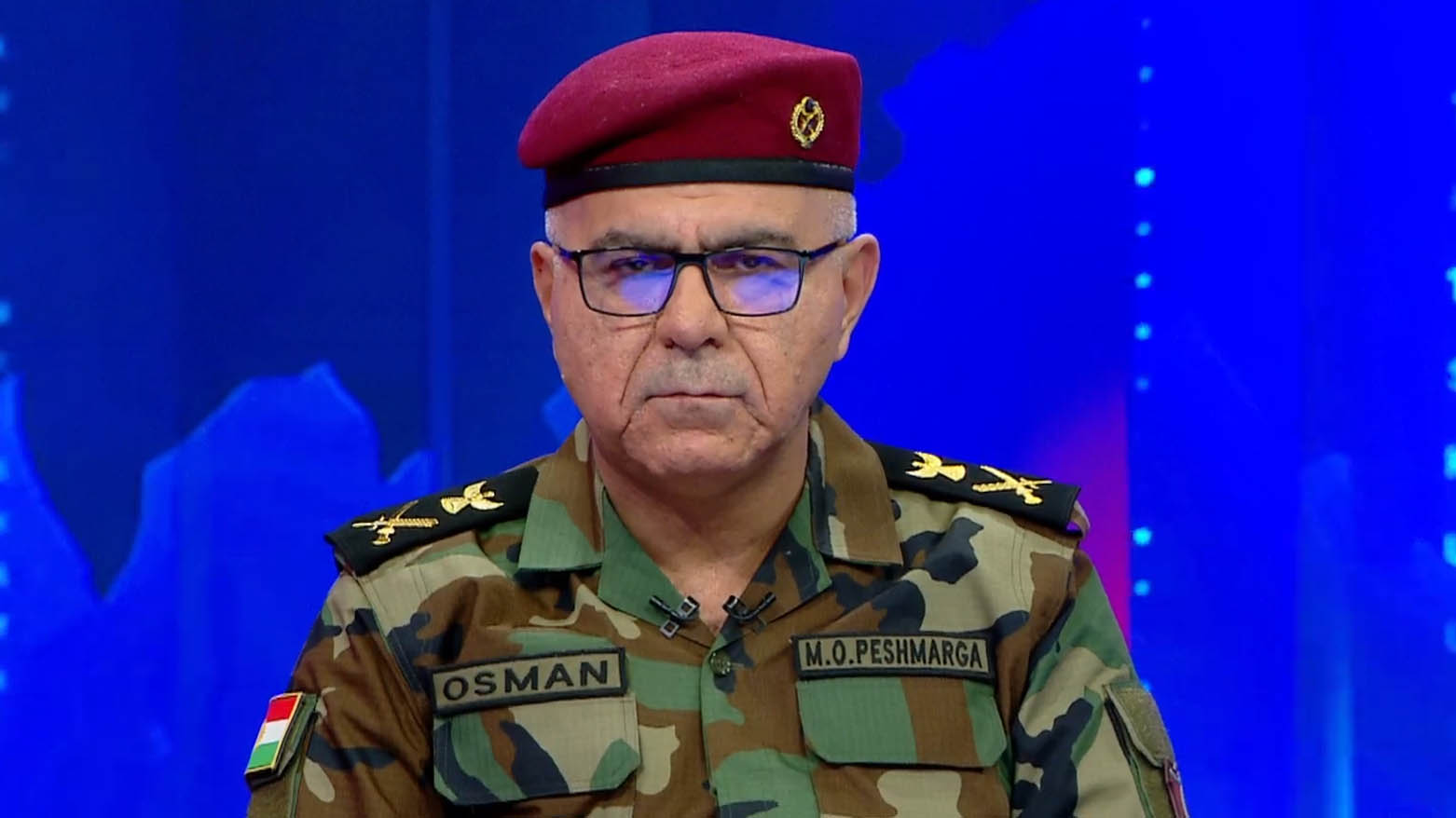
ERBIL (Kurdistan24) - The Kurdistan Region's long-running Peshmerga reform and unification process has reached an advanced stage and will ultimately result in the establishment of 11 unified military divisions under the Ministry of Peshmerga, a senior ministry official said on Tuesday.
Speaking during the "Basi Roj" program on Tuesday, Osman Mohammed, Director General of Media and Awareness at the Ministry of Peshmerga, outlined the latest developments in the ministry's reform agenda, describing the unification of the Peshmerga forces as one of its most significant achievements.
Mohammed said integrating the forces—previously administered under two separate military structures—has been one of the ministry's most sensitive and important reform priorities.
He said the ministry has worked intensively to bring all forces under a single unified military structure and that the process has now reached a highly advanced stage.
According to Mohammed, the reorganization of Area Command One, including all of its divisions and brigades, has been fully completed. Area Command Two still has several administrative and organizational issues to resolve, but these are expected to be finalized by September 2026.
He added that once the unification process is complete across the Kurdistan Region, the ministry will begin a new phase focused on modern military education, training, and professional development for officers and personnel serving in the newly unified formations.
Eleven unified divisions under one command
Mohammed said the former structures known as Units 70 and 80 have undergone fundamental restructuring and have now been incorporated into the regional area commands, which share a unified organizational framework.
Because of geographical differences, the number of divisions assigned to each command will vary. Area Command One will include six divisions, while Area Command Two will consist of five divisions.
"As a result, the Kurdistan Region will officially have 11 unified military divisions operating under the Ministry of Peshmerga and the Kurdistan Regional Government," he said.
He stressed that unifying the Peshmerga was both a domestic necessity and a long-standing public demand that forms part of the KRG's broader strategy to reform its security institutions.
Prime minister's role and international support
Mohammed credited the project's progress to the sustained commitment of Prime Minister Masrour Barzani over the past five years.
"Under the direction of the Prime Minister, we have reached a new chapter in the history of the Peshmerga forces," he said.
He identified three principal outcomes of the reform process: ensuring all forces operate under the legal authority of the Ministry of Peshmerga, establishing a unified military structure across all units, and equalizing the financial rights and entitlements of officers and personnel without discrimination.
He added that these reforms reflected the aspirations of the public, government institutions, and the Kurdistan Region's international partners.
Mohammed also said coordination and cooperation with the international coalition remain strong and continue at a high level.
Financial reforms and salary digitalization
On financial reforms, Mohammed said the accounting systems of both Area Commands have now been fully integrated into the Ministry of Peshmerga's central accounting system.
He added that the ministry now operates through a single bank account at the Ministry of Finance and Economy.
Regarding salary payments, Mohammed said 97% of Peshmerga personnel currently receive their monthly salaries through the "My Account" banking project, while the remaining three percent are expected to be enrolled in the system in the near future.
Criticism of Baghdad over funding and equipment
Mohammed criticized the Iraqi federal government, saying it has fallen short of its constitutional and legal responsibilities toward the Peshmerga.
He said Baghdad has not allocated any financial resources to the Ministry of Peshmerga through the Iraqi Ministry of Defense and has provided no logistical assistance to the force.
"Regarding both financial allocations and the arming of the Peshmerga forces, the Iraqi government has been negligent," Mohammed said.
Joint forces and continued coalition presence
Mohammed said the ministry continues its security efforts across the region, noting that two joint brigades composed of Peshmerga and Iraqi Army personnel have been deployed in the disputed Kurdish areas outside the Kurdistan Region's administration to confront ISIS militants and other terrorist groups.
He also said relations with coalition forces remain strong and confirmed that part of the international coalition will remain in the Kurdistan Region to continue providing support missions.
Earlier on Tuesday, the first phase of integrating Area Commands One and Two was formally launched in Erbil in the presence of coalition representatives.
Meanwhile, Kurdistan Region Minister of Peshmerga Shoresh Ismail said the restructuring and unification process has entered its final phase but stressed that broader institutional reforms will continue.
"The reform process has not ended and will continue because it is the aspiration of every Kurd," Ismail said.
He added that the Peshmerga are entering a new era by serving under the Ministry of Peshmerga as one unified team, expressing hope that the achievement would mark the beginning of even greater reforms.