Sulaimani Residents Reject Proposed Separation, Call for Kurdistan's Unity
Sulaimani residents reject a campaign to create a separate region, citing Peshmerga sacrifices and calling for Kurdish unity, political dialogue and reform.
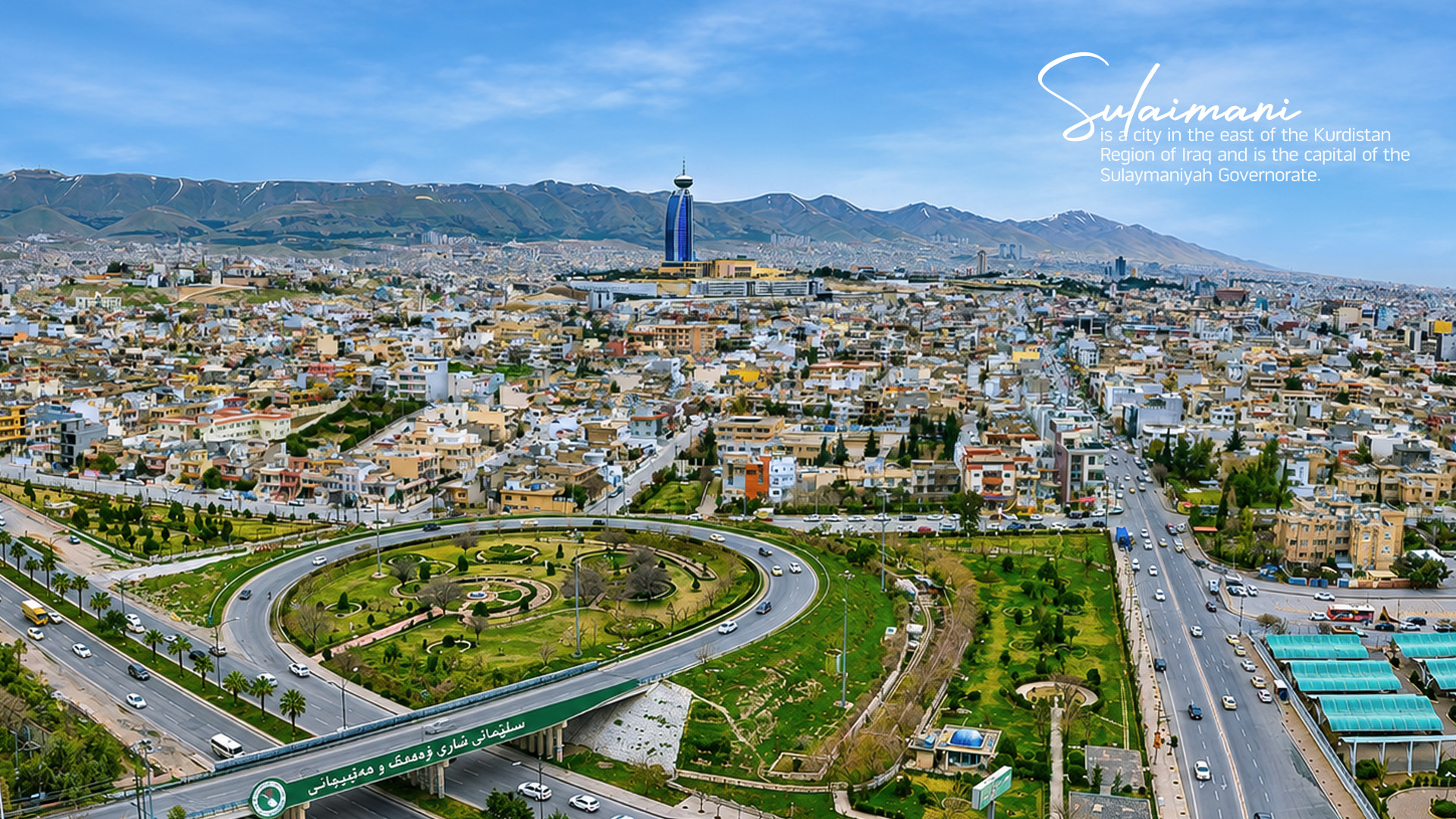
ERBIL (Kurdistan24) - Residents interviewed in Sulaimani have rejected a campaign seeking to establish the province as a separate region, warning that dividing the Kurdistan Region would undermine sacrifices made during decades of Kurdish struggle and deepen political disagreements that they believe should be resolved through dialogue.
Speaking to Kurdistan24 correspondent Aram Bakhtiyar on Sunday, residents voiced objections to the proposed separation, invoking the history of the Peshmerga, the Anfal campaign and the wider Kurdish aspiration for unity.
Their remarks came as 80 writers, academics, legal experts and civil society activists issued a separate appeal opposing the signature campaign, while political leaders called for negotiations to resolve the disagreements surrounding the Kurdistan Region's future.
The interviews reflect the views of those interviewed, rather than a survey of public opinion across Sulaimani.
'Not in the Nation's Interest'
Mamosta Fareeq Rasheed, a said separating Sulaimani would disregard the sacrifices that helped establish the Kurdistan Region's institutions and autonomous administration.
"Sulaimani's split is not in the nation's interest, not in Sulaimani's, not in the martyrs' blood, nor in the toil of those Peshmerga," Rasheed told Kurdistan24.
He pointed to the shared experience of Kurdish communities across the four parts of Kurdistan, asking why people should seek to divide the area in which an autonomous government had been established after decades of struggle.
"So what about this part of South Kurdistan that we liberated, and built Kurdistan's Government, as a result of our people's blood and resistance, chemical attacks, Anfal, and this is the result. Why should we now try to divide and split Sulaimani?" he asked.
He returned repeatedly to the Peshmerga, recalling those who defended Kurdish communities in extreme cold, heat and other hardship.
For Rasheed, the sacrifices of fighters and civilians were not simply a historical reference: they formed the reason that political disputes should be settled without dismantling the institutions created afterward.
Rasheed argued that the Iraqi Constitution's recognition of the Kurdistan Region should protect its existing status.
He also called for disagreements to be addressed through negotiations rather than through the creation of new internal boundaries.
"Truly, if united, we can resolve all the problems that arise through dialogue and understanding," he said, urging people considering signing petitions to weigh the consequences of the proposal.

A Warning
Another resident and local intellectual figure, Hama Kareem Aref, said he opposed separating even a small town from the Kurdistan Region, arguing that Sulaimani's historical importance extended well beyond the province itself.
"I believe that trying to separate even a small town from Kurdistan is illegitimate and wrong," Aref said. "Let alone a city like Sulaimani; it is the history of all Kurds, the history of all parts of Kurdistan, not the history of only Sulaimani."
He drew a comparison with the historical division of Kurdistan into four parts, saying the proposed move risked adding another internal division.
He characterized such an initiative as "bordering on treason," an expression of his opposition rather than a legal determination.

Ahmed Aref, a local intellectual and public figure, went further in expressing his hopes for Kurdish unity, saying he wanted the four parts of Kurdistan to come together rather than see the existing Region divided.
"We are Kurds, and our land is Kurdistan. This division and this ruin only harms the Kurds," he said.
Ahmed Aref criticized distinctions based on where Kurds originated and said rivalries had left the Kurdish people politically weakened.
His preferred outcome, he added, was greater national unity, not another administrative boundary.
"Truly, if you want to act sincerely, Kurdistan needs a truly fine state, not a region," he said.

Call for Reform, Not Partition
The interviews coincided with an appeal signed by 80 intellectuals, academics, writers, lawyers and civil society figures from different parts of Kurdistan.
Published on Sunday under the title "An Appeal to Protect the Unity of the Kurdistan Region," the statement rejected the campaign to establish Sulaimani as a separate region.
The signatories framed the Kurdistan Region as the product of a shared history and collective sacrifices extending across Sulaimani, Erbil, Duhok, Halabja and other Kurdish communities.
They argued that the fundamental issue was whether residents' grievances stemmed from regional unity itself or from shortcomings in governance, political disputes and unequal treatment.
If the problems concern how the Region is governed, the statement argued, they should be addressed through institutional reform, fair distribution of wealth and equal rights rather than redrawing its boundaries.
The appeal also emphasized that expressing support for a proposal through signatures does not, by itself, establish broad public consent or replace constitutional, economic and social scrutiny.
The signatories acknowledged the right to express differing views while opposing the campaign's objective.
The statement also invoked Kurdish writers and cultural figures from different areas, arguing that their contributions form a shared heritage that cannot be neatly separated by administrative borders.
The signatories included Dr. Aziz Raouf, Dr. Rebwar Siwaily and Dr. Talar Ali Amin, alongside other academics, artists and civic figures.
They warned against allowing any political party to claim exclusive ownership of Sulaimani or the Kurdistan Region and called on political leaders to return to negotiations.
Decentralization vs. Separation
Sulaimani Governor Haval Abubaker also rejected the idea of a separate region in an interview with Kurdistan24 presenter Zhino Mohammed during the city's 242nd founding anniversary celebrations.
"We support a strong Region. A Region in which everyone sees themselves," he said, explaining that his support for devolving administrative and financial powers to local authorities should not be construed as a demand for geographical or political separation.
"No one wants Sulaimani to join anywhere else. No one is for dividing the Region. Sulaimani is the true mother of this Region. She will never ruin it," Abubaker said.
Recalling his contact with Erbil Governor Omed Xoshnaw during recent deadly floods, he argued that solidarity between Kurdish cities was essential regardless of political differences.
"Our past was together, and for our future to be together, today we must be together. And our destiny is one," he said, calling for an inclusive government that respects local administrations and the needs of residents.
Read More: Sulaimani Governor Rejects Division of Kurdistan Region
'Pledge to Oppose Division'
At the launch of the second phase of Erbil's Green Belt project on Sunday, Prime Minister Masrour Barzani separately pledged to confront attempts to divide or weaken the Kurdistan Region, describing its protection and development as a national responsibility.
"Protecting the entity of the Kurdistan Region and developing the Kurdistan Region is a national duty for all of us," Prime Minister Masrour Barzani said.
"On the one hand, we work every day to create projects that improve people's lives and help our citizens. On the other hand, we will stop at nothing to protect the entity of the Kurdistan Region and prevent it from being divided."
Referring to past efforts by previous regimes to reduce Kurdistan's territory and change its demographics, Prime Minister Masrour Barzani urged residents to resist any renewed attempts to weaken the Region.
"With all our efforts and capabilities, with the support of Almighty God and the loyal and patriotic people of Kurdistan, we will confront every campaign aimed at dividing or weakening the Kurdistan Region," he declared.
His remarks came during a ceremony primarily devoted to environmental development, but placed the question of the Region's unity alongside his government's commitment to delivering public services.
Read More: Prime Minister Barzani Pledges to Defend Kurdistan's Unity at Green Belt Launch
Political Parties and France Address the Dispute
Kurdistan Democratic Party (KDP) Political Bureau member Kamal Kirkuki rejected attempts to divide the Region, arguing that it constitutes one recognized entity under Iraq's Constitution.
He urged lawmakers from rival parties to participate in parliamentary proceedings and address disagreements within the legislature.
KDP spokesperson Mahmoud Mohammed also criticized the prospect of internal division, comparing it with the historical partition of Kurdish territories.
He said his party was working to prepare the ground for a meeting with the Patriotic Union of Kurdistan (PUK) following President Masoud Barzani's appeal for dialogue.
Mohammed maintained that the solutions to disputes should be developed within the Kurdistan Region rather than sought through litigation in Baghdad.
He said the formation of the next cabinet would depend on the results of political talks.
In a meeting with KDP Political Bureau member Hemin Hawrami on Nov. 15, French Consul General Emmanuel Mignot likewise expressed support for a strong, united Kurdistan Region within Iraq's constitutional framework and for continued dialogue among Kurdish parties.
The discussion also addressed the reactivation of Parliament, which Mignot described as a legal step. His remarks underscored France's stated interest in institutional stability, although the diplomatic position did not settle the political disagreements among Kurdish parties.
Parliament Dispute Remains Unresolved
The debate unfolded alongside disagreements over the reactivation of the Kurdistan Parliament.
On Nov. 4, 52 lawmakers attended a session that elected Vala Farid as speaker, Rami Nouri as deputy speaker and Mona Qahwachi as secretary.
The PUK and New Generation Movement disputed the session's legitimacy.
On Nov. 15, Iraq's Federal Supreme Court rejected two urgent requests to suspend the session's decisions.
The majority rulings denied interim injunctions; they did not resolve the underlying legal challenges.
The question of Sulaimani's administrative future remains part of a wider political debate involving demands for fair governance, greater local powers and an end to partisan deadlock.
The residents interviewed by Kurdistan24, the intellectuals who signed the appeal and the officials who spoke publicly advanced different arguments, but each rejected separation as the solution to those disputes.