Iraq's Next Anti-Corruption Test: What Happens to the Recovered Billions?
As investigators pursue senior officials, seize cash and valuables, and widen inquiries across multiple provinces, Iraqi authorities are beginning to define what happens after assets are recovered.
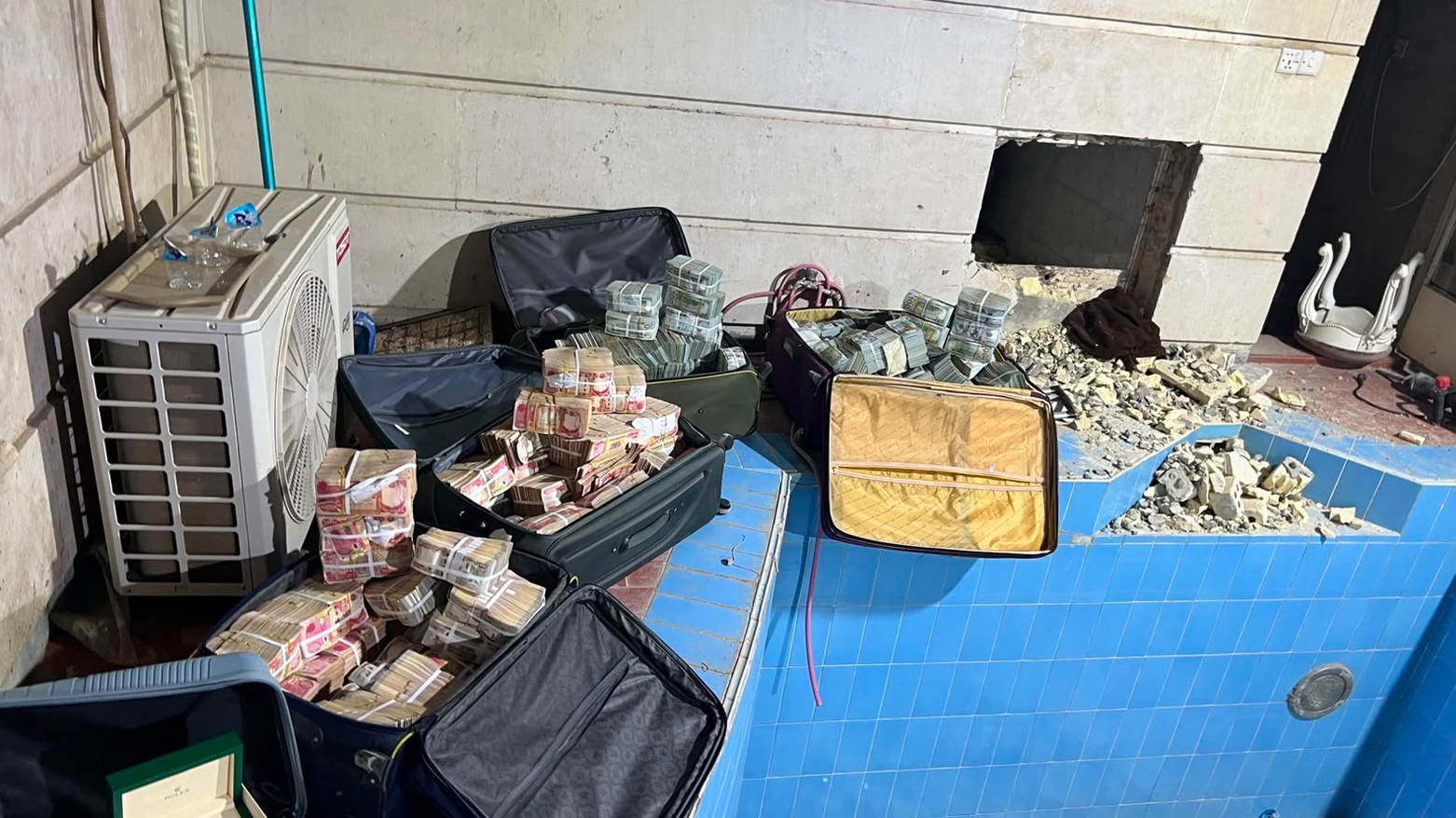
ERBIL (Kurdistan24) - Arrests may dominate the headlines, but Iraq's expanding anti-corruption campaign is entering a more consequential phase, one that will ultimately be judged not by the number of officials taken into custody, but by what becomes of the wealth allegedly stolen from the state.
As investigators pursue senior officials, seize cash and valuables, and widen inquiries across multiple provinces, Iraqi authorities are beginning to define what happens after assets are recovered.
The government now says confiscated money will be placed into a dedicated treasury account, where it will be formally recorded as public revenue rather than absorbed into ordinary government finances.
The proposal represents an important institutional shift.
Recovering illicit assets addresses only part of the corruption cycle; ensuring those funds are transparently managed, legally safeguarded, and ultimately directed toward public priorities will determine whether the campaign produces lasting fiscal and political credibility.
That question has become increasingly urgent as investigations spread well beyond Baghdad.
In recent days, the anti-corruption drive expanded into Salahuddin province, where local officials said dozens of administrators, civil servants, and current or former parliamentarians have come under investigation.
Arrests within the provincial health sector, intensified surveillance by security agencies and the Integrity Commission, and the reported seizure of millions of dollars in cash illustrate the widening scope of the campaign.
As more cases emerge, public attention is shifting from the mechanics of arrests to the accountability surrounding the assets being recovered.
Economic adviser to the Iraqi Prime Minister Mazhar Mohammed Salih told Kurdistan24 that all confiscated financial assets, including cash recovered from homes and properties linked to suspects, will be transferred into a specialized bank account and recognized as state revenue.
According to Salih, the mechanism is intended to ensure recovered wealth enters the public treasury through a clearly identifiable channel rather than becoming indistinguishable within broader government accounts.
Separating recovered assets into a dedicated account could also make future oversight easier.
Budget planners, auditors and lawmakers would, in principle, be able to distinguish ordinary government revenue from money reclaimed through anti-corruption proceedings, providing a clearer picture of how recovered funds contribute to public finances.
Salih argued that reclaiming illicit wealth strengthens the state's fiscal position while complementing broader efforts to prevent future losses.
Asset recovery, he said, should work alongside reforms designed to reduce opportunities for corruption and improve the efficiency of public spending.
He suggested that reclaimed funds could support economic development initiatives and help finance programs aimed at improving living standards, particularly for lower-income public-sector employees.
Whether those objectives are ultimately realized will depend less on headline announcements than on the transparency surrounding implementation.
Iraq has witnessed repeated anti-corruption drives over the past two decades, many of which generated significant public attention but produced mixed perceptions regarding long-term institutional reform.
The current campaign is unfolding against the backdrop of striking official estimates about the scale of corruption. Judge Munir Haddad, legal adviser to the prime minister, recently said stolen public funds exceed $2 trillion, a figure reflecting his assessment of decades of systemic financial abuse.
Read More: Iraq's Stolen Public Funds Exceed $2 Trillion, Legal Adviser Says
While the estimate has not been independently verified, it illustrates the magnitude with which Iraqi officials now describe the challenge facing the state.
Haddad also announced that forthcoming corruption trials will be broadcast publicly, arguing that open proceedings could strengthen confidence in judicial processes.
He said authorities continue to conduct surprise raids and investigations to prevent suspects from fleeing as inquiries broaden to include current and former senior officials, lawmakers and deputy ministers.
The legal effort increasingly extends beyond recovering money alone.
According to Haddad, investigators also intend to examine the broader political networks that enabled corruption, including parties and institutions involved in appointing officials later accused of financial crimes.
He further said Iraqi authorities have received international support for efforts to trace and recover misappropriated public assets, while noting cooperation between Baghdad and the Kurdistan Regional Government in apprehending several suspects.
Developments in Salahuddin underscore how rapidly the campaign is widening.
Local sources told Kurdistan24 that investigations accelerated after the arrest of a senior Oil Ministry official, whose questioning reportedly led investigators toward additional officials and political figures.
Residents interviewed by Kurdistan24 welcomed the broader inquiry, expressing frustration over the disparity between widespread economic hardship and allegations of vast illicit wealth accumulated by public officials.
Those reactions highlight a challenge extending beyond criminal prosecutions.
Public confidence is unlikely to hinge solely on how many arrests are announced, but on whether investigations culminate in transparent judicial outcomes and whether recovered assets can be demonstrably redirected toward public benefit.
For Iraq's economy, even substantial recoveries would represent only one component of broader fiscal reform. Recovered assets could potentially strengthen government revenues, ease pressure on public finances, support infrastructure projects or contribute to essential public services.
Yet economists generally caution that asset recovery cannot substitute for stronger procurement systems, effective financial oversight and institutions capable of preventing corruption before it occurs.
That distinction may define the campaign's lasting significance. Recovering billions of dollars would constitute a notable achievement, but preventing future losses remains equally important if Iraq hopes to reduce the enormous economic costs associated with corruption.
As investigations continue and additional assets are traced, the dedicated treasury account is emerging as more than an administrative detail. It has become an early test of whether Iraq's anti-corruption campaign can evolve from a series of high-profile arrests into a more transparent system of public financial accountability.
Ultimately, the credibility of the country's latest anti-corruption effort may rest not only on how much wealth is recovered, but on whether Iraqis can clearly see where that money goes, and whether its return is reflected in stronger institutions, better public services and greater confidence that public resources are once again serving the public interest.
|
Summary Iraq plans to deposit recovered corruption assets into a dedicated treasury account as anti-graft investigations spread beyond Baghdad to provinces including Salahuddin. Officials say transparent management of reclaimed public wealth will be critical to strengthening fiscal accountability and public confidence. |
Kurdistan24 correpondent Sardar Hassan contributed to this report.