Kurdish Scholars Union Distances Itself From Dr. Abdul Latif, Urges Legal Action
The Kurdish Scholars Union says Dr. Abdul Latif is not a member, urging legal action while warning against blaming religious institutions. As his dismissal enters a legal challenge, the case highlights accountability, due process, governance, and public trust in Kurdistan.
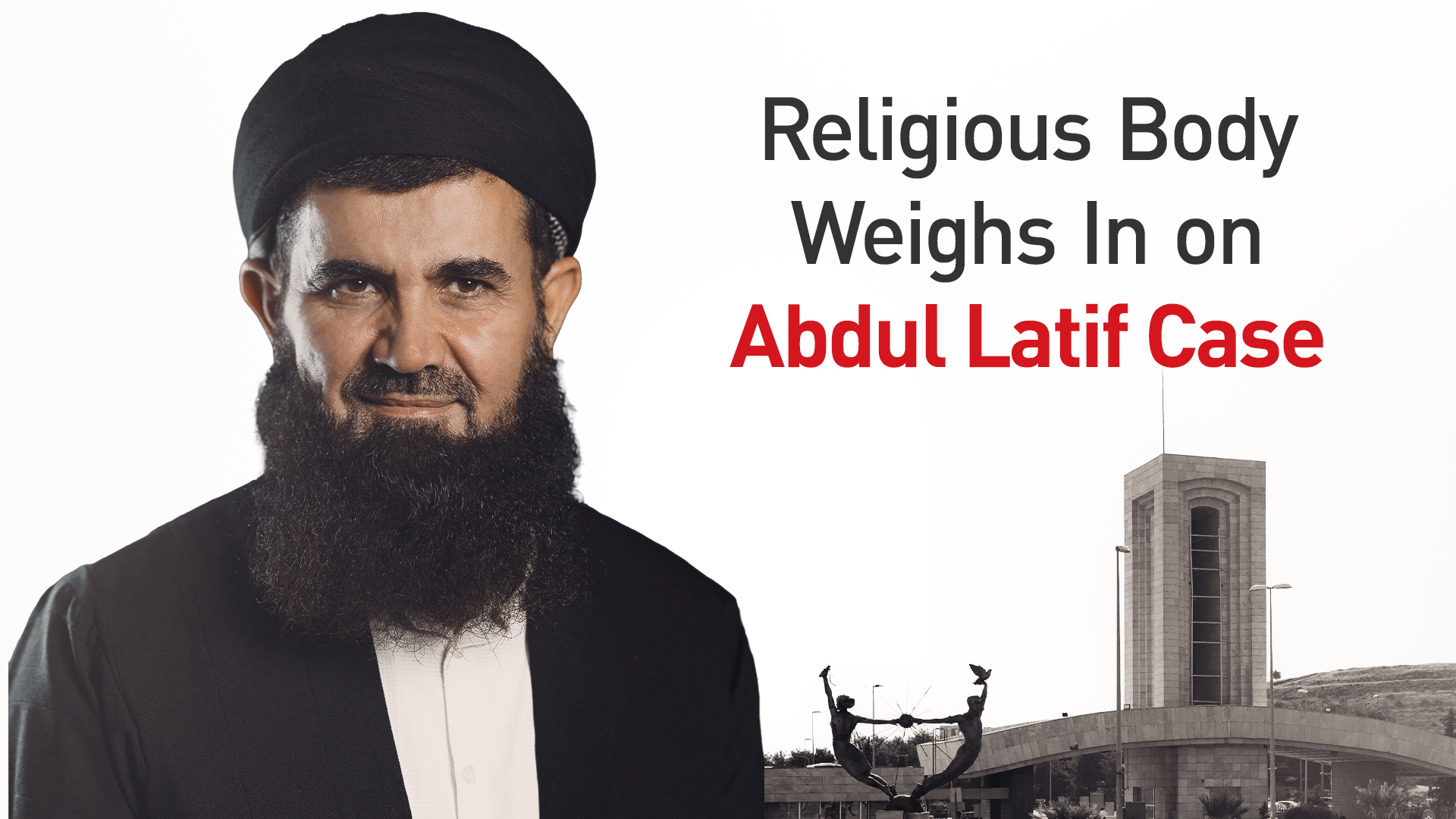
ERBIL (Kurdistan24) - As legal and administrative proceedings surrounding Dr. Abdul Latif Ahmed continue to unfold, one of the Kurdistan Region's leading religious organizations has taken the unusual step of publicly defining where it stands, and, just as importantly, where it does not.
The Union of Islamic Religious Scholars of Kurdistan announced on Wednesday that Dr. Abdul Latif is not one of its members, while urging the Kurdistan Regional Government's Ministry of Endowment and Religious Affairs and the General Directorate of Endowments in Sulaimani to pursue any legal and administrative measures they deem appropriate.
The statement marks one of the clearest institutional responses yet from Kurdistan's religious establishment, seeking to distinguish the actions of an individual from the reputation of religious scholarship, mosques, and Islamic institutions.
The intervention comes as the dispute surrounding the former University of Sulaimani professor enters a new phase.
Following the KRG Ministry of Higher Education's decision to permanently dismiss him from public employment, Dr. Abdul Latif's legal team has challenged the order as unlawful and announced plans to appeal before the courts, maintaining that the allegations against their client remain disputed.
That evolving legal process has broadened the case beyond a university disciplinary matter into a wider institutional discussion involving government authorities, religious organizations, and the judiciary, each defining its own role while emphasizing due process.
Rather than commenting directly on the substance of the allegations, the Scholars Union focused on institutional responsibility.
It explained that it had initially refrained from issuing a public position because Dr. Abdul Latif served under the Ministry of Higher Education and because official investigative mechanisms were already underway at the University of Sulaimani before the ministry issued its decision.
Only after those administrative procedures concluded did the organization decide it was necessary to clarify its position publicly.
Its statement reflects an effort to protect the credibility of Kurdistan's broader religious establishment from becoming entangled in a controversy centered on one individual.
By emphasizing that Dr. Abdul Latif is not affiliated with the Union, the organization sought to prevent assumptions that the case represents Kurdish religious scholars collectively or the institutions they serve.
That distinction formed the core of the Union's message. It urged citizens and media organizations not to use the case as justification for insulting "religious sanctities, scholars, mosques, or the pulpit," arguing that responsibility rests with individuals rather than entire communities or institutions.
Echoing a longstanding Islamic principle of individual accountability, the Union stressed that "no one bears the burden of another's sins," underscoring that alleged misconduct by one person should not be attributed either to Islam itself or to the wider body of religious scholarship.
At the same time, the statement did not advocate institutional silence. Instead, it explicitly called upon the Ministry of Endowment and Religious Affairs and the Sulaimani Endowment Directorate to adopt a formal position and pursue appropriate legal action within their respective jurisdictions.
In doing so, the Union signaled that safeguarding the integrity of religious institutions requires accountability through established legal and administrative channels rather than public generalization or collective blame.
The approach reflects a balancing act increasingly visible in high-profile public controversies: separating allegations against individuals from the institutions with which they may be publicly associated while allowing competent authorities to determine legal responsibility.
The Union's clarification follows the KRG Ministry of Higher Education's decision to permanently dismiss Dr. Abdul Latif Ahmed Mustafa, formerly a professor at the College of Islamic Sciences at the University of Sulaimani, under Article 8, Paragraph 8 of the State and Public Sector Employees Discipline Law No. 14 of 1991.
The sanction, known administratively as azal, represents the most severe disciplinary measure available in public employment, permanently barring an individual from returning to government service or state universities after the ministry approved findings submitted by investigative committees.
Dr. Abdul Latif's attorneys have rejected that decision, arguing that procedural violations occurred during the investigation and insisting the dismissal will be challenged before the judiciary. They have urged the public to avoid prejudging the outcome while the courts review the case.
The allegations attracted exceptional public attention because of Dr. Abdul Latif's prominence beyond academia.
Abdul Latif's long-standing public profile, as a Salafi preacher, university lecturer, founder of the Kurdish-language Amozhgari television channel, and imam affiliated with Bahasht Mosque, situated him at the intersection of religious authority, higher education, and public communication, amplifying the institutional significance of the allegations once they surfaced.