U.S. Dollar Flows Return to Iraq Amid Anti-Corruption Drive and Security Reforms
The U.S. has resumed dollar shipments to Iraq after suspending them in April to pressure Baghdad to curb Iranian influence. The move follows Prime Minister Ali al-Zaidi's efforts to rein in Iran-backed militias and launch a broad anti-corruption campaign.
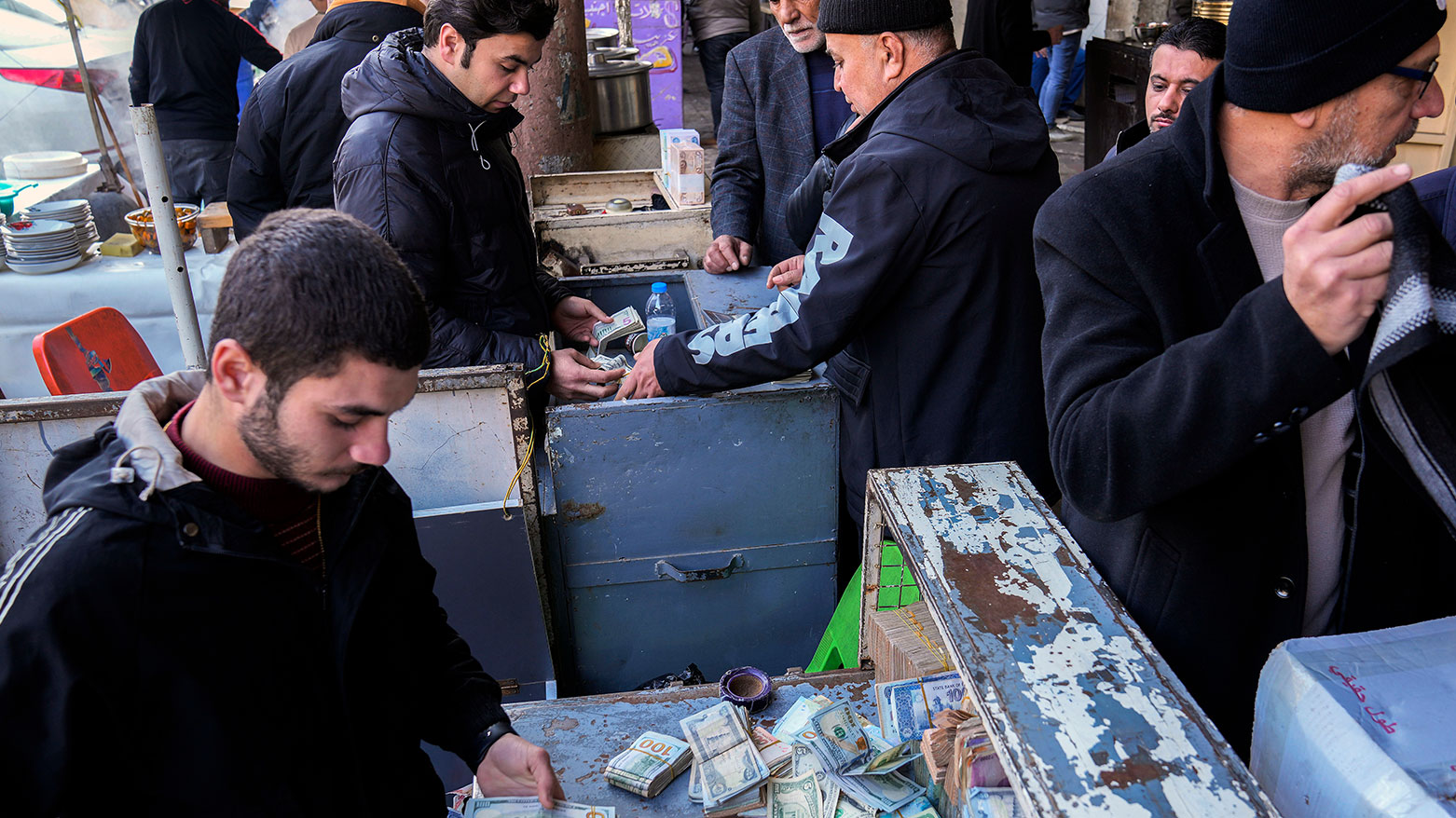
ERBIL (Kurdistan24) - The most potent levers of international diplomacy are rarely deployed with public fanfare. Often, they take the form of quiet administrative decisions deep within the architecture of global finance. For months, Iraq has operated under the shadow of such a decision: a suspension by the United States of critical physical dollar shipments to Baghdad. The halt severed a vital economic artery, squeezing Iraq's cash-dependent economy and sending an unambiguous political message to the nation's political elite.
Now, that pressure is being released.
According to a report by Raja Abdulrahim and Falih Hassan of The New York Times on Thursday, the United States has quietly resumed these air shipments of U.S. currency.
The resumption is not merely a bureaucratic adjustment; it is a profound geopolitical signal, indicating that Washington has observed enough political movement in Baghdad to cautiously reopen the financial taps.
The initial suspension of the transfers by the Trump administration in April was an extraordinary measure, highlighting the complex and often contradictory nature of the U.S.-Iraq alliance.
The objective was twofold: to stem the illicit flow of dollars to Iran-backed militias operating outside of state control, and to pressure Baghdad into establishing greater distance from Tehran during a fraught period of government formation. The mechanism of pressure was simple but devastating.
While Iraq generates immense wealth from its oil sales, those funds are held as foreign currency reserves in an account at the Federal Reserve Bank of New York.
By halting the physical repatriation of its own money, Washington demonstrated the vulnerability of an Iraqi economy heavily dependent on dollar liquidity to finance international trade and stabilize its domestic market.
The decision to restore these shipments arrives at a critical juncture in Iraqi politics, directly intersecting with the early tenure of Prime Minister Ali al-Zaidi.
A political newcomer who assumed office shortly after the suspension began, al-Zaidi inherited a state fractured by competing allegiances and suffocated by systemic corruption. His rapid moves to consolidate state authority appear to have played a central role in Washington's calculus.
Most notably, al-Zaidi issued an ambitious directive ordering all armed factions, including powerful Iran-linked militias, to submit to direct state control.
While previous administrations have attempted similar integration efforts with limited success, and prominent groups like Kataib Hezbollah have already rejected the current directive, the Prime Minister's willingness to confront the issue signaled a departure from the political paralysis of recent years.
Haider al-Aboudi, a spokesman for the Prime Minister, confirmed to the New York Times that the shipments had resumed, stating plainly that "the problem has been resolved," a sentiment echoed by Mudhar Muhammad Salih, a financial adviser to the government.
However, Washington's cautious optimism is not rooted in security directives alone. The resumption of dollar transfers coincides with an expanding, highly publicized anti-corruption campaign sweeping across Iraq.
Dozens of current and former officials, including sitting parliamentarians, have been detained as authorities widen their investigations from Baghdad into provinces like Salahuddin.
Yet, international observers and financial institutions are keenly aware that arrests alone do not equal structural reform. Iraq's governance is increasingly being judged by implementation rather than high-profile announcements.
The true test of this anti-corruption drive, and a central factor in restoring international financial confidence, lies in what happens to the recovered billions.
Authorities have recently pledged to place confiscated assets into a dedicated treasury account, formally recording them as public revenue rather than allowing them to vanish back into opaque government finances. This institutional shift is critical.
Financial governance, transparency, and accountability are becoming just as important to Iraq's international standing as the prosecution of corrupt officials.
Investors and foreign partners are watching closely to see if recovered wealth is transparently managed and effectively reintegrated to support public services and infrastructure.
The restoration of the dollar shipments provides al-Zaidi with essential economic breathing room as he attempts to push forward a broader modernization agenda.
The Prime Minister has publicly committed to completing his cabinet appointments within weeks, aiming to end the institutional uncertainty that often plagues Iraqi ministries.
Furthermore, he is preparing for an anticipated visit to Washington, where he hopes to transition the bilateral relationship from a predominantly security-focused alliance to a partnership centered on investment, technology, and economic development.
This ambition extends to Iraq's energy sector.
The government has approved major projects involving leading international firms and outlined plans to establish an Energy and Development Fund, financed by oil exports, designed to accumulate hundreds of billions of dollars for long-term infrastructure reconstruction.
Al-Zaidi is also pushing to increase Iraq's oil production capacity to seven million barrels per day within three years, a move that would significantly expand the nation's energy revenues.
For the international community, the stakes in Iraq extend far beyond its borders.
The country possesses some of the world's largest oil reserves, making its financial and political stability a linchpin of global energy markets. Furthermore, Iraq remains the central arena for competition between the United States and Iran.
The oversight of dollar transfers is not merely an accounting issue; it is a critical component of broader sanctions enforcement and anti-money laundering protocols.
The international banking system's confidence in Iraq hinges on the state's ability to prevent its financial channels from being exploited by criminal networks and militant groups.
Ultimately, Washington's decision to resume dollar shipments represents an early indication, not definitive proof, of a shifting dynamic between the two nations.
It suggests a willingness to empower a new Prime Minister attempting to assert state sovereignty and tackle entrenched corruption. However, the move is rooted in cautious optimism rather than unconditional trust.
The future of U.S.-Iraq financial cooperation, and the broader confidence of international investors, will depend entirely on whether Baghdad can convert its ambitious political pledges into measurable, durable institutional change.
|
Summary The United States has resumed dollar transfers to Iraq after a monthslong suspension, signaling cautious confidence in Iraq's Prime Minister Ali al-Zaidi's reform agenda. The move carries implications for Iraq's economy, regional stability, anti-corruption efforts, and U.S.-Iran competition. |