Kurdistan Region Emphasized Neutral Stance in Tehran Talks, Presidency Spokesperson Says
The Kurdistan Region reaffirmed its neutrality during the recent regional conflict during high-level meetings in Tehran, while expressing support for dialogue
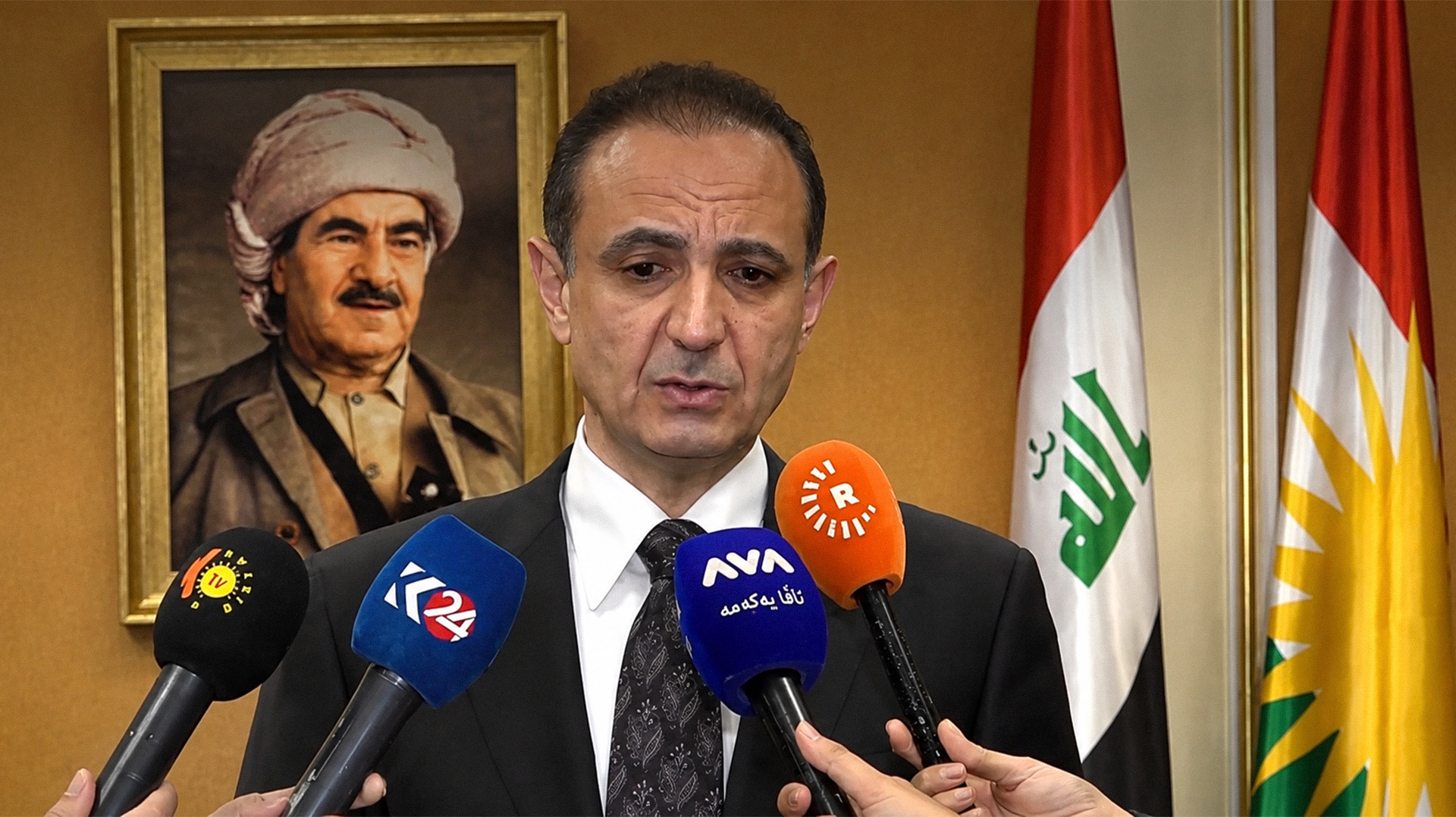
ERBIL (Kurdistan24) - Kurdistan Region President Nechirvan Barzani reaffirmed the Region's policy of neutrality during the recent regional conflict and stressed that the Kurdistan Region will never become a source of threat to any neighboring country during high-level meetings in Tehran, according to Kurdistan Region Presidency spokesperson Dilshad Shahab.
Speaking at a press conference on Friday, following the return of the Kurdistan Region's delegation from the Islamic Republic of Iran, Shahab said the visit to Tehran was made to participate in condolence ceremonies for the late Iranian leader Ali Khamenei.
Shahab said Nechirvan Barzani visited Iran at the official invitation of Tehran and held a series of high-level meetings with the country's president, parliament speaker, and foreign minister.
Discussing the substance of the meetings, Shahab said the Kurdistan Region clearly reiterated its official position of neutrality regarding the recent regional conflict.
"We reaffirmed the Kurdistan Region's clear and official position of neutrality in the recent war and regional tensions," Shahab said. "The Presidency of the Kurdistan Region made every effort to preserve the Region's national neutrality. Although we suffered casualties and damage during the conflict, our balanced policies enabled us to overcome the situation successfully."
He added that the Kurdistan Region's standing and its policy of neutrality had been respected by the parties involved in the conflict and by other actors, who praised Erbil's balanced approach.
Shahab said discussions between the United States and Iran aimed at ending the regional conflict were among the key issues raised during the meetings with Iranian officials.
"Nechirvan Barzani reiterated his support for dialogue and negotiations as the path to ending the war," Shahab said. "We also stressed that the Kurdistan Region will never become a source of threat to any of its neighbors."
According to Shahab, expanding bilateral relations between Erbil and Tehran was another major topic of discussion, noting that the Kurdistan Region has consistently sought to maintain friendly and good-neighborly relations with Iran.
He added that Iranian leaders likewise reaffirmed the importance they attach to their relationship with the Kurdistan Region.
"The warm reception and special attention shown by Tehran's officials to the President of the Kurdistan Region, despite the crowded schedule surrounding the mourning ceremonies, is a clear indication of the Kurdistan Region's standing and historical regional importance in diplomacy," Shahab said.
Responding to questions about the Kurdistan Region's internal political situation, Shahab rejected claims that the Region's political conditions were deteriorating.
"The Kurdistan Region's political and diplomatic standing remains very strong," he said. "It is true that internal political issues have had an impact, but the Kurdistan Region is not in danger, and political disputes will never threaten its constitutional status."
On the Kurdistan Parliament, Shahab said its reactivation has been delayed for too long.
"The people of Kurdistan and our international partners expect the parliament to resume its work," he said. "This issue has been delayed for too long, and reopening parliament is a fundamental and legitimate right of the people of Kurdistan."