Erbil issues 850 investment licenses as investor confidence continues to grow
Investment chief says nearly 50 licenses granted in first half of 2026, with industry, tourism, and agriculture leading development priorities
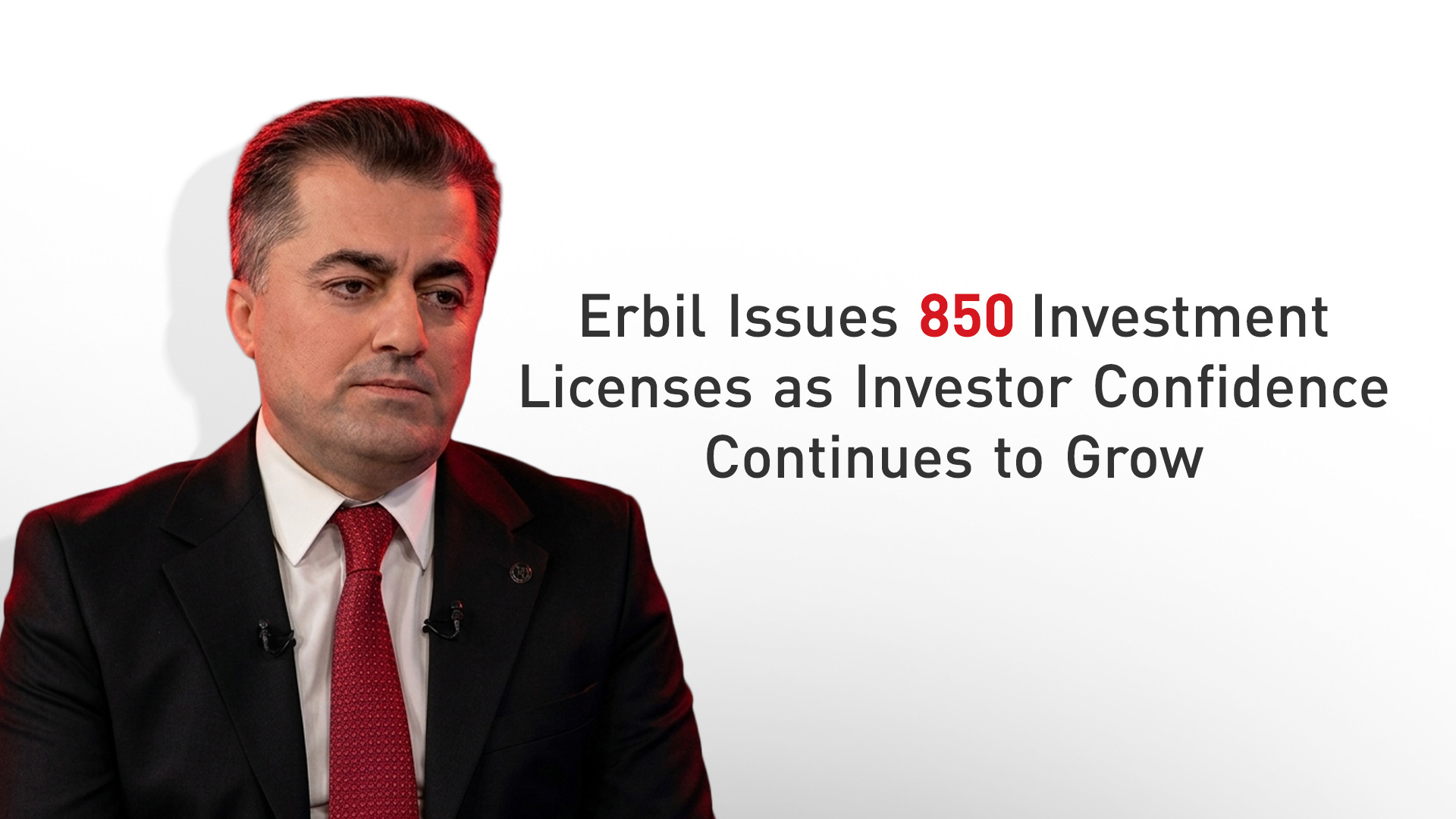
ERBIL (Kurdistan24) — The General Directorate of Investment in Erbil has issued 850 investment licenses across the governorate, underscoring growing investor confidence in the Kurdistan Region's capital as authorities continue to promote economic diversification and private sector growth.
Speaking to Kurdistan24 on Sunday, Erbil Director General of Investment Saman Arab said the governorate has so far granted 850 investment licenses and is currently reviewing several additional proposals that are expected to receive approval in the coming period.
"In the first six months of this year alone, nearly 50 investment licenses have been issued," Arab said, adding that the figures demonstrate that "investors' attention remains focused on Erbil" and that investment activity in the city is moving toward "an even brighter future."
He noted that around 100 investment licenses were issued throughout 2025 and expressed optimism that this year's total would surpass that figure, citing the incentives and facilitation measures introduced by the Kurdistan Regional Government (KRG) to attract both domestic and foreign investors.
"We hope the number will increase this year thanks to the extensive facilities and support provided by the Kurdistan Regional Government to investors," Arab said.
The investment official said Erbil's investment portfolio spans 11 different sectors, although priority is given to projects capable of generating the greatest number of employment opportunities.
He identified industry, tourism, and agriculture as the leading sectors receiving strategic attention, while noting that investment licenses have also been granted for commercial, educational, and healthcare projects.
Erbil has long served as the economic hub of the Kurdistan Region, benefiting from relatively stable security conditions, modern infrastructure, and an investment-friendly legal framework.
Since the enactment of the Kurdistan Region's Investment Law No. 4 of 2006, authorities have sought to attract domestic and foreign investment through tax exemptions, land allocation, and other incentives designed to stimulate private sector growth and diversify the regional economy.
The KRG has increasingly emphasized economic diversification in recent years, seeking to reduce dependence on hydrocarbons by expanding manufacturing, agriculture, tourism, logistics, education, and healthcare.
Officials have also promoted public-private partnerships and reforms designed to improve the business climate and attract regional and international investors.
Despite broader economic challenges facing Iraq and fluctuations in public finances, Erbil has continued to attract investment across multiple sectors, with policymakers viewing private sector expansion as a key driver of sustainable growth, job creation, and long-term economic resilience in the Kurdistan Region.