How a Kurdish Sculptor Is Preserving Literary Heritage Through Monumental Public Art
What does it take to turn poetry into stone? One Kurdish sculptor's latest work offers a compelling answer.
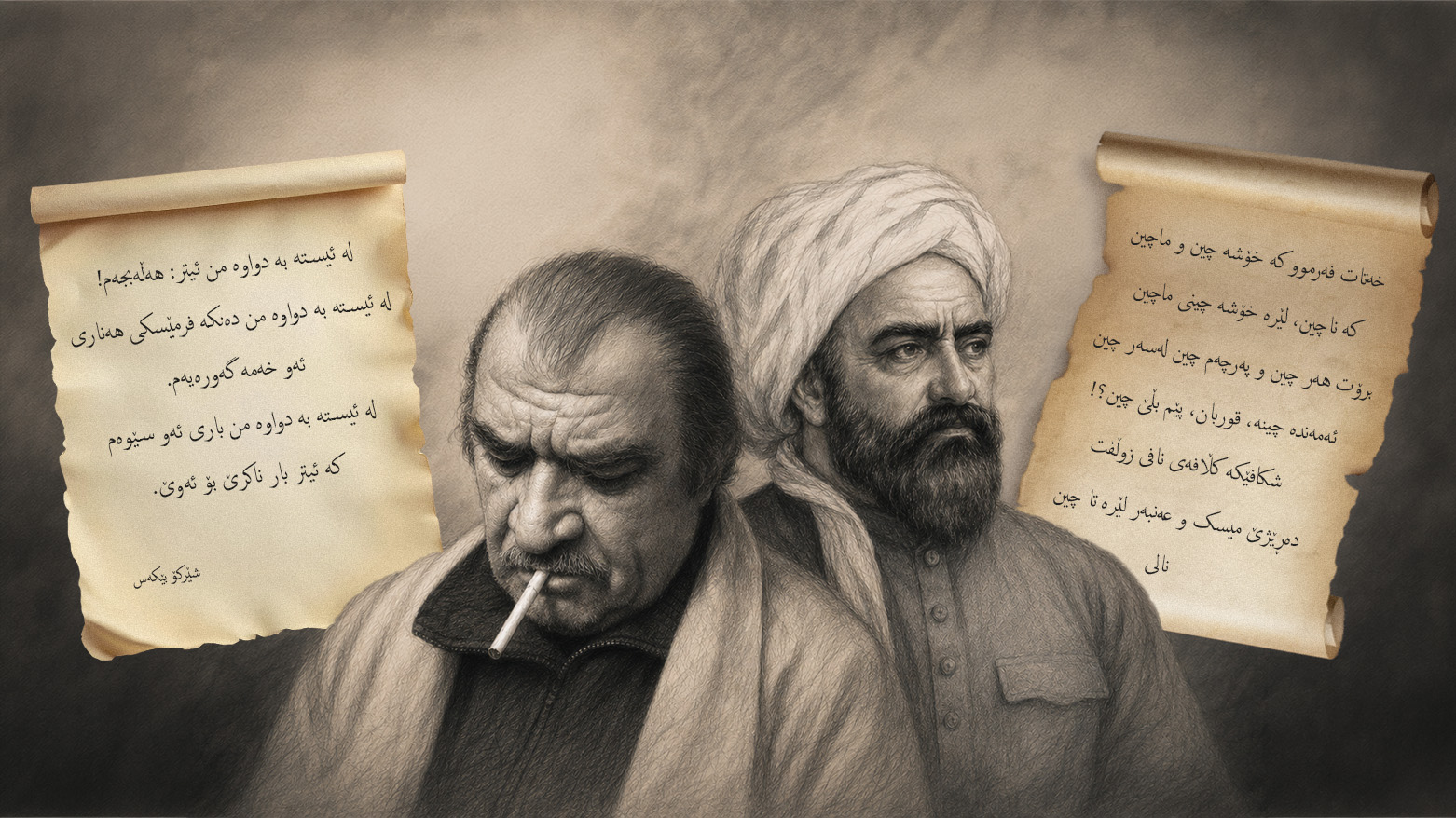
ERBIL (Kurdistan24) - In his studio, where blocks of marble have gradually yielded to months of careful chiseling and patient refinement, Kurdish sculptor Chenar Nizar has completed two towering figures that seek to do more than resemble their subjects. Standing nearly three meters tall, his sculptures of Nali and Sherko Bekas aim to translate two defining voices of Kurdish literature into enduring works of public art.
For Nizar, the project marks both a personal artistic milestone and a broader cultural statement.
Speaking to Kurdistan24 on Sunday, he described the sculptures as an effort to embody Kurdish history, literature and identity through sculpture, transforming literary memory into a visual language that can speak across generations.
The undertaking demanded an unusual level of patience.
Nizar devoted roughly four months of continuous work to each statue, overseeing every stage himself, from selecting the marble blocks to carving, polishing and completing the final details.
Unlike many artistic mediums, marble offers little room for correction, he explained, as a single misplaced strike can irreversibly damage the stone and undo months of work.
That sense of permanence shaped every decision.
The completed statue of Nali rises to 285 centimeters, while Sherko Bekas stands 270 centimeters tall.
Yet for Nizar, scale was only one element of the challenge. More important was finding a way to capture qualities that cannot easily be measured: expression, temperament and intellectual presence.
Rather than relying solely on artistic interpretation, the sculptor immersed himself in historical photographs, archival material and biographical accounts to better understand the personalities behind two of Kurdish literature's most influential figures.
His goal, he said, was not to produce idealized monuments but portraits that reflected the emotional character each poet brought to Kurdish culture.
That distinction is evident in the way the two works were conceived.
Nali, widely regarded as one of the founders of Kurdish classical poetry, is presented with an emphasis on wisdom, composure and scholarly authority, reflecting the literary tradition he helped shape.
Sherko Bekas, whose work transformed modern Kurdish poetry through themes of humanity, freedom and national identity, is portrayed with a quieter introspection, conveying the contemplative spirit that defined much of his writing.
The sculptures also speak to a broader role that public art has played across cultures for centuries.
Monuments have long served as places where literature, history and collective memory intersect, allowing societies to preserve the legacy of influential writers long after their words first entered public life.
In an era when cultural identity is increasingly expressed across digital platforms, monumental sculpture continues to offer something distinctly tangible, a lasting physical presence that invites reflection in shared public spaces.
Nizar believes sculpture possesses a unique ability to communicate across both language and generations.
His ambition, he told Kurdistan24, was to introduce younger audiences to the lives and contributions of two literary giants while demonstrating that artistic beauty carries greater significance when paired with cultural meaning.
Throughout the project, he deliberately prioritized precision over speed, arguing that works honoring figures of such stature demanded the highest artistic standards.
Born in Sulaimani in 1986, Nizar graduated from the Sculpture Department of the Sulaimani Institute of Fine Arts and has steadily built a distinguished career, participating in approximately 60 exhibitions across the Kurdistan Region as well as four international exhibitions.
The completion of the Nali and Sherko Bekas statues represents another significant chapter in that artistic journey.
The sculptures will be unveiled on July 8, 2026, at Picasso Gallery on Darwaza Street in Sulaimani. While the ceremony will mark the public debut of two monumental works, their lasting significance lies beyond the exhibition itself.
By giving enduring physical form to two of Kurdish literature's greatest voices, Chenar Nizar has created monuments that not only honor the past but also invite future generations to engage with a literary tradition that remains an essential part of the world's rich cultural heritage.
|
Summary Kurdish sculptor Chenar Nizar has completed monumental marble statues of Nali and Sherko Bekas, celebrating Kurdish literary heritage through public art and highlighting sculpture's enduring role in preserving cultural identity for future generations. |