Türkiye Casts Itself as NATO's Second-Largest Military Force
Turkish Defense Minister Yasar Guler says Türkiye's expanding military capabilities and sustained defense investment will be central to NATO's future as debates over alliance modernization and F-35 diplomacy intensify.
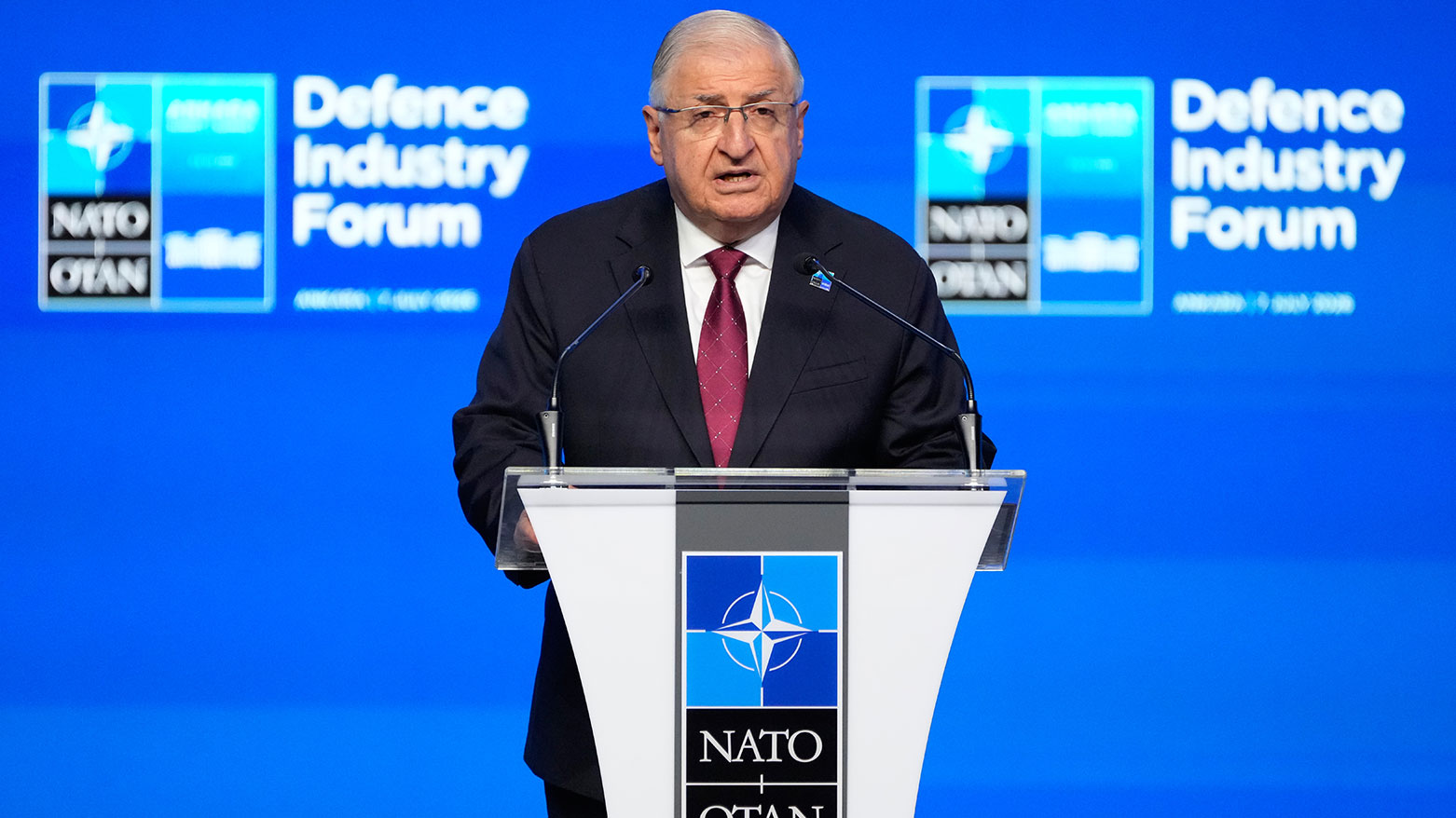
ERBIL (Kurdistan24) - Türkiye sought to reinforce its position at the center of NATO's evolving security agenda on Tuesday, with Defense Minister Yasar Guler declaring that the country possesses the alliance's second-largest military force and arguing that sustained defense investment will shape NATO's future as leaders gather in Ankara amid mounting geopolitical pressures.
Speaking during a NATO Summit-related ceremony in the Turkish capital, Guler presented Türkiye as a major contributor to the alliance's military readiness, saying Ankara has steadily expanded its defense capabilities while strengthening its ability to respond to regional and international security challenges.
His remarks came as NATO members confront a rapidly changing strategic environment marked by Russia's continued war against Ukraine, instability across the Middle East, and growing calls from Washington for European allies to assume a larger share of the alliance's collective defense responsibilities.
Guler said Türkiye has significantly advanced its military capabilities in recent years through sustained modernization efforts, arguing that continued investment remains essential to maintaining credible deterrence.
He also emphasized that NATO's future effectiveness would depend heavily on defense budgets, describing adequate financial commitments as a decisive factor in preserving the alliance's operational strength.
The comments underscored Ankara's effort to present itself not only as a frontline ally because of its strategic geography, but also as a military power capable of making substantial contributions to NATO's broader defense posture.
As host of this year's summit, Türkiye has sought to highlight both its expanding defense industry and its role in addressing security challenges stretching from the Black Sea to the eastern Mediterranean and the Middle East.
Those arguments arrive as NATO places increasing emphasis on translating higher defense spending into deployable military capability.
Alliance leaders have repeatedly stressed that new investments must result in stronger armed forces, improved readiness, and modern equipment capable of responding to evolving threats.
Against that backdrop, Guler's emphasis on military capacity and sustained funding aligns with broader alliance discussions over burden-sharing, modernization and long-term deterrence.
His address also reflects Ankara's broader effort to demonstrate that its growing domestic defense industry and modernization programs strengthen NATO as a whole, reinforcing Türkiye's claim to a more prominent role in alliance decision-making as security priorities continue to evolve.
The summit is unfolding against the backdrop of renewed debate over Türkiye's defense relationship with the United States, particularly surrounding the future of the F-35 fighter aircraft program.
According to Agence France-Presse (AFP), Türkiye on Tuesday rejected criticism from Israeli Prime Minister Benjamin Netanyahu regarding the possibility of renewed U.S. sales of F-35 fighter jets and related components to Ankara, with the Turkish Foreign Ministry describing the allegations as part of a "disinformation campaign."
AFP correspondent Max Delany reported that Turkish officials dismissed Israeli claims that such sales would undermine the regional military balance.
The diplomatic exchange follows renewed attention to Türkiye's long-running effort to regain access to the U.S.-led F-35 program.
Washington removed Türkiye from the multinational project in 2019 after Ankara acquired the Russian-made S-400 air defense system, citing concerns that operating both systems could compromise sensitive technology.
AFP reported that the issue has resurfaced as President Recep Tayyip Erdogan prepared to meet U.S. President Donald Trump on the sidelines of the NATO summit.
Read More: Trump Arrives in Türkiye for NATO Summit, Erdoğan Talks
Trump has previously indicated that he intends to take steps that could advance bilateral defense cooperation, while analysts cited by AFP say Ankara is also seeking F110 fighter engines to support development of its indigenous KAAN next-generation combat aircraft.
The renewed discussion illustrates how defense procurement has become intertwined with broader alliance politics.
For Türkiye, regaining access to advanced Western military technology has become part of a wider effort to deepen defense cooperation with NATO partners while continuing to expand its domestic aerospace industry.
Israeli officials have argued that restoring F-35 access for Türkiye could alter the regional military balance, but Ankara has rejected those assertions.
Read More: F-35 Decision Could Reshape U.S.-Türkiye Ties as NATO Meets in Ankara
According to AFP, the Turkish Foreign Ministry maintained that its security policy is aimed at promoting regional peace and stability while accusing Israeli officials of attempting to divert attention through what it described as coordinated messaging.
Although the F-35 issue remains unresolved, it forms only one element of a broader debate over NATO's future military posture, defense industrial cooperation and alliance cohesion.
For Ankara, Guler's remarks were designed to place Türkiye's broader military role at the forefront of that discussion.
By highlighting the country's force structure, modernization efforts and commitment to sustained defense investment, he portrayed Türkiye as an indispensable contributor to NATO's collective deterrence at a time when alliance members are reassessing long-term security priorities.
As summit deliberations continue, questions surrounding defense spending, military capability, procurement cooperation and strategic burden-sharing are expected to remain central themes.
Within that wider debate, Türkiye is seeking to reinforce its message that its military capacity, geographic position and expanding defense industry make it an increasingly important pillar of NATO's future security architecture.
|
Summary Türkiye used the NATO summit in Ankara to underscore its military role, with Defense Minister Yasar Guler describing the country as the alliance's second-largest force and stressing defense spending as key to NATO's future, while F-35 diplomacy added broader geopolitical context. |