Syria, France Unveil Vision to Make Damascus a Regional Transit Hub
Ahmed al-Sharaa and Emmanuel Macron outline a long-term economic partnership centered on logistics, infrastructure and investment despite security concerns during the French president's visit.
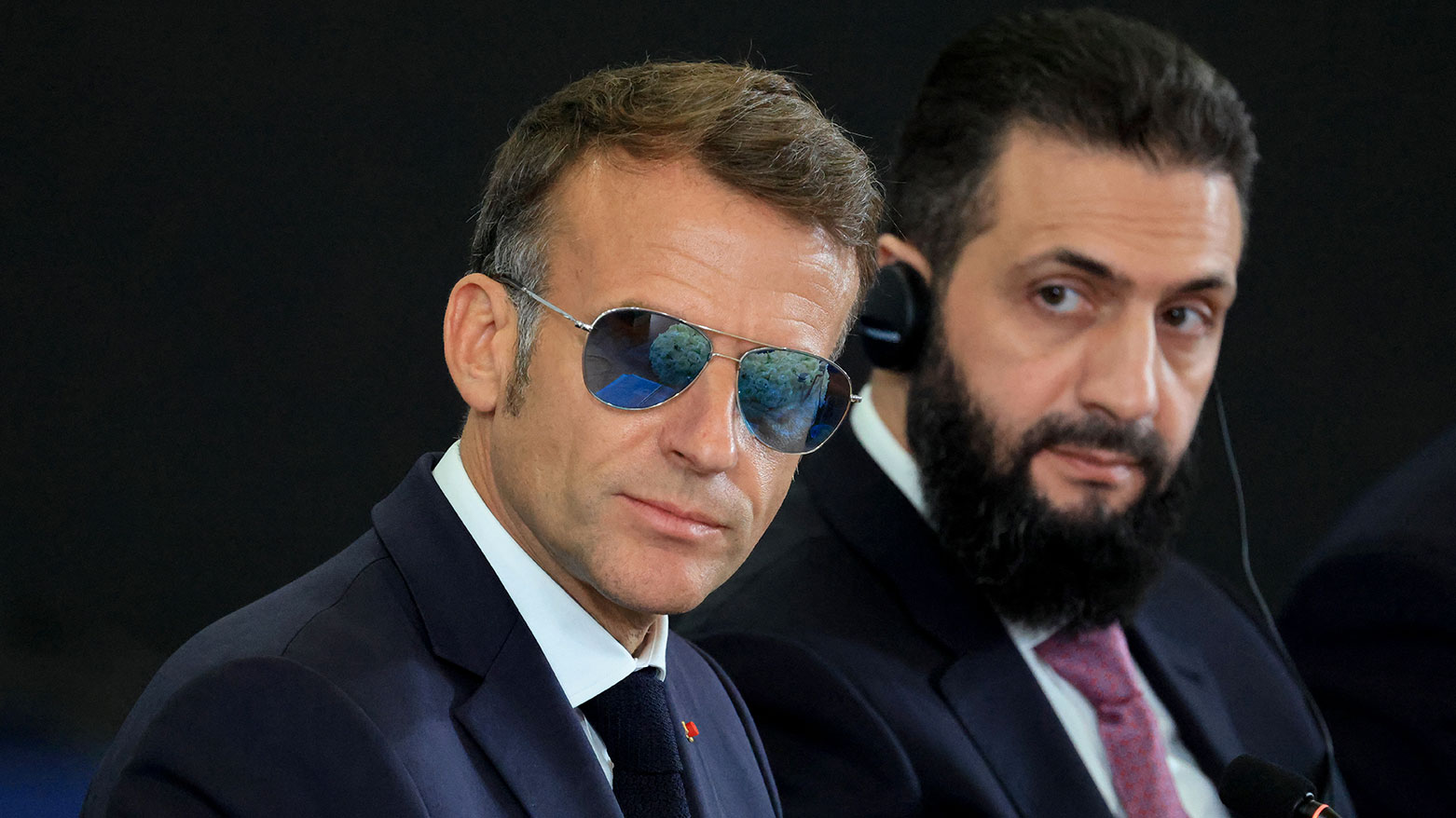
ERBIL (Kurdistan24) - Syria and France on Tuesday outlined an ambitious plan to transform Damascus into a regional transit and logistics hub, signaling a new stage in Syria's post-war economic recovery as President Ahmed al-Sharaa and French President Emmanuel Macron sought to deepen commercial ties and position the country as a gateway linking regional and international trade.
The initiative, unveiled during an economic forum on Syria's reconstruction attended by senior officials and business leaders from both countries, reflects Damascus' effort to move beyond emergency recovery and attract long-term foreign investment.
It also marks one of the clearest indications yet that Syria is seeking to re-establish itself as a strategic commercial crossroads after more than a decade of conflict.
According to Agence France-Presse (AFP), al-Sharaa said changing global trade dynamics have reinforced Syria's geographic importance, arguing that recent disruptions affecting shipping through the Strait of Hormuz have heightened interest in secure overland transport corridors.
He described Syria's location as an asset capable of reconnecting regional and international supply networks and said France was the partner Damascus hoped would help advance that vision.
Macron echoed that objective, according to AFP, saying he wants Syria to develop into a long-term regional platform where logistics networks, energy infrastructure and digital connectivity projects can expand.
He acknowledged that rebuilding the country will require sustained stability but said the interests of French businesses are closely aligned with Syria's reconstruction priorities.
The economic agenda presented in Damascus illustrates how reconstruction is increasingly being linked to wider geopolitical and commercial trends.
Governments and businesses have renewed their focus on diversified transport routes after disruptions affecting key maritime corridors exposed vulnerabilities in global supply chains.
For Syria, officials see an opportunity to leverage its geographic position to reconnect trade between the Mediterranean, the Gulf and neighboring markets while rebuilding infrastructure damaged during years of war.
That strategy also reflects a broader effort by Damascus to restore investor confidence and reintegrate into regional and international economic networks.
Rather than focusing solely on rebuilding physical infrastructure, Syrian officials are presenting the country as a future center for logistics, energy distribution and digital connectivity capable of supporting long-term economic growth.
According to AFP, al-Sharaa described the strategic partnership announced with France as a model for Syria's future relationships with Europe and other international partners.
He encouraged French companies to build durable partnerships with Syrian private-sector firms, emphasizing that Damascus wants investment to move beyond preliminary understandings toward projects backed by implementation schedules and commercial commitments.
Several bilateral agreements were signed during Tuesday's forum, AFP reported, although French investors continue to approach opportunities in Syria cautiously after years of instability.
The evolving relationship builds on earlier economic cooperation. AFP noted that Syria awarded French shipping and logistics company CMA CGM a 30-year contract worth 230 million euros in 2025.
The agency also reported that Syria later signed a memorandum of understanding with ConocoPhillips, TotalEnergies and QatarEnergy concerning offshore oil and gas exploration, illustrating growing international interest in rebuilding the country's energy sector.
French officials have framed reconstruction as a long-term process that will depend not only on financing but also on stronger cooperation between governments and private industry.
Infrastructure development, transportation, energy and digital services are expected to form key pillars of that strategy if political and security conditions continue to improve.
The economic discussions proceeded despite a security incident earlier Tuesday that underscored the challenges still facing Syria's recovery.
Read More: Explosions Reported in Damascus During French President's Visit
AFP reported that two explosions were heard in Damascus while Macron was visiting the Syrian capital.
A Syrian security source told the agency that the blasts occurred near the Four Seasons Hotel, where the French president had stayed overnight before departing for meetings with al-Sharaa.
According to Reuters, several improvised explosive devices detonated near the hotel area. Syrian media cited by Reuters said Macron and his delegation had already left the hotel before the explosions occurred.
The Syrian Ministry of Interior said security forces had discovered two improvised explosive devices near the Ministry of Tourism building and that the explosives detonated while bomb disposal personnel attempted to neutralize them.
The ministry said the devices had been concealed in a parked vehicle and a nearby garbage container.
Authorities said the explosions occurred outside the security perimeter established for Macron's accommodation and therefore did not directly threaten the French leader. The ministry reported that 18 people, including four police officers, were injured.
The Élysée Palace later confirmed that Macron and his delegation were safe and had neither heard nor been affected by the explosions.
According to both AFP and Reuters, the French president's official schedule continued without interruption, including his meetings with al-Sharaa and participation in the reconstruction forum.
The continuation of the visit despite the incident reinforced the central message both governments sought to project: that economic cooperation and reconstruction remain priorities even as Syria continues to address persistent security challenges.
Whether Damascus can ultimately establish itself as a regional transit and logistics hub will depend on sustained stability, continued infrastructure investment and the confidence of international partners.
Tuesday's announcements nevertheless suggest that both Syria and France are seeking to shift their relationship from diplomatic engagement toward practical economic cooperation, with logistics, trade and long-term investment positioned at the center of that effort.
|
Summary Syria and France announced a shared plan to develop Damascus into a regional transit and logistics hub, deepening reconstruction cooperation through new agreements and investment plans. The economic agenda proceeded despite explosions in the Syrian capital during President Emmanuel Macron's visit. |