Iran Says East Tehran Blasts Came From Planned Destruction of Unexploded Munitions
Iranian officials said explosions heard in Pakdasht and Qiam Dasht resulted from scheduled disposal of unexploded wartime ordnance, underscoring continued post-conflict clearance efforts.
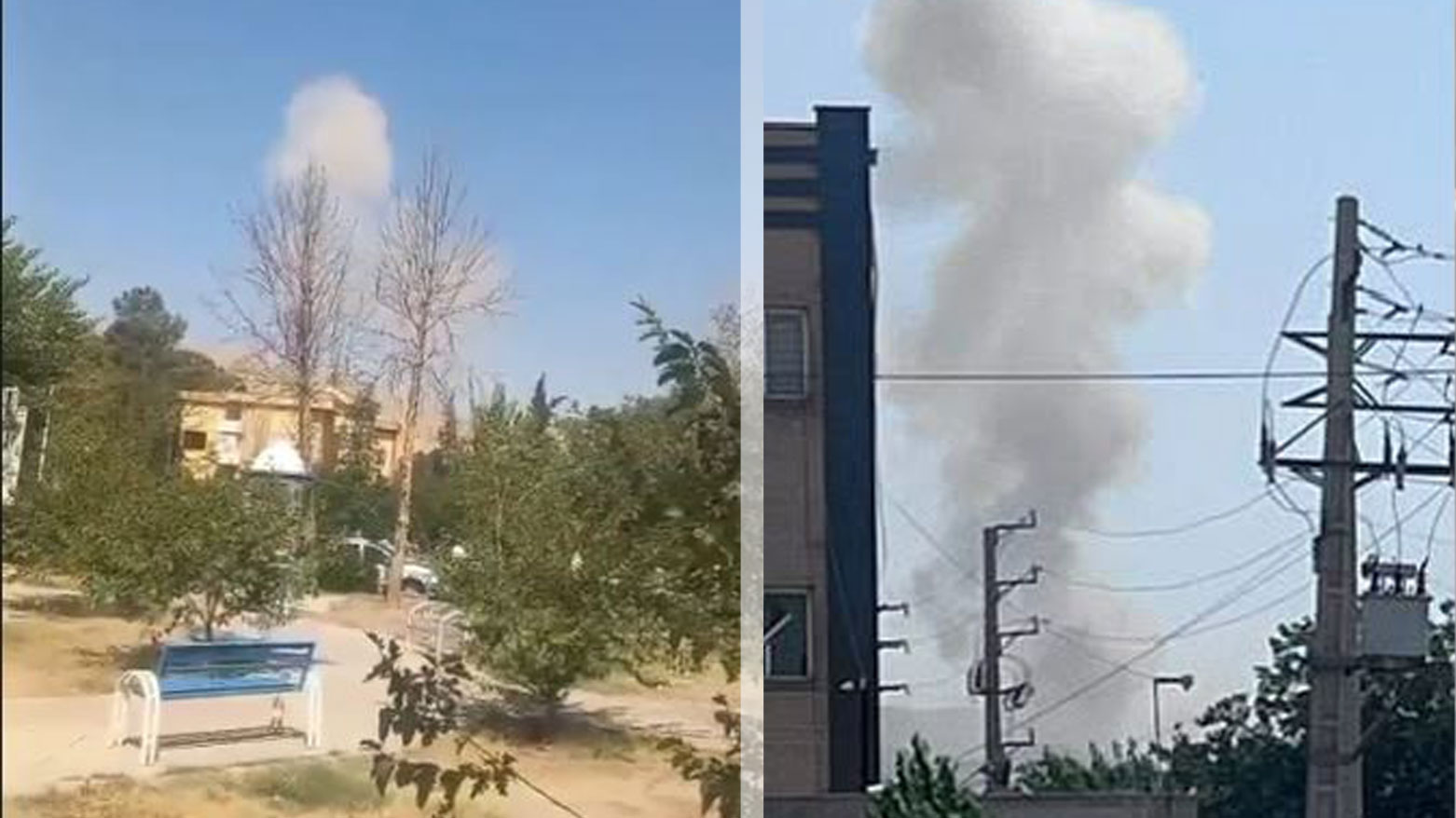
ERBIL (Kurdistan24) - A series of explosions heard across eastern Tehran on Saturday briefly prompted uncertainty among residents before Iranian authorities said the blasts were part of a planned operation to destroy unexploded wartime ordnance left behind by the recent conflict involving Iran, the United States, and Israel.
Residents in the Pakdasht and Qiam Dasht areas reported hearing several loud explosions, with the exact locations initially unclear. Iran's Fars News Agency, citing local witnesses, confirmed the reports as questions circulated over the source of the detonations.
Officials later said there was no emergency.
The Mayor of Pakdasht told Fars that the explosions resulted from scheduled operations to neutralize unexploded munitions recovered after the recent fighting. The mayor said the operation was proceeding as planned and assured residents that the situation was fully under control, adding that there was no immediate danger to the public.
Although authorities characterized the detonations as routine safety measures, the incident illustrates how the aftermath of the recent conflict continues to affect daily life even after large-scale combat has largely subsided. Iranian security agencies remain engaged in identifying, recovering, and safely disposing of unexploded military ordnance scattered across affected areas to reduce risks to civilians.
According to Iranian officials, many of the explosives being removed are missiles and drones that failed to detonate during the fighting. Such disposal operations have become a recurring part of post-conflict security efforts, with controlled demolitions carried out periodically once hazardous remnants are located.
Saturday's explosions followed that pattern, according to the official explanation, transforming what initially appeared to be an unexplained security incident into a planned operation conducted by authorities.
The recent conflict began in late February following large-scale U.S. and Israeli strikes on Iran and continued for approximately 40 days before a ceasefire was brokered by Pakistan. The opposing sides later signed a Memorandum of Understanding (MoU) intended to reinforce the cessation of hostilities.
Despite those agreements, the security environment has remained fragile. Periodic U.S. strikes on Iranian targets and retaliatory attacks by Iran's Islamic Revolutionary Guard Corps (IRGC) against American military bases in the region have continued, contributing to persistent tensions.
Against that backdrop, Iranian authorities have maintained extensive clearance operations to remove unexploded remnants of the conflict, describing the effort as an essential public safety measure aimed at preventing accidental detonations and reducing risks in populated areas.
The controlled explosions heard in eastern Tehran on Saturday formed part of those continuing operations, according to Iranian officials, who reiterated that the demolition was planned and posed no threat to nearby residents.
|
Summary Explosions heard in eastern Tehran were caused by the planned destruction of unexploded wartime ordnance, Iranian officials said. The incident highlights continuing efforts to remove missiles and drones left behind after the recent 40-day Iran conflict. |