Yemen Prisoner Exchange Postponed Indefinitely as Government, Houthis Trade Blame
A planned Yemen prisoner exchange involving about 1,700 detainees has been delayed indefinitely amid competing claims by the Yemeni government and the Houthis, complicating humanitarian efforts and broader UN-backed peace initiatives.
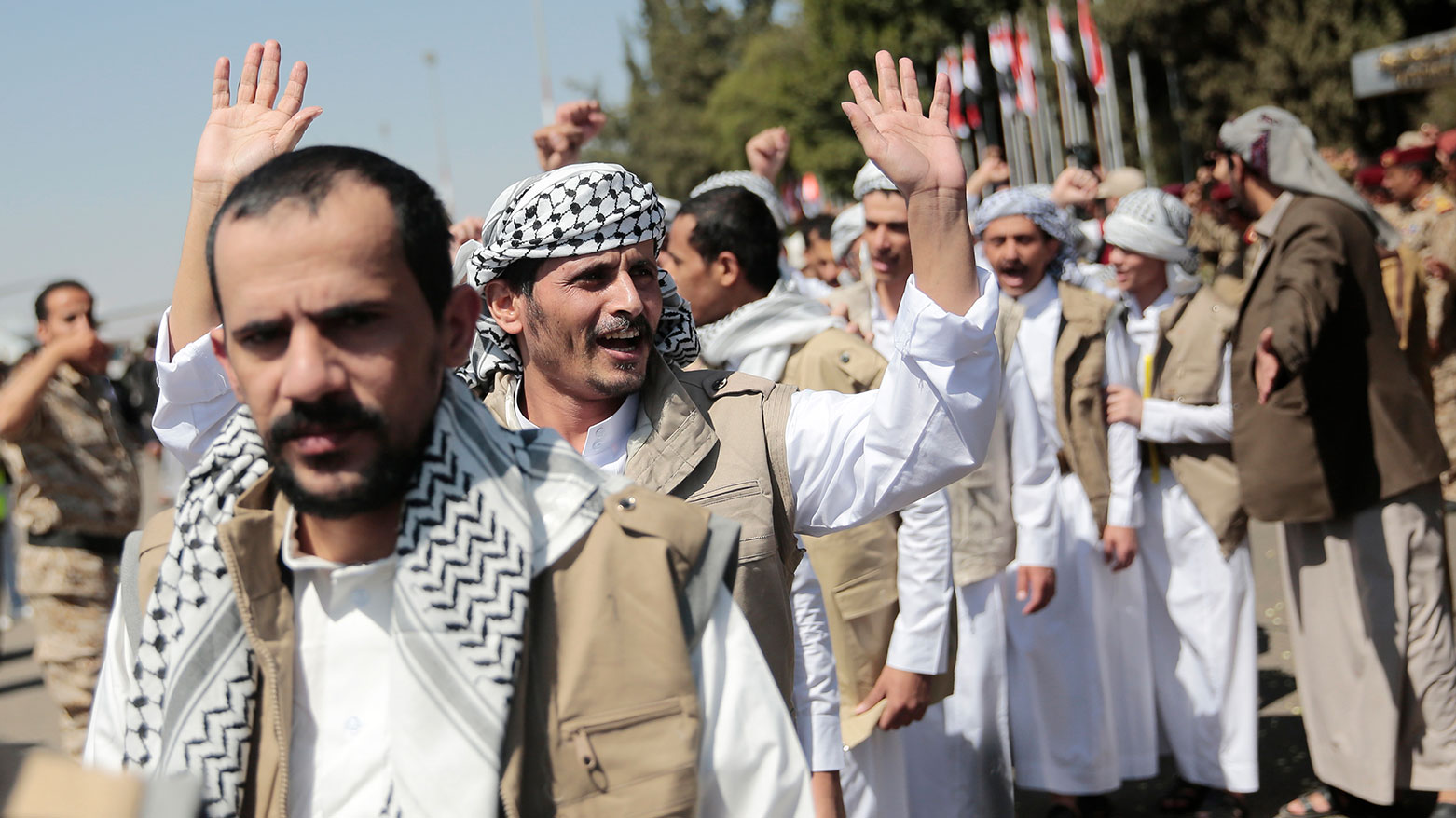
ERBIL (Kurdistan24) - A long-awaited prisoner exchange between Yemen's internationally recognized government and the Houthi movement has been postponed indefinitely, dealing a setback to one of the few remaining confidence-building measures between the country's rival factions and raising fresh concerns about the prospects for humanitarian progress amid a fragile peace process.
The delay affects an agreement that would have seen the release of approximately 1,700 detainees from both sides and had been regarded as the largest planned prisoner exchange since Yemen's conflict began more than a decade ago. The operation, scheduled for Saturday, was expected to reunite hundreds of families while reinforcing United Nations-backed efforts to sustain dialogue between the warring parties.
Officials from both camps have offered sharply different explanations for why the exchange failed to proceed, underscoring the persistent mistrust that continues to complicate negotiations despite months of mediation.
Hadi Haig, who heads the Yemeni government's negotiating team on prisoner affairs, said the government received formal notification on Friday from the International Committee of the Red Cross (ICRC) and the Office of the UN Special Envoy indicating that the Houthis had declined to implement the exchange on the agreed date, resulting in an open-ended postponement.
According to Haig, the government had completed all procedural requirements necessary to carry out the agreement. He accused the Houthi movement of obstructing the process and argued that the detainee file was being used as leverage for broader political, military and economic objectives.
Those claims have not been independently verified.
The Houthis rejected that account and instead attributed the delay to the internationally recognized government.
Abdul Qader al-Murtada, head of the Houthi-affiliated National Committee for Prisoner Affairs, said his side had fulfilled its commitments within the agreed timetable and remained prepared to proceed with the exchange.
He alleged that the process stalled because the government declined to include additional Houthi detainees on the final release list, preventing implementation of the agreement. Government officials have not publicly accepted that characterization.
The conflicting accounts highlight the political sensitivity surrounding detainee negotiations, which have frequently become intertwined with wider disputes over military, political and humanitarian issues.
Although prisoner exchanges do not resolve the underlying conflict, they have become one of the few practical mechanisms through which the parties have demonstrated limited cooperation.
Previous exchanges have enabled hundreds of detainees to return home while helping preserve communication channels between negotiating teams even when broader political talks have stalled.
The latest agreement emerged after roughly three months of negotiations in Amman, Jordan, culminating in a May 14 accord providing for the release of around 1,700 detainees.
The arrangement also included the planned release of seven Saudi nationals and 20 Sudanese nationals serving with the Arab Coalition supporting Yemen's internationally recognized government.
The ICRC has played a central operational role in previous prisoner exchanges, facilitating logistics and transportation while ensuring humanitarian standards during transfers.
The Office of the UN Special Envoy has meanwhile continued to support negotiations aimed at maintaining dialogue between the two sides despite repeated setbacks in the broader peace process.
The postponement therefore extends beyond the fate of those awaiting release. It also interrupts one of the few confidence-building initiatives that has consistently received backing from international mediators seeking to reduce tensions and encourage incremental progress toward a political settlement.
The delay comes as Yemen's security environment has shown renewed signs of deterioration, further complicating diplomatic efforts.
Recent fighting in southern Hodeidah has intensified pressure on mediation initiatives, with Yemeni officials reporting heavy clashes that left dozens of Houthi fighters and government troops dead.
Kurdistan24 previously reported that the confrontations occurred near strategic front lines overlooking the Red Sea, an area that remains central to both military operations and international maritime security.
Read More: More Than 50 Houthis Killed in Southern Hodeidah, Yemeni Officials Say
Those battles followed another deadly confrontation near Hays district in which at least 14 government soldiers were killed in a Houthi attack, according to reporting by Agence France-Presse (AFP).
While such clashes have remained localized, they illustrate how quickly military tensions can resurface despite the significant reduction in nationwide offensives following the 2022 UN-brokered truce.
Although that truce formally expired, it substantially reduced large-scale combat and created space for humanitarian initiatives, including detainee negotiations.
However, intermittent violence has continued to reinforce mutual suspicion, making agreements on sensitive issues such as prisoner releases increasingly difficult to implement.
The renewed instability has also heightened concerns surrounding the Red Sea and the Bab al-Mandab Strait, where security incidents continue to draw international attention because of their implications for commercial shipping and regional stability.
Read More: Houthi Attack Kills 14 Yemen Government Troops Near Hodeidah
Such developments add another layer of complexity to diplomatic efforts already challenged by years of conflict.
Since the war began after the Houthis seized the capital, Sanaa, in 2014, Yemen has experienced one of the world's most severe humanitarian crises, with millions requiring assistance and countless families separated by detention, displacement and ongoing hostilities.
Against that backdrop, prisoner exchanges have carried significance well beyond the individuals involved, serving as rare examples of cooperation capable of building limited trust between opposing sides.
With the latest exchange now postponed indefinitely, attention is likely to remain focused on whether the parties, working with the ICRC and the Office of the UN Special Envoy, can revive implementation of the agreement.
For now, the competing narratives surrounding the delay reflect the broader challenges confronting Yemen's peace process, where humanitarian initiatives remain closely tied to the political and security dynamics shaping one of the Middle East's longest-running conflicts.
|
Summary Yemen's planned prisoner exchange involving about 1,700 detainees has been postponed indefinitely as the Houthis and the Yemeni government trade blame. The delay, involving the ICRC and UN mediators, comes amid renewed Hodeidah fighting, complicating peace talks and humanitarian efforts. |