Minority Communities Proud of Ninth KRG Cabinet's Achievements, Says Minister
Aydin Marouf says government's policies have transformed minority affairs through inclusive governance, equal services, and stronger coexistence
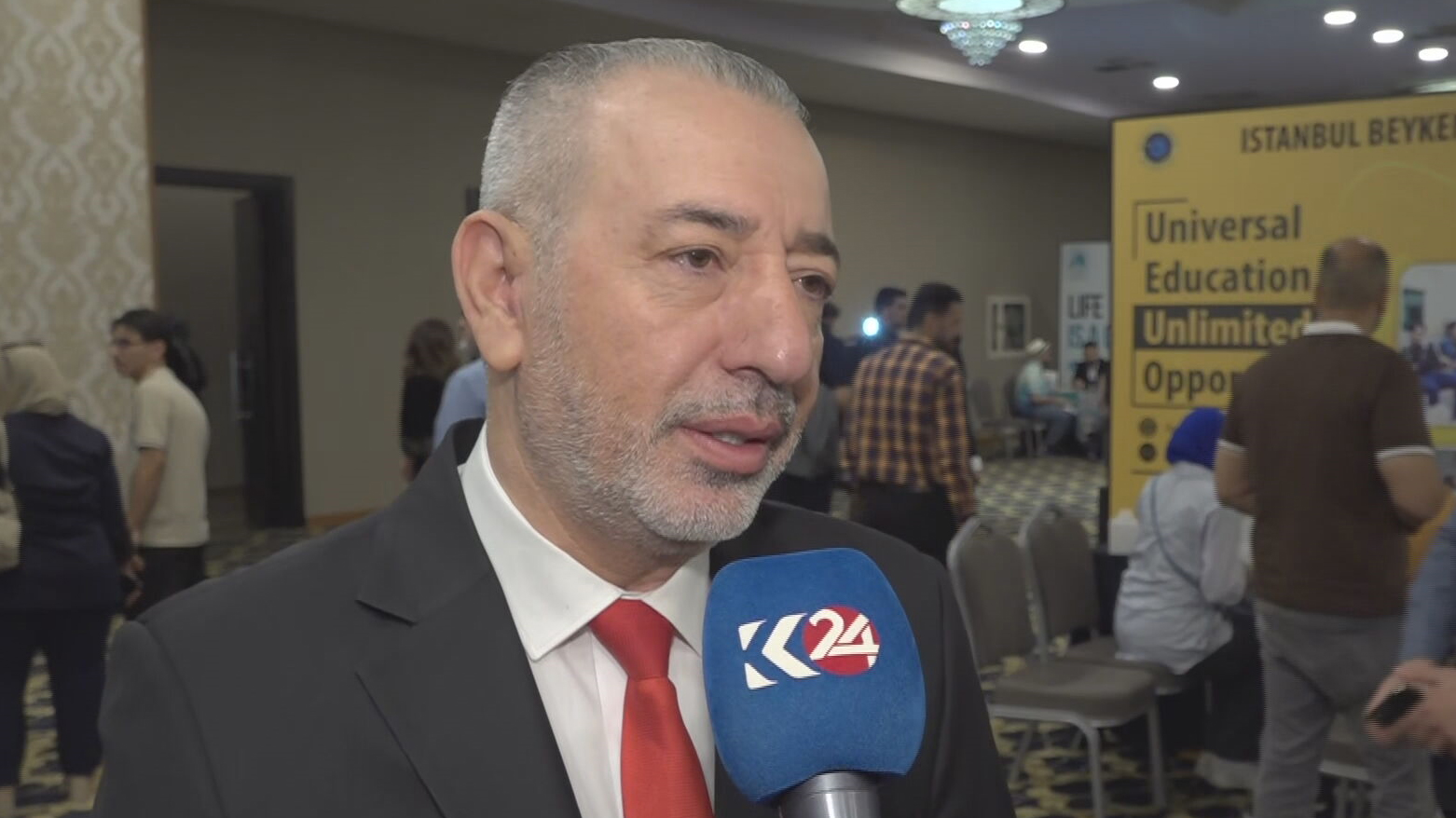
ERBIL (Kurdistan24) — Minority ethnic and religious communities across the Kurdistan Region take pride in the achievements and development projects carried out by the Kurdistan Regional Government's (KRG) ninth cabinet, the Region's Minister for Component Affairs said on Saturday, highlighting what he described as a significant shift in the government's approach toward diversity, coexistence, and equal representation.
In an exclusive interview with Kurdistan24 on Saturday, Aydin Marouf, the KRG Minister for Component Affairs, said the Region's diverse ethnic and religious communities view the ninth cabinet's record with "great pride," citing what he described as fair and inclusive governance across all sectors.
"The ninth cabinet has served all ethnic and religious communities equitably," Marouf said, adding that the government's work in public services, diplomacy, and strengthening peaceful coexistence has earned widespread respect among Kurdistan's diverse population.
Marouf stressed that the ninth cabinet has brought about a major transformation in the government's handling of minority affairs, saying its policies have advanced not only service delivery but also social cohesion and institutional inclusion.
He particularly highlighted the decision by Prime Minister Masrour Barzani to establish, for the first time in the history of the KRG, a dedicated ministerial portfolio responsible for overseeing the affairs of the Region's ethnic and religious communities.
According to Marouf, the creation of the Ministry for Component Affairs represented "a highly significant and courageous decision" by the prime minister, reflecting a strategic commitment to ensuring that the interests of all communities receive dedicated attention at the highest levels of government.
He said the move demonstrates the prime minister's broad vision for reinforcing the principles of peaceful coexistence, protecting the rights of all communities, and fostering greater cooperation within the government.
Marouf added that this inclusive approach has enabled the cabinet to function as "one team," working collectively to implement service projects, strengthen public institutions, and further enhance the Kurdistan Region's standing both domestically and internationally.
The Kurdistan Region is widely recognized as one of the Middle East's most diverse areas, home to Kurds, Turkmen, Assyrians, Chaldeans, Armenians, Arabs, and other ethnic communities, as well as followers of Islam, Christianity, Yazidism, Kakaism, and other faiths.
The Region has long presented itself as a model of religious freedom and ethnic coexistence, particularly after providing refuge to hundreds of thousands of displaced Iraqis and Syrian refugees fleeing conflict and persecution.
Since taking office in 2019, the KRG's ninth cabinet, led by Prime Minister Masrour Barzani, has emphasized institutional reforms, modernization of public services, economic diversification, digital governance, and strengthening the rule of law.
Alongside these reforms, the government has consistently promoted policies aimed at safeguarding minority rights, expanding political participation, preserving cultural and religious heritage, and ensuring equal access to public services for all components of Kurdistan's society.
The establishment of the Ministry for Component Affairs marked a milestone in these efforts, creating a dedicated institution tasked with addressing the concerns of minority communities, coordinating government policies affecting them, and reinforcing the Kurdistan Region's longstanding commitment to pluralism, inclusion, and peaceful coexistence.