CENTCOM Says U.S. Struck Around 140 Iranian Military Targets in Latest Operation
The U.S. military says roughly 140 Iranian military targets were hit in its latest operation, linking the strikes to escalating maritime tensions in the Strait of Hormuz following the reported attack on the M/V GFS Galaxy.
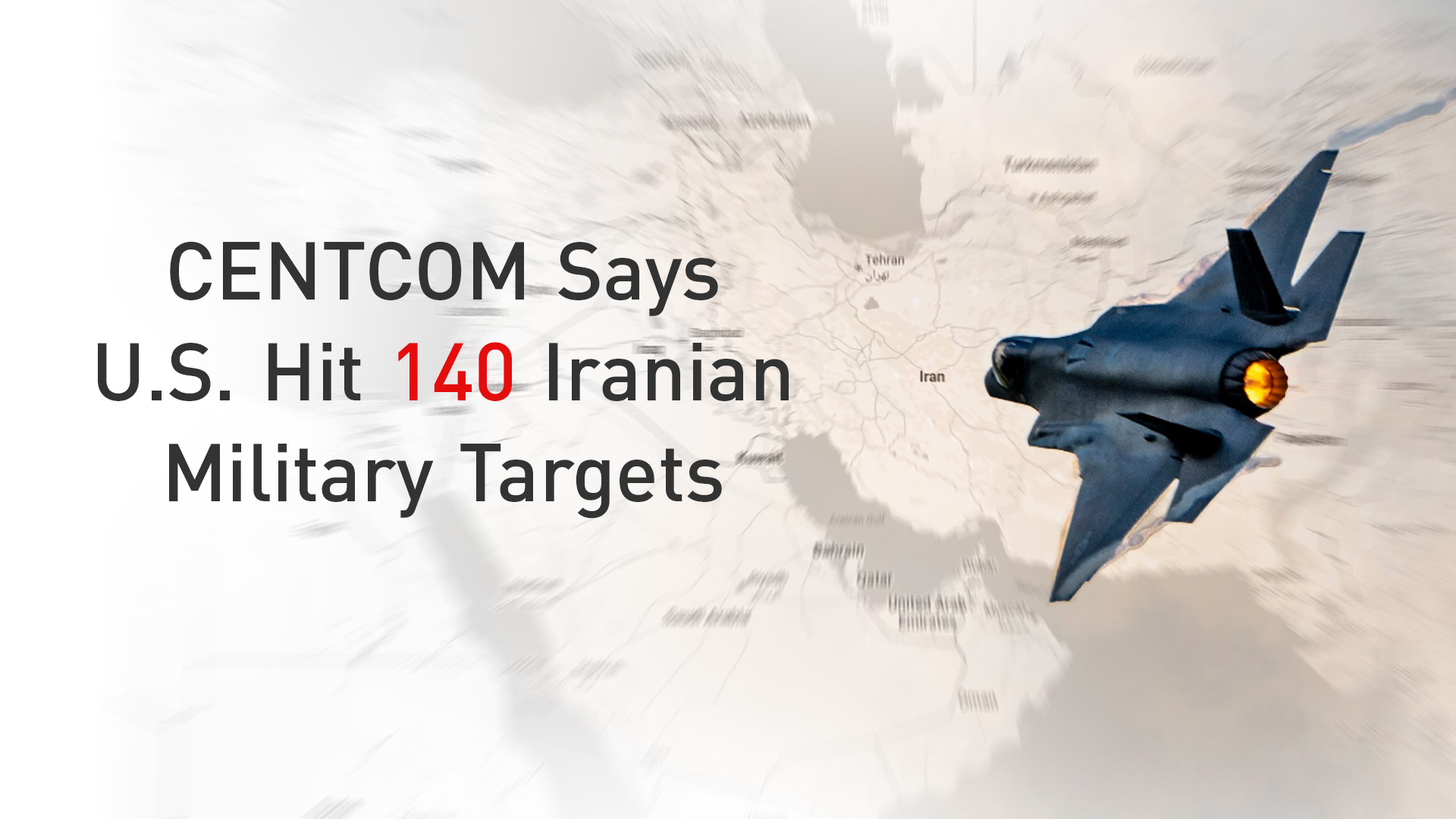
ERBIL (Kurdistan24) - The United States has carried out one of its largest military operations against Iran in the current escalation, with U.S. Central Command (CENTCOM) announcing that American forces struck approximately 140 Iranian military targets in what Washington described as a response to threats against commercial shipping in the Strait of Hormuz.
According to Agence France-Presse (AFP), CENTCOM said the operation employed precision-guided munitions launched from land- and sea-based fighter aircraft, drones and naval vessels, reflecting the scale and coordination of the latest campaign.
The strikes mark a significant expansion of U.S. military action, targeting a broad range of military infrastructure that the Pentagon says supports Iran's ability to conduct operations along the Gulf's strategically vital waterways.
CENTCOM said the targets included missile and drone launch sites, naval assets, ammunition storage facilities, communications networks and coastal surveillance systems.
According to the U.S. military, those facilities were selected to reduce capabilities that it says have been used to threaten civilian mariners and international commercial shipping transiting the Strait of Hormuz.
The operation represents the third round of U.S. strikes against Iran within the past week, according to previous Kurdistan24 report, underscoring a shift toward sustained military pressure as Washington responds to what it characterizes as escalating maritime threats.
Read More: CENTCOM Announces Third Round of U.S. Strikes on Iran
Rather than treating individual incidents as isolated events, the Trump administration has framed the campaign as part of a broader effort to protect freedom of navigation through one of the world's busiest shipping corridors.
According to Kurdistan24, the latest operation was authorized by President Donald Trump after what CENTCOM described as an attack by Iran's Islamic Revolutionary Guard Corps (IRGC) on the Cyprus-flagged container ship M/V GFS Galaxy while it was transiting the Strait of Hormuz.
Iranian authorities had not independently confirmed the U.S. account of the incident at the time of publication.
The reported attack has become central to Washington's justification for expanding military operations.
U.S. officials argue that repeated strikes are intended to degrade Iran's capacity to threaten merchant vessels rather than pursue broader offensive objectives, placing maritime security at the center of the current confrontation.
The Trump administration also emphasized its message through public statements.
According to Kurdistan24, U.S. War Secretary Pete Hegseth reacted on X by writing, "Iran made a poor choice. Now they pay," reflecting the administration's position that attacks on commercial shipping would prompt a direct military response.
While U.S. officials detailed the operation, Iranian authorities had not immediately released a comprehensive assessment of the reported strikes.
Mehr News Agency reported explosions in the southeastern port city of Jask, as well as additional blasts in Konarak and Chabahar. Those reports have not been independently verified, and the precise locations or causes of the explosions remain unclear.
The latest military action comes amid heightened tensions over navigation through the Strait of Hormuz, one of the world's most strategically important maritime chokepoints.
The narrow waterway handles a substantial share of global oil and liquefied natural gas shipments, making any disruption closely watched by governments, energy markets and the international shipping industry.
Washington maintains that international commercial vessels must retain unrestricted access through the strait under established principles of international navigation.
Iran, meanwhile, has defended its actions in Gulf waters as measures tied to its security interests and has advanced its own interpretation of authority over maritime traffic in the area.
The strikes therefore carry significance beyond their immediate military impact.
By targeting approximately 140 military sites in a single operation, the United States has demonstrated a broader willingness to employ force in response to incidents affecting commercial shipping.
At the same time, competing narratives from Washington and Tehran continue to shape international understanding of the confrontation, with maritime security emerging as one of the defining issues in the evolving U.S.-Iran crisis.
|
Summary CENTCOM says U.S. strikes hit about 140 military targets in Iran after the reported attack on the M/V GFS Galaxy in the Strait of Hormuz. Washington says the operation targeted capabilities threatening commercial shipping, highlighting growing regional security tensions. |