U.S. Senator Lindsey Graham Dies Aged 71
In a statement published on the senator's official account on X, Graham's office said: "On the evening of Saturday, July 11, U.S. Senator Lindsey Graham passed away from a brief and sudden illness."
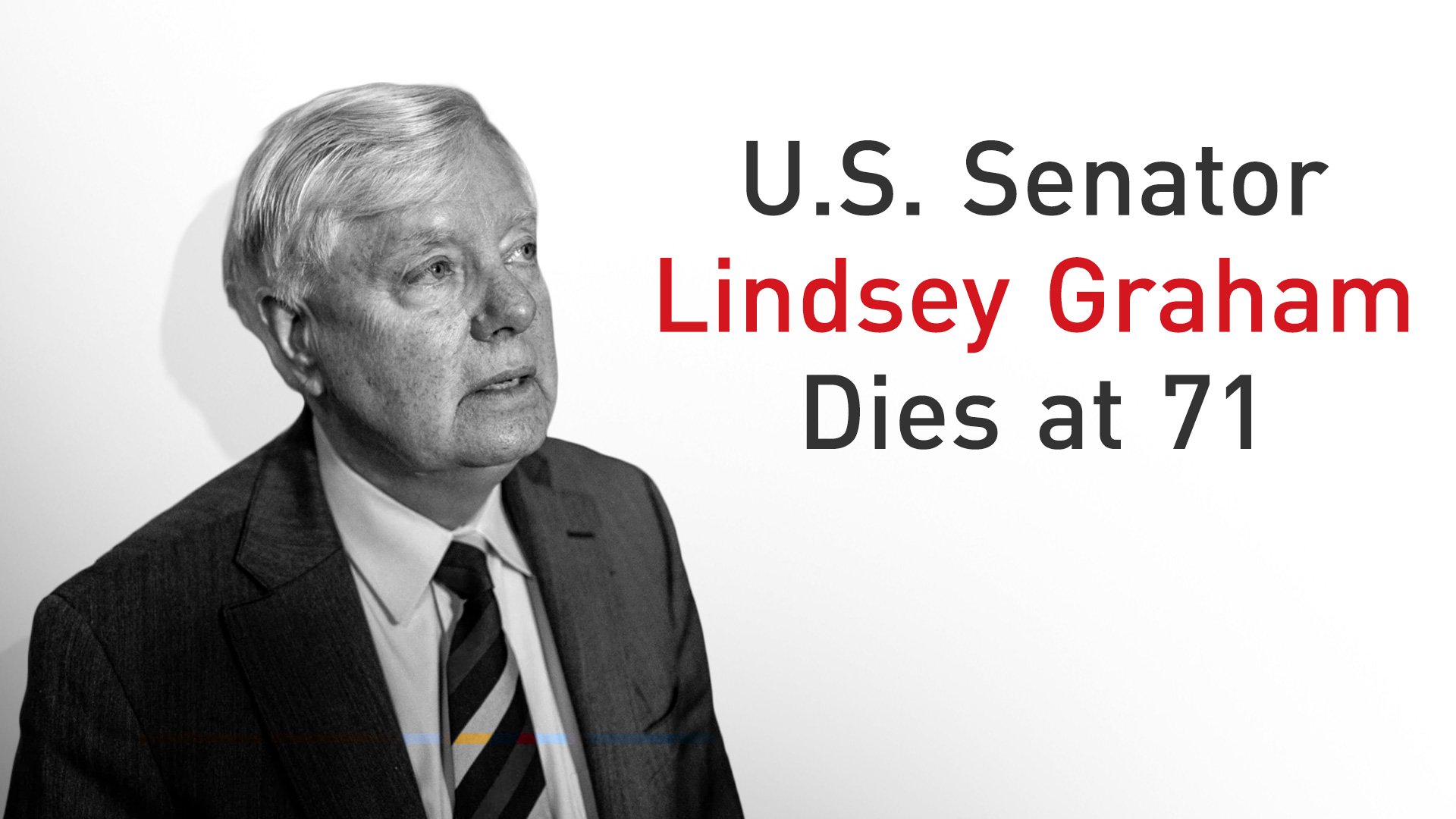
ERBIL (Kurdistan24) - The Office of U.S. Senator Lindsey Graham announced Sunday that the South Carolina Republican died on Saturday evening following what it described as a "brief and sudden illness."
In a statement published on the senator's official account on X, Graham's office said: "On the evening of Saturday, July 11, U.S. Senator Lindsey Graham passed away from a brief and sudden illness."
The statement added that Graham's family "appreciates prayers at this time and asks for privacy during this incredibly difficult period."
The office did not provide additional details about the illness or indicate whether further information would be released.
The senator's death marks the conclusion of a political career spanning decades, during which he became an influential voice on U.S. foreign policy, national security and Middle East affairs.
His engagement with the Kurdistan Region extended across successive U.S. administrations and periods of significant regional upheaval.
Graham consistently voiced support for strengthening ties between Washington and the Kurdistan Region and repeatedly emphasized the strategic importance of cooperation with Kurdish authorities.
That commitment continued into the final year of his life. In late January 2026, Graham joined Democratic Senator Richard Blumenthal in introducing the Save the Kurds Act, legislation intended to protect Kurdish forces in Western Kurdistan (northeastern Syria).
Announcing the bill on X, Graham said the proposal reflected strong bipartisan support in Congress for safeguarding Kurdish groups, particularly the Syrian Democratic Forces (SDF), which he described as indispensable U.S. partners in the campaign against ISIS during President Donald Trump's first administration.
Graham said the SDF, whose ranks include a large Kurdish component, had borne much of the burden in the fight against ISIS and argued that attacks on Kurdish forces threatened both regional stability and Washington's credibility with its allies.
While acknowledging Syria's complex political and ethnic landscape, he warned that continued attacks against Kurdish forces would undermine prospects for the country's stability and reconstruction.
The proposed legislation sought to impose sanctions on Syrian government officials, financial institutions, and foreign individuals or entities accused of providing military or financial support to the Syrian government.
His positions earned him broad recognition among Kurdish leaders, who frequently described him as a reliable partner during periods of heightened regional uncertainty.
Over the years, Graham met with senior Kurdish officials on multiple occasions and publicly supported efforts aimed at reinforcing political, security and economic cooperation between the United States and the Kurdistan Region.
His support for the Kurdistan Region, advocacy for the Peshmerga, and engagement on regional security issues remain central elements of the legacy remembered by Kurdish leaders as they honor one of their most steadfast supporters in Washington.
This report was updated on Sunday, Jul. 12, 2026, at 10:01am.