IRGC Claims Strike on U.S. Base in Syria as Regional Tensions Deepen
Iran says it struck the U.S. base at Al-Tanf in Syria as Gulf states strengthen defenses amid an expanding regional confrontation.
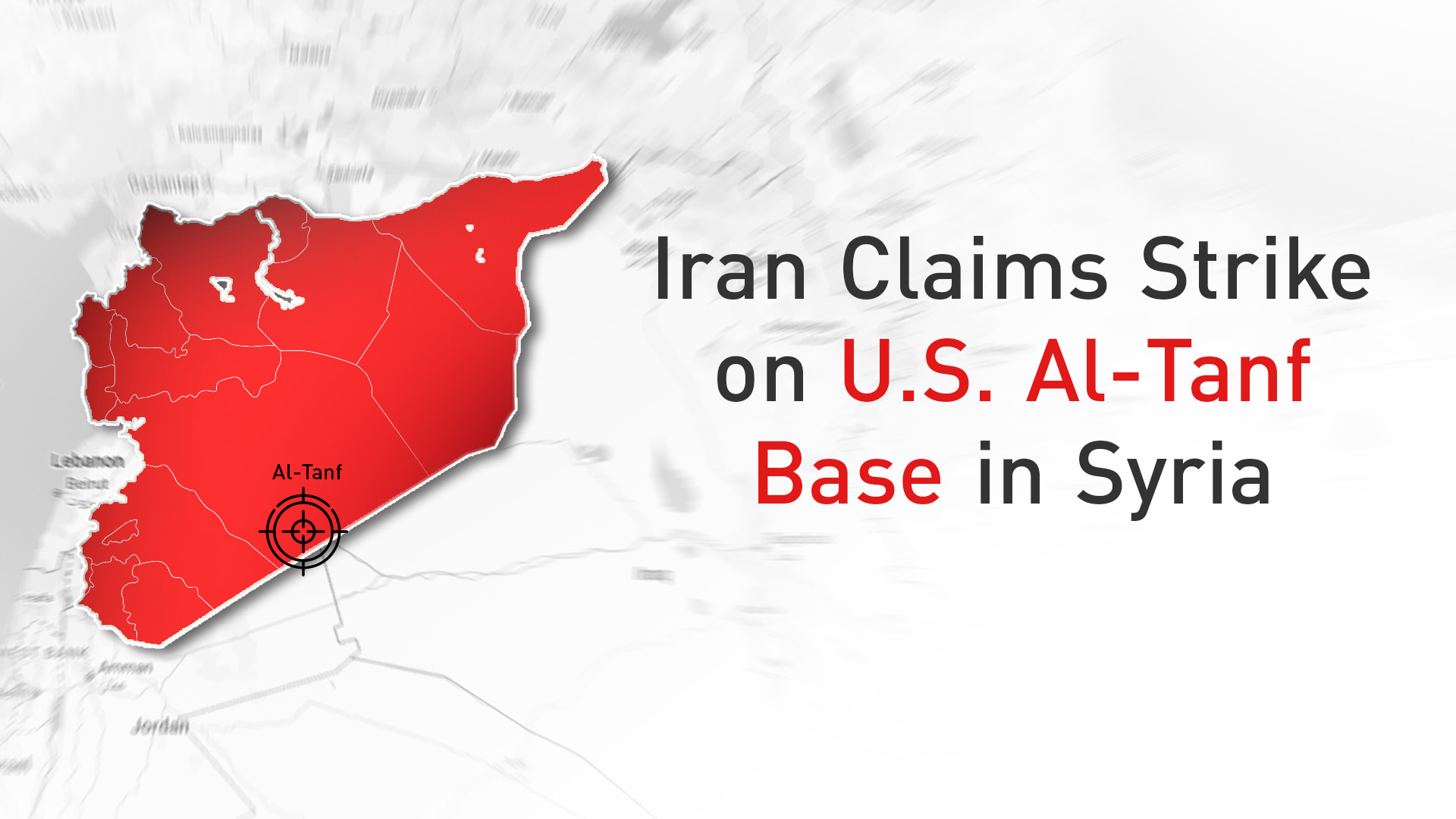
ERBIL (Kurdistan24) - Iran's Islamic Revolutionary Guard Corps (IRGC) said Friday that it had carried out a drone and missile strike against the U.S. Special Operations Command base at Al-Tanf in southeastern Syria, presenting the operation as retaliation for Iranian personnel killed during recent American attacks and signaling that Tehran is prepared to broaden the geographic scope of its response.
In a statement, the IRGC said its aerospace forces conducted what it described as the 11th phase of "Operation Nasr-2," targeting the strategically located base near Syria's borders with Iraq and Jordan.
According to the organization, the operation employed both drones and missiles against the facility, which it said was selected in response to the deaths of Iranian troops during U.S. strikes in the Bampur area of Iranshahr.
The IRGC further claimed the attack destroyed a radar installation and several U.S. military helicopters, while alleging that numerous American personnel were killed.
Those claims have not been independently verified, and no U.S. confirmation of the reported strike or its alleged effects was available at the time of publication.
By identifying a U.S. military installation outside Iran as its target, Tehran's announcement portrays the confrontation as extending beyond reciprocal strikes on Iranian territory and into a broader regional contest involving American deployments across the Middle East.
The statement also paired the military claim with a renewed warning over one of the world's most important energy corridors.
The IRGC asserted that continued U.S. operations would prompt efforts to prevent oil and natural gas exports from passing through the Strait of Hormuz, reinforcing previous Iranian threats linking military escalation to maritime commerce and global energy supplies.
The reported strike in Syria comes as regional security concerns have expanded well beyond the direct exchange of attacks between Washington and Tehran.
Earlier Friday, Iranian authorities separately announced drone operations targeting Bahrain and Kuwait, describing them as retaliation for recent U.S. strikes.
Tehran said explosive-laden Arash drones were directed toward the Sakhir Air Base in Bahrain before additional aircraft targeted locations associated with U.S. troop deployments and logistical support in Kuwait.
Bahrain had not publicly confirmed the Iranian claims.
Kuwaiti officials, however, acknowledged a significant aerial security incident. According to the Ministry of Defense, the country's air defenses intercepted 32 hostile drones before they reached strategic sites.
Authorities said debris caused material damage in several residential areas but reported no civilian casualties, adding that the armed forces remain on heightened alert.
The regional security picture broadened further after Qatar's Ministry of Defense announced it had intercepted incoming missiles over its territory.
Agence France-Presse (AFP) also reported explosions heard in Qatar, where authorities activated emergency measures and raised national security alert levels, underscoring how neighboring Gulf states are increasingly being drawn into the crisis.
These developments have unfolded alongside continued U.S. military operations against Iran.
U.S. Central Command (CENTCOM) announced earlier that American forces had completed a sixth consecutive night of strikes, saying fighter aircraft, unmanned aerial systems and naval assets struck multiple Iranian military objectives, including air defense positions, logistics facilities, coastal surveillance sites and maritime capabilities.
CENTCOM said the campaign is intended to further degrade Iran's military capacity while responding to attacks on commercial shipping, adding that more than 50,000 U.S. service members remain deployed across the region.
At sea, CENTCOM also said U.S. naval forces have continued enforcement operations in the Gulf of Oman, conducting vessel inspections while redirecting or stopping ships accused of attempting to bypass Washington's maritime restrictions.
Meanwhile, Iranian officials have reported extensive damage to transportation infrastructure following recent U.S. strikes, including several strategic bridges in Hormozgan Province, where authorities imposed road closures and emergency measures after the attacks.
Taken together, the competing military announcements illustrate how the confrontation is now unfolding across multiple fronts, from Syria and Iran to the Gulf, while diplomatic tensions remain overshadowed by an expanding cycle of military action and retaliation.
|
Summary Iran's IRGC claims it struck the U.S. military base at Al-Tanf in Syria using drones and missiles in retaliation for recent American strikes. The reported attack comes as Gulf states reinforce defenses and tensions around the Strait of Hormuz continue to intensify. |