Netanyahu's Elusive Trump Meeting Highlights Shifting U.S.-Israel Ties
A reported failure to secure a White House meeting with President Donald Trump has intensified scrutiny of Benjamin Netanyahu's standing in Washington as political divisions over Israel deepen.
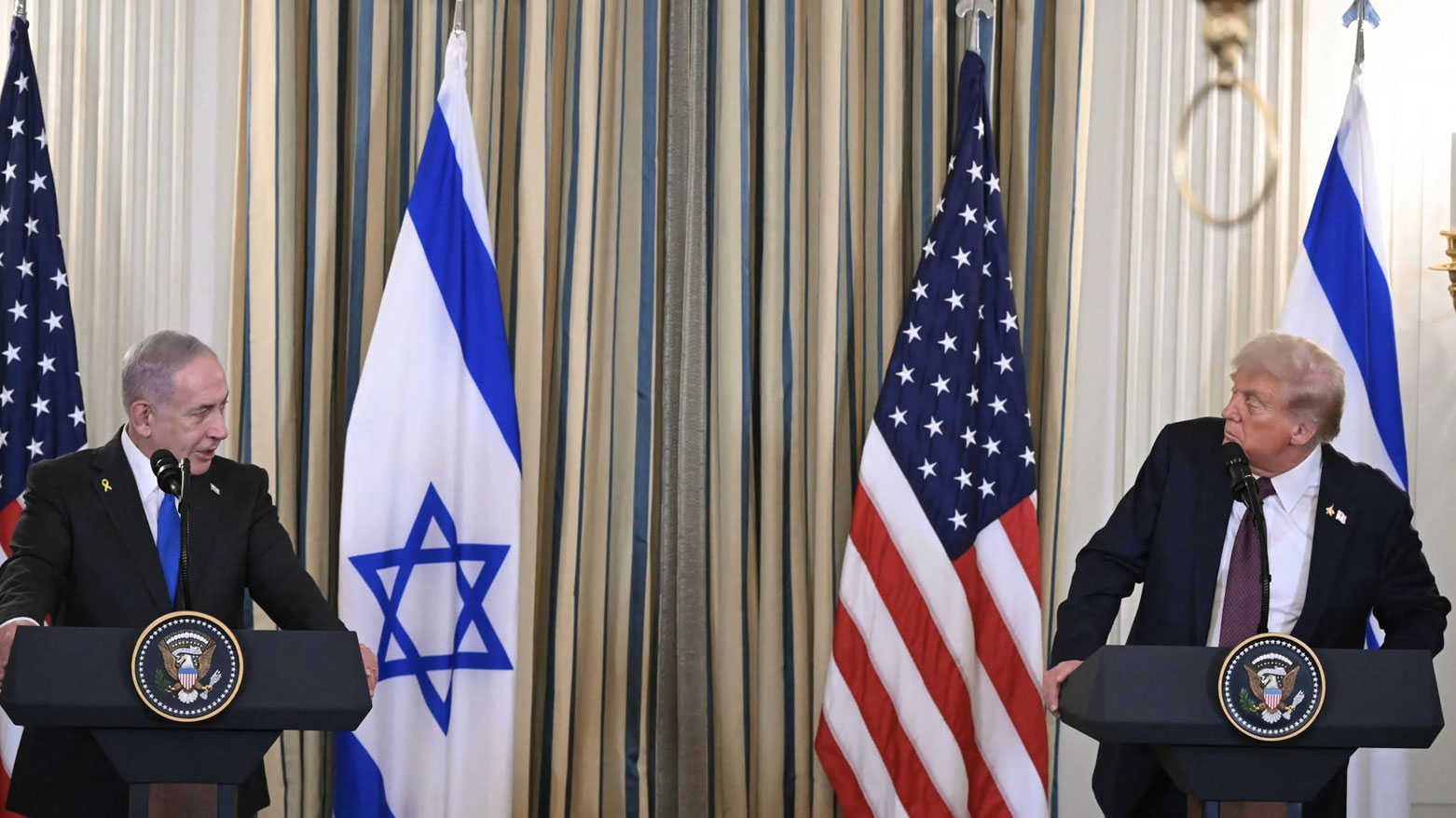
ERBIL (Kurdistan24) - Israeli Prime Minister Benjamin Netanyahu's reported attempt to arrange another White House meeting with President Donald Trump has become a closely watched indicator of changing political dynamics between Washington and Jerusalem, highlighting what appears to be a more complicated phase in a relationship that until recently was marked by frequent high-level engagement.
According to reporting by Axios, Netanyahu sought to secure a meeting with Trump during a planned visit to Washington, but no appointment was ultimately placed on the president's official schedule.
The episode attracted unusual attention because the Israeli leader has enjoyed repeated access to the Oval Office since Trump's return to office, making the absence of a confirmed meeting notable in diplomatic and political circles.
The uncertainty surrounding the proposed visit has prompted questions not simply about scheduling, but about the current state of the bilateral relationship as both governments confront widening regional security challenges and increasingly complex strategic calculations.
Axios reported that Netanyahu's office prepared for a possible Washington trip, including logistical arrangements and advance planning, while publicly signaling an expectation that the prime minister would meet Trump.
White House officials, however, indicated that no meeting had been finalized, suggesting that expectations in Jerusalem had outpaced confirmed plans in Washington.
The reported disconnect comes at a moment when policy differences have become more visible.
According to Axios, friction has emerged over several regional issues, including Iran and Türkiye, with one flashpoint reportedly following Netanyahu's public criticism of the Trump administration's consideration of selling F-35 fighter aircraft to Türkiye.
The report said the remarks were poorly received inside the White House, illustrating broader disagreements over regional strategy.
The evolving relationship also reflects a wider reassessment of Israel's leadership within parts of Washington.
Axios reported that some senior U.S. officials have expressed frustration with Netanyahu's handling of recent regional developments, while members of Trump's political circle have questioned aspects of Israel's approach during the conflict with Iran.
The political backdrop in Washington has likewise become increasingly complicated.
According to CNN, the U.S. House of Representatives this week witnessed one of the largest demonstrations of Democratic dissent over military assistance to Israel in recent years.
An amendment seeking to block billions of dollars in military aid ultimately failed, but it drew support from 103 Democrats, more than half of the party's House members, highlighting a significant shift in internal debate despite its defeat.
The vote also exposed differences within Democratic leadership.
House Minority Leader Hakeem Jeffries and House Democratic Caucus Chair Pete Aguilar opposed the amendment, while House Minority Whip Katherine Clark supported it, underscoring the range of views within the party over future U.S. policy toward Israel.
Progressive lawmakers portrayed the outcome as evidence of changing political attitudes rather than a legislative victory.
Democratic Rep. Greg Casar argued the vote sent a message that future military assistance should no longer be viewed as automatic, while Rep.
Ilhan Omar described the result as reflecting a political moment that had once appeared unlikely. Other lawmakers, including Katherine Clark, maintained that although they viewed the amendment itself as flawed, the broader debate over military assistance deserved greater scrutiny.
Taken together, the White House episode and the congressional debate illustrate a more challenging political environment for Netanyahu than during previous periods of close coordination with Washington.
Neither development signals a formal change in U.S. policy toward Israel, and Axios noted that the possibility of a future meeting between Trump and Netanyahu has not been ruled out.
Nevertheless, the reported delay in securing face-to-face talks, combined with increasingly visible divisions within Congress over military support for Israel, reflects a relationship being shaped by evolving strategic priorities and a changing political landscape in the United States.
|
Summary Israeli Prime Minister Benjamin Netanyahu's reported inability to secure a White House meeting with President Donald Trump has fueled questions about his standing in Washington as policy differences and congressional debate over U.S. support for Israel continue to deepen. |