Lebanon's Aoun Heads to Washington for High-Stakes Talks With Trump
The Lebanese president's Washington visit comes as ceasefire implementation, Israeli withdrawal, and regional security remain at the center of U.S.-Lebanon diplomacy.
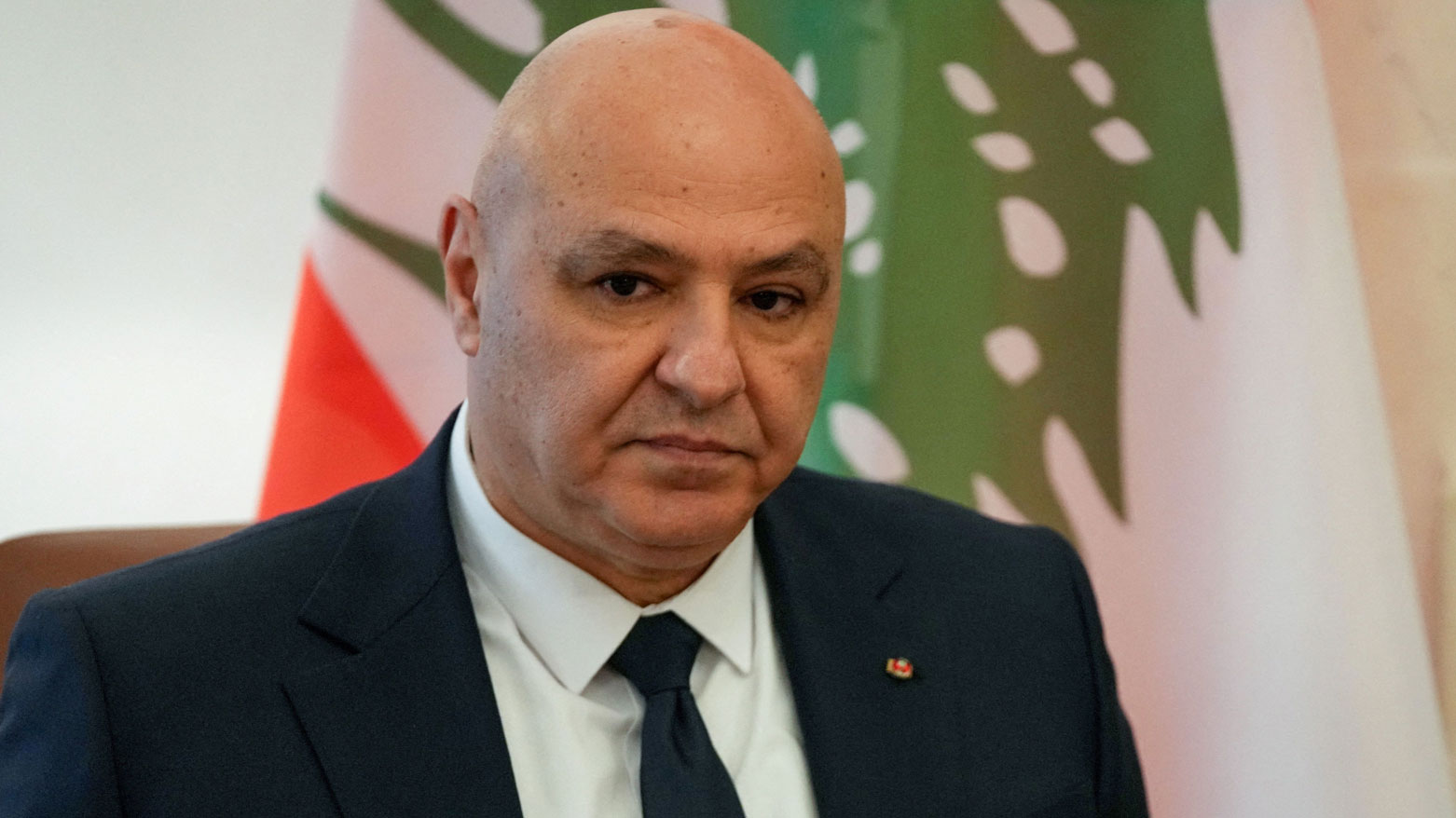
ERBIL (Kurdistan24) - Lebanese President Joseph Aoun departed Beirut on Saturday for Washington, where he is expected to hold talks with U.S. President Donald Trump and senior American officials in a visit that could shape the next phase of Lebanon's security and diplomatic engagement with the United States.
According to Agence France-Presse (AFP), the Lebanese presidency said the discussions will focus on reinforcing the ceasefire in southern Lebanon, advancing efforts to secure Israel's withdrawal from areas it continues to occupy, and reviewing the broader political and security situation confronting Lebanon.
The trip comes at a sensitive moment, as Beirut seeks stronger international backing for state institutions while navigating a volatile regional environment following months of military escalation.
The timing of the visit reflects growing diplomatic momentum surrounding Lebanon's southern frontier.
Recent negotiations have sought to translate ceasefire understandings into practical security arrangements that could reduce the risk of renewed confrontation, while strengthening the role of Lebanese state institutions in areas long shaped by conflict.
Against that backdrop, Aoun's meetings in Washington represent more than a routine bilateral engagement; they coincide with broader international efforts to stabilize Lebanon's border with Israel and prevent a wider regional crisis.
The presidency said Aoun's agenda includes consultations on consolidating the ceasefire, particularly in southern Lebanon, alongside discussions aimed at achieving an Israeli withdrawal from remaining Lebanese territory.
Those objectives have become increasingly central to Beirut's foreign policy as the government seeks to reinforce national sovereignty while avoiding another cycle of conflict.
The visit follows recent U.S.-mediated diplomacy that has attempted to move implementation of security arrangements from negotiation to action.
According to reporting by The Associated Press, American officials hosted talks in Rome that produced agreement on a framework for establishing pilot zones in southern Lebanon, where Israeli forces would gradually transfer responsibility to the Lebanese Armed Forces.
Those discussions are intended to support a broader withdrawal process while reinforcing the ceasefire through an expanded role for Lebanon's national military.
Although implementation has yet to proceed fully on the ground, the negotiations signaled continued international commitment to reducing tensions along one of the region's most sensitive frontiers.
The broader framework remains politically complex.
The Associated Press reported that the proposed arrangements envision a stronger presence for the Lebanese Armed Forces and form part of wider efforts to move toward a more comprehensive agreement between Lebanon and Israel.
However, significant political differences persist regarding Hezbollah's future role, including questions surrounding the group's disarmament and the long-term security architecture of southern Lebanon.
Those unresolved issues add further importance to Aoun's discussions in Washington, where strengthening Lebanon's state institutions is expected to feature prominently alongside military and diplomatic coordination.
Successive Lebanese governments have argued that durable stability depends upon reinforcing official institutions capable of exercising authority across the country's territory while preserving internal political balance.
Regional developments beyond Lebanon have also reinforced the urgency of sustained diplomatic engagement.
Earlier this week, Syrian authorities announced the seizure of a truck carrying rockets and other weapons that officials alleged were destined for Hezbollah in Lebanon, according to The Associated Press.
Hezbollah rejected the accusation, describing it as unfounded.
Regardless of the competing narratives surrounding that incident, the development illustrates continuing efforts by regional governments to curb illicit weapons trafficking and prevent additional sources of instability from undermining broader diplomatic initiatives.
The wider geopolitical landscape also shapes the context of Aoun's visit.
Washington has intensified efforts to support regional partners while pursuing separate diplomatic tracks involving Syria, Iraq and Lebanon, seeking to contain security risks without allowing localized crises to trigger broader confrontation.
Lebanon, situated at the intersection of several regional fault lines, remains a central element of those calculations.
For Beirut, closer cooperation with Washington extends beyond military coordination.
Continued U.S. support for the Lebanese Armed Forces and other state institutions has long been viewed as essential to strengthening governmental capacity and reinforcing confidence in Lebanon's national institutions during a period of significant political and economic challenges.
Aoun's visit therefore arrives at a moment when diplomacy, security and institutional development have become increasingly intertwined.
While the immediate agenda centers on consolidating the ceasefire and advancing Israeli withdrawal from southern Lebanon, the discussions are also expected to reinforce broader bilateral cooperation between Beirut and Washington.
As diplomatic efforts continue, the Washington meetings will be closely watched as an indication of whether recent momentum can be translated into practical steps that support stability along Lebanon's southern border, strengthen state institutions and sustain international engagement at a time when the wider Middle East continues to face considerable uncertainty.
|
Summary Lebanese President Joseph Aoun departed for Washington to meet President Donald Trump as Beirut seeks stronger U.S. support for the southern ceasefire, Israeli withdrawal and state institutions. The visit follows renewed diplomacy aimed at stabilizing Lebanon's border and easing regional tensions. |