Iran Targets U.S. Military Installations in Gulf, Warns of More Powerful Attacks
Houthis threaten blockade of Saudi ports as fighting expands across key maritime routes and diplomatic contacts continue
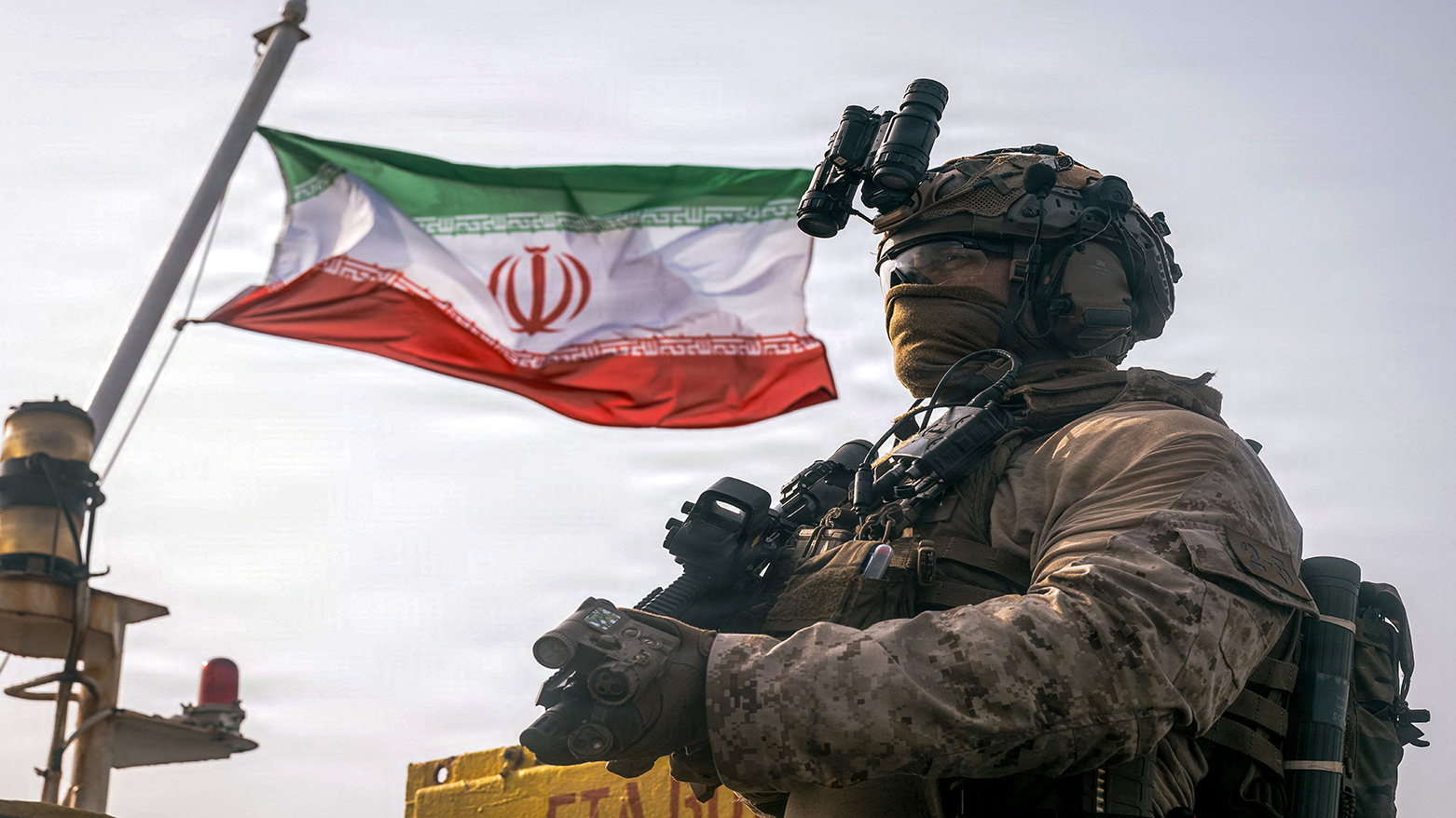
ERBIL (Kurdistan24) — Iran on Tuesday said it had struck U.S. radar and air defense installations in the Gulf and warned Washington to expect "more decisive and powerful" attacks, as the conflict widened with new threats to regional shipping and energy infrastructure.
Iran's Islamic Revolutionary Guard Corps (IRGC) said it targeted U.S. military assets in Kuwait and Bahrain, including air defense systems, radar installations, and administrative buildings, hours after the United States launched another wave of strikes on Iranian military targets.
In a statement carried by the state-run IRNA news agency, the Guards warned that "with this radar sweep, the enemy should prepare for even more decisive and powerful waves of drone and missile attacks."
The latest escalation came after U.S. Central Command said late Monday that American forces had struck Iranian military command centers, maritime capabilities, missile and drone launch sites, and air defense systems to further degrade Iran's ability to attack commercial shipping in the Strait of Hormuz.
Washington intensified its campaign after at least three U.S. service members were killed in recent days. U.S. President Donald Trump warned Monday that Iran would pay "many times over" for every American soldier killed, while Iranian President Masoud Pezeshkian described the conflict as "a full-scale war."
The Pentagon said nearly 100 U.S. service members have been wounded since July 7, most suffering minor concussions.
Hormuz tensions deepen
Iran also announced new actions in the Strait of Hormuz, saying Revolutionary Guards forces intercepted and stopped two "non-compliant oil tankers" attempting to transit the strategic waterway as Tehran tightened its control over one of the world's most important energy corridors.
The IRGC later said the two tankers were struck by explosions that triggered massive fires and left the vessels disabled.
The United Kingdom Maritime Trade Operations (UKMTO) agency separately reported that an "unknown projectile" hit a tanker off the coast of Oman. A second tanker was reportedly struck in a similar incident later on Tuesday.4
The renewed confrontation has placed the Strait of Hormuz at the center of the conflict, threatening global energy supplies. Roughly one-fifth of the world's seaborne oil normally passes through the narrow waterway connecting the Persian Gulf to international markets.
Houthis threaten Saudi ports
Adding to regional tensions, Yemen's Iran-aligned Houthi movement announced plans to blockade Saudi Arabian ports, raising fears that the conflict could spread beyond the Gulf.
If implemented, the blockade could disrupt Saudi Arabia's ability to export crude oil through its Red Sea facilities, including the port of Yanbu, one of the kingdom's main alternatives to the Strait of Hormuz.
Saudi Arabia condemned what it described as threats by the "terrorist Houthi militia," reaffirming its support for Yemen's internationally recognized government.
The Houthis, who have fought a decade-long conflict against the Saudi-led coalition, have not disclosed how they intend to enforce the proposed blockade.
Oil prices briefly climbed to a one-month high on Monday before easing Tuesday as traders assessed the growing risks to global energy supplies posed by the expanding conflict.
Diplomatic contacts continue
Despite the escalating military confrontation, diplomatic channels remain active.
Iranian Foreign Ministry spokesman Esmaeil Baqaei said indirect exchanges with Washington through mediators were continuing.
Meanwhile, Iranian Interior Minister Eskandar Momeni arrived in Islamabad for a two-day visit, where he is expected to hold talks with Pakistani Prime Minister Shehbaz Sharif and Army Chief Gen. Asim Munir on regional security developments.
Separately, Lebanese President Joseph Aoun is scheduled to meet President Trump in Washington on Tuesday as international pressure mounts on Beirut to disarm Hezbollah, a key Israeli demand linked to any future withdrawal from southern Lebanon.
The latest exchanges underscore the rapid expansion of the conflict beyond direct U.S.-Iran hostilities, with maritime security, global energy supplies, and multiple regional actors increasingly drawn into the confrontation.