Beijing's Mediation Bid Gains Momentum as U.S. and Iran Pause Strikes
China and Pakistan are reportedly working to revive indirect U.S.-Iran negotiations as a pause in military exchanges creates a renewed opening for regional diplomacy.
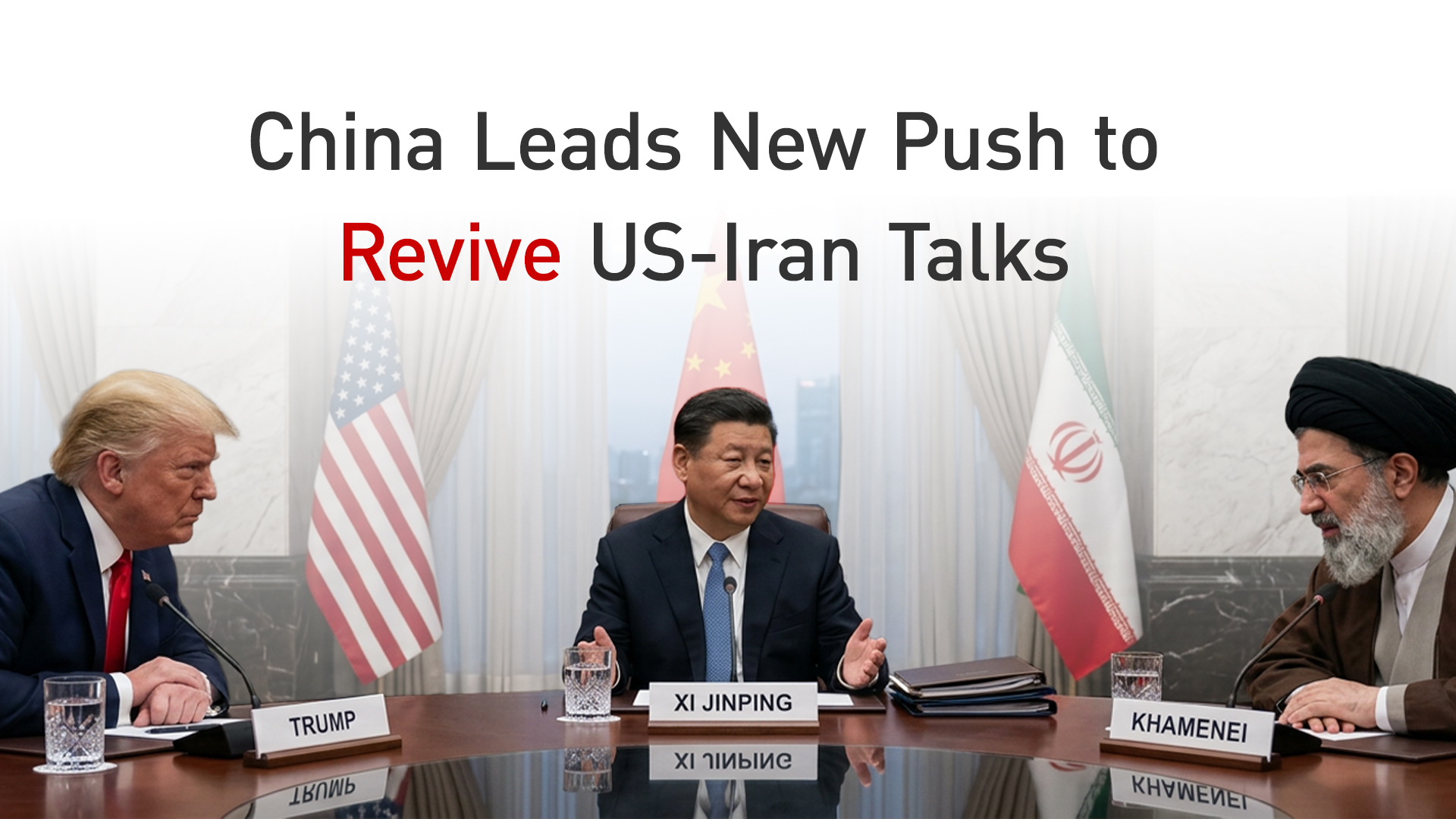
ERBIL (Kurdistan24) - China is spearheading a new diplomatic initiative, in coordination with Pakistan, aimed at reducing tensions between the United States and Iran and laying the groundwork for renewed indirect negotiations, according to senior sources cited by Al Arabiya.
The reported effort comes as regional diplomacy gathers momentum following a temporary halt in military exchanges that has created a rare opportunity to shift attention from confrontation toward dialogue.
The timing has drawn particular attention across the Middle East.
After days of escalating military activity, both Washington and Tehran have paused major retaliatory operations, while U.S. officials have indicated that President Donald Trump is allowing diplomacy additional room to develop even as American forces remain prepared for further action.
According to Agence France-Presse (AFP), the lull has encouraged cautious optimism among regional governments and financial markets that negotiations could regain traction if the current period of restraint endures.
According to Al Arabiya's senior sources, Beijing's initiative is designed to preserve communication channels between Washington and Tehran while creating conditions conducive to restarting indirect talks.
Pakistan is reportedly supporting the effort, underscoring the growing involvement of regional and international actors seeking to prevent renewed escalation.
The reported consultations extend beyond immediate de-escalation.
Sources told Al Arabiya that diplomats are discussing reciprocal confidence-building measures intended to rebuild trust between the two adversaries before broader negotiations resume.
Those future talks could encompass Iran's nuclear program, regional security arrangements, and sanctions imposed on Tehran.
The initiative also reportedly envisions a broader diplomatic framework involving Gulf countries alongside other regional stakeholders.
According to the sources, incorporating neighboring states into future discussions is viewed as an important step toward strengthening long-term regional stability and ensuring that any diplomatic progress addresses wider security concerns affecting the Middle East.
Tehran has meanwhile confirmed that indirect communication with Washington through mediators remains active.
Iranian officials have reiterated their preference for resolving disputes through diplomacy while simultaneously maintaining their opposition to what they describe as U.S. efforts to dominate maritime corridors in the Gulf and the Strait of Hormuz.
The reported Chinese initiative unfolds against the backdrop of a fragile military pause.
AFP reported that Iran has halted retaliatory operations against U.S. partners in the region, while American air operations have also ceased for several consecutive nights.
U.S. Ambassador to the United Nations Mike Waltz said President Trump was allowing negotiations "a little bit of room," although he stressed that U.S. forces remain fully prepared if diplomacy fails.
The reduction in hostilities has also eased immediate pressure on global energy markets.
Oil prices declined after investors interpreted the pause as a possible opening for diplomacy, though uncertainty continues to shape expectations about whether negotiations can produce a more durable de-escalation.
According to The Associated Press (AP), mediation efforts have continued through Oman and other intermediaries even as both governments attempt to preserve an interim ceasefire framework that has been strained by recent exchanges.
Negotiators remain focused on preventing renewed confrontation while seeking compromises on longstanding disputes, particularly those surrounding Iran's nuclear activities.
Maritime security remains another central concern.
Commercial traffic through the Strait of Hormuz has fallen to its lowest level in weeks, reflecting continuing caution among shipping companies despite the absence of confirmed attacks in recent days, AP reported.
Tehran has also acknowledged continuing discussions with Oman regarding maritime transit, while broader concerns over regional shipping routes continue to influence diplomatic calculations.
The diplomatic environment remains fluid.
Israeli Prime Minister Benjamin Netanyahu is expected to meet President Trump in Washington this week, where Iran's nuclear program and wider regional security are likely to feature prominently.
At the same time, officials involved in mediation efforts continue to emphasize that preserving dialogue remains essential if the current pause in fighting is to evolve into a more comprehensive diplomatic process.
For now, China's reported initiative represents one of the clearest indications that multiple international actors are seeking to capitalize on the present reduction in hostilities.
While no formal negotiations have yet resumed, the continued exchange of messages through intermediaries and the involvement of regional partners suggest that diplomacy remains active, even as uncertainty persists over whether the current window for engagement can be sustained.
|
Summary China, reportedly working with Pakistan, is leading a diplomatic initiative to revive indirect U.S.-Iran negotiations as military exchanges subside. With mediation continuing through regional intermediaries, officials hope the current pause can evolve into broader talks on security, sanctions and Iran's nuclear program. |