Netanyahu Reportedly Rejects U.S. Push for Withdrawals Ahead of Trump Meeting
Israeli media say Prime Minister Benjamin Netanyahu will resist broad U.S. requests for withdrawals from Gaza, southern Lebanon and Syria as Iran and regional security dominate upcoming talks with President Donald Trump.
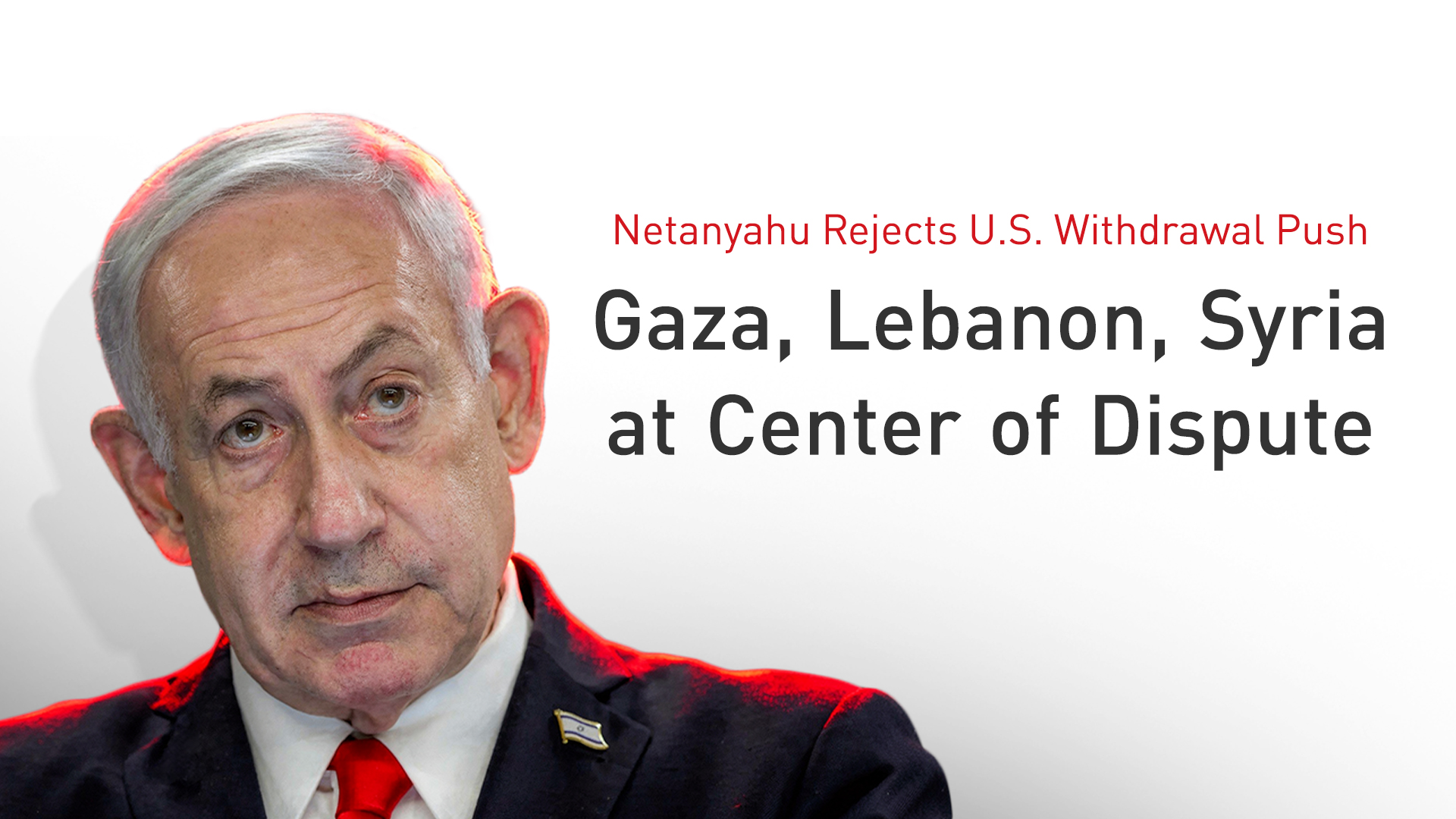
ERBIL (Kurdistan24) - Israeli Prime Minister Benjamin Netanyahu has reportedly rejected broad U.S. requests for Israeli withdrawals from the Gaza Strip, southern Lebanon and parts of Syria, setting the stage for potentially difficult discussions with U.S. President Donald Trump as the two leaders prepare to meet amid heightened regional tensions.
According to Israel Hayom, Netanyahu told members of Israel's Security Cabinet that Washington had presented proposals calling for extensive territorial withdrawals across multiple fronts.
The newspaper reported that the prime minister made clear he intends to oppose those requests, arguing that Israel's security requirements must take precedence as the region continues to navigate overlapping conflicts and fragile diplomatic initiatives.
The reported disagreement comes at a pivotal moment for U.S.-Israeli coordination.
In an interview with Fox News' Sunday Morning Futures with Maria Bartiromo, Netanyahu framed Iran as the foremost long-term security challenge confronting Israel and expressed unequivocal support for President Trump's efforts to prevent Tehran from acquiring a nuclear weapon.
"One way or the other, they have to end their nuclear program," Netanyahu said, arguing that the objective should be achieved through diplomacy if possible but without compromising that strategic goal.
His remarks underscore why questions surrounding Gaza, Lebanon and Syria have become intertwined with broader discussions over Iran's regional influence, deterrence and post-conflict security arrangements.
While Israeli media portray disagreements over territorial withdrawals, Netanyahu's public comments suggest he views each front through the broader lens of containing threats linked to Tehran and preventing hostile armed groups from re-establishing positions near Israel's borders.
According to Israel Hayom, Netanyahu informed cabinet ministers that he would resist pressure to approve sweeping withdrawals from the three theaters, a position that reflects Israel's current security priorities as fighting and instability continue across the region.
The reported stance is expected to feature prominently during his upcoming discussions with Trump, where regional security, Iran and future diplomatic initiatives are likely to dominate the agenda.
During the Fox News interview, Netanyahu argued that joint Israeli and American military operations had significantly delayed Iran's nuclear program by targeting key facilities and eliminating leading nuclear scientists.
At the same time, he cautioned that Tehran could attempt to rebuild those capabilities, making continued vigilance essential.
He also stressed the importance of the close intelligence partnership between Jerusalem and Washington, describing cooperation between the two countries' intelligence services as exceptionally strong.
Rather than suggesting he would present new intelligence during his visit, Netanyahu said the relationship already involves extensive information sharing while emphasizing the value of consulting directly with President Trump on the next phase of policy.
Netanyahu further warned that Israel would respond forcefully to any future Iranian attack, whether conducted directly or through allied armed groups.
That emphasis on deterrence provides additional context for his reported reluctance to accept withdrawals that Israeli officials believe could create new security vulnerabilities along multiple borders.
His interview also touched on Lebanon, where Netanyahu described recent developments as an opportunity to weaken Hezbollah's military influence while expressing cautious optimism about direct contacts between Israel and the Lebanese government under U.S. auspices.
He said the framework envisions reducing Hezbollah's military presence, strengthening Lebanese state authority and potentially opening the door to broader normalization, while acknowledging that implementation depends heavily on the Lebanese army's ability to assume security responsibilities.
Those remarks come as the regional security picture remains unsettled.
According to Agence France-Presse (AFP), Lebanon's army said ongoing Israeli military activity in the country's south continues to complicate implementation of the recently agreed security framework.
Lebanese military officials argue that continued strikes and military operations have slowed the army's planned deployment into designated areas where Israeli forces are expected to withdraw under the agreement.
The situation illustrates how efforts to stabilize the border remain closely tied to broader diplomatic negotiations involving Washington and regional partners.
The reported dispute over withdrawals also unfolds against an increasingly competitive domestic political backdrop.
AFP reports that Israel is moving toward a closely watched general election in October, with former military chief Gadi Eisenkot emerging as Netanyahu's principal challenger.
Recent polling cited by AFP suggests Eisenkot's newly formed party has edged ahead of Netanyahu's Likud, while surveys indicate security remains the defining issue shaping voter preferences.
Eisenkot has built much of his campaign around promises to strengthen Israel's long-term national security doctrine while restoring public confidence following the regional conflicts of recent years.
Although domestic politics are becoming increasingly competitive, security policy continues to dominate public debate, reinforcing the significance of Netanyahu's reported refusal to accept broad territorial concessions.
As Netanyahu prepares for talks in Washington, the reported differences over Gaza, southern Lebanon and Syria are likely to be examined alongside broader discussions on Iran's nuclear ambitions, regional deterrence and future security coordination between Israel and the United States.
While Israel Hayom portrays the territorial issue as an emerging point of friction, Netanyahu's public remarks to Fox News indicate that he sees every major regional file, from border deployments to intelligence cooperation, as part of a single strategic effort to prevent Iran and its allies from expanding their influence.
Whether those positions can be reconciled with Washington's reported proposals may become clearer after the upcoming meeting with President Trump, which is expected to address not only immediate security concerns but also the broader direction of U.S.-Israeli cooperation during a period of continuing regional uncertainty.
|
Summary Israeli media report Prime Minister Benjamin Netanyahu will oppose broad U.S. demands for withdrawals from Gaza, southern Lebanon and Syria ahead of talks with President Donald Trump. Iran, regional deterrence, intelligence cooperation and border security are expected to dominate the agenda. |