Iran to Deepen Coordination With Kurdistan Region on Border Security, Baqaei Says
Iran's Foreign Ministry says cooperation with Baghdad and the Kurdistan Region will be expanded as Tehran also warns Ukraine over a reported strike on an Iranian vessel.
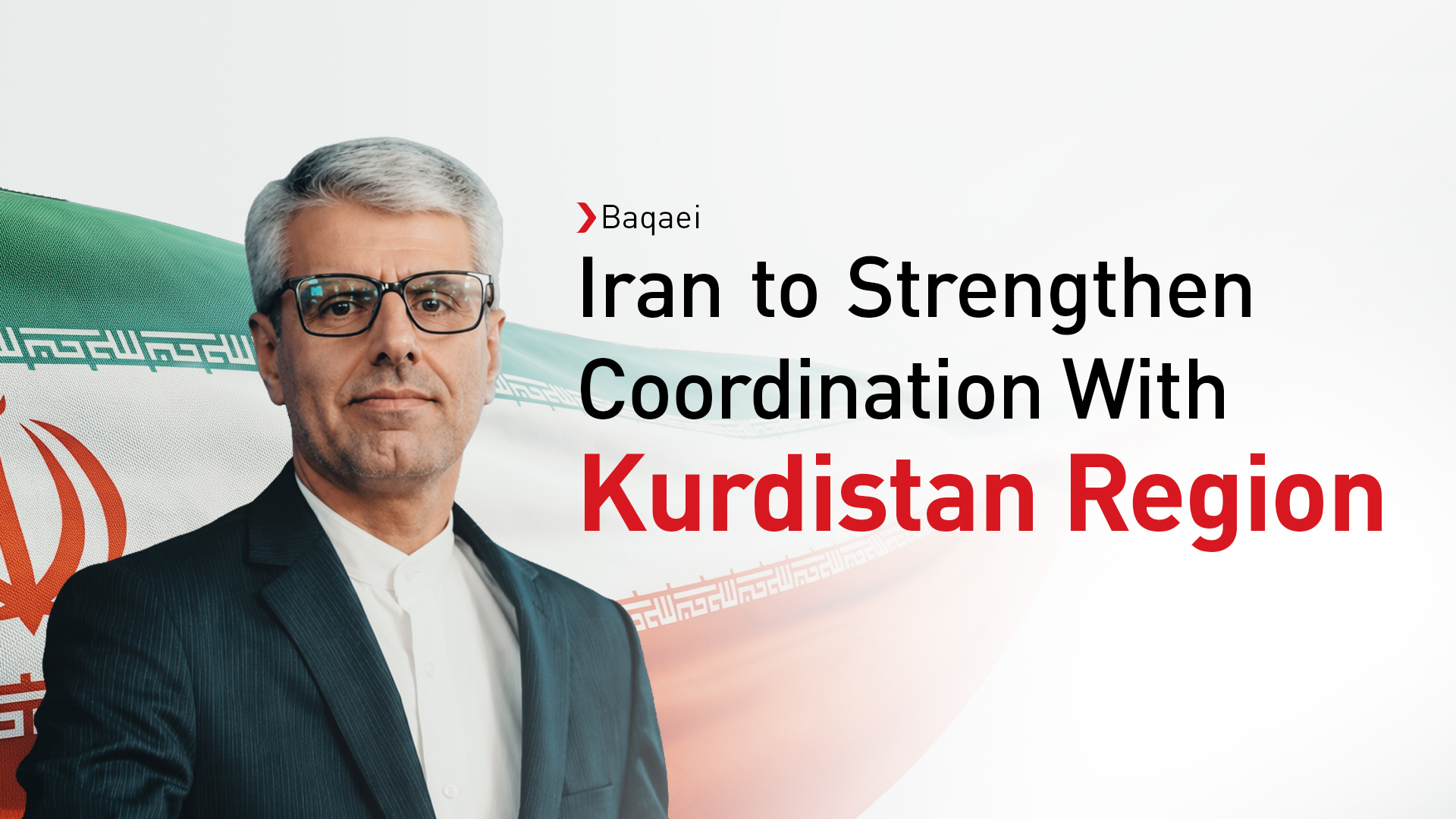
ERBIL (Kurdistan24) - Iran intends to strengthen security coordination with both the Iraqi government and the Kurdistan Region to safeguard their shared borders against armed groups, Iranian Foreign Ministry spokesperson Esmaeil Baqaei said Monday, presenting the initiative as part of ongoing bilateral security cooperation between Tehran and Baghdad.
Speaking during his weekly press conference, Baqaei said discussions on border security formed part of recent high-level contacts between Iranian and Iraqi officials, reaffirming Tehran's commitment to implementing an existing security agreement between the two neighboring countries.
"Our objective is that, through cooperation with the Iraqi government and the relevant authorities in the Kurdistan Region of Iraq, our shared borders remain secure and free from any movements by terrorist groups," Baqaei said, according to Iran's state-run Islamic Republic News Agency (IRNA).
Responding to questions about Iraqi Prime Minister Ali al-Zaidi's recent visit to Tehran, Baqaei also dismissed media reports suggesting the trip involved messages from Washington, saying Iran's position was consistent with statements already issued by the Iraqi prime minister's office.
He added that security cooperation, including border protection and efforts against armed groups, was among the issues discussed during the visit.
Baqaei's remarks underscored Tehran's emphasis on working with both Baghdad and the Kurdistan Regional Government on security matters while framing the cooperation as an extension of previously established bilateral commitments.
The spokesperson then turned to the escalating diplomatic dispute between Tehran and Kyiv following what Iranian officials describe as a Ukrainian strike on an Iranian commercial vessel in the Caspian Sea.
Condemning the reported attack, Baqaei described it as an unlawful act that violated international law and the United Nations Charter, warning that Iran would respond.
"This attack was a dangerous adventure," he said. "It will not go unanswered."
Iranian officials have accused Ukraine of targeting an Iranian commercial vessel in the Caspian Sea, alleging that one sailor was killed and others were injured. Ukrainian President Volodymyr Zelensky has publicly announced long-range strikes against vessels that Kyiv said were transporting military cargo linked to Iran, though the competing accounts have not been independently verified.
Baqaei argued that governments supporting Kyiv would share responsibility for the consequences of the reported attack.
"All parties who support the Ukrainian regime must be held accountable," he said, while criticizing what he described as increasingly risky actions by the Ukrainian leadership.
He also reiterated Tehran's longstanding position that it is not a participant in Russia's war against Ukraine.
"We have stated from the beginning that we have zero involvement in the conflict between Russia and Ukraine," Baqaei said, adding that Iran believes the latest incident risks widening regional tensions beyond the immediate battlefield.
According to Baqaei, the actions attributed to Ukraine had generated concern among countries bordering the Caspian Sea, though he did not identify specific governments.
The spokesperson also addressed broader regional diplomacy, rejecting suggestions that external powers could determine Iran's military or diplomatic decisions.
"We will never allow the United States to dictate the timing of war and peace," Baqaei said, maintaining that decisions relating to Iran's national security are made through the country's own institutional process.
He added that diplomacy would continue to play a role whenever it served Iran's national interests, while insisting Tehran would defend those interests for as long as necessary.
Baqaei also criticized a recent joint statement issued by the United States and Gulf Cooperation Council (GCC) foreign ministers, accusing Washington of responsibility for military actions against Iran and arguing that some regional countries had assisted those operations by allowing their territory to be used.
While emphasizing that Iran seeks constructive relations with neighboring states, he described the joint statement as harmful to diplomatic efforts and said it had undermined dialogue that followed the June 18 memorandum of understanding.
On Iran's nuclear program, Baqaei rejected what he called double standards surrounding civilian nuclear technology.
Referring to reports that Saudi Arabia could receive U.S. support for a civilian nuclear program, he argued that peaceful nuclear energy remains the right of all members of the Nuclear Non-Proliferation Treaty and said Iran's position on the issue had not changed.
The foreign ministry spokesperson also addressed tensions with France, confirming that the French ambassador had recently been summoned to Iran's Foreign Ministry.
Baqaei accused two French diplomats of interfering in Iran's internal affairs under the guise of engagement with civil society, allegations that France has rejected.
Separately, he dismissed reports suggesting foreign embassies in Tehran had significantly reduced their operations, saying diplomatic missions continued to function largely as normal.
Claims to the contrary, he argued, were part of what he described as a broader campaign of psychological warfare, adding that rumors surrounding several European embassies had later been denied by the governments concerned.
Baqaei's comments reflected a briefing that combined regional security, border cooperation with Iraq and the Kurdistan Region, and Iran's increasingly forceful diplomatic response to the reported maritime incident involving Ukraine, while reiterating Tehran's position that it will pursue both diplomacy and national security measures according to its own strategic priorities.
|
Summary Iran says it will deepen coordination with Iraq and the Kurdistan Region to strengthen border security under existing agreements. Foreign Ministry spokesperson Esmaeil Baqaei also warned that a reported Ukrainian strike on an Iranian vessel "will not go unanswered." |