Who Are the Iraqi Armed Groups Targeted in the US-Saudi Strikes?
From the battle against ISIS to a powerful Iran-aligned force, the Popular Mobilization Forces have become a central player in Iraq's security landscape and the wider US-Iran rivalry
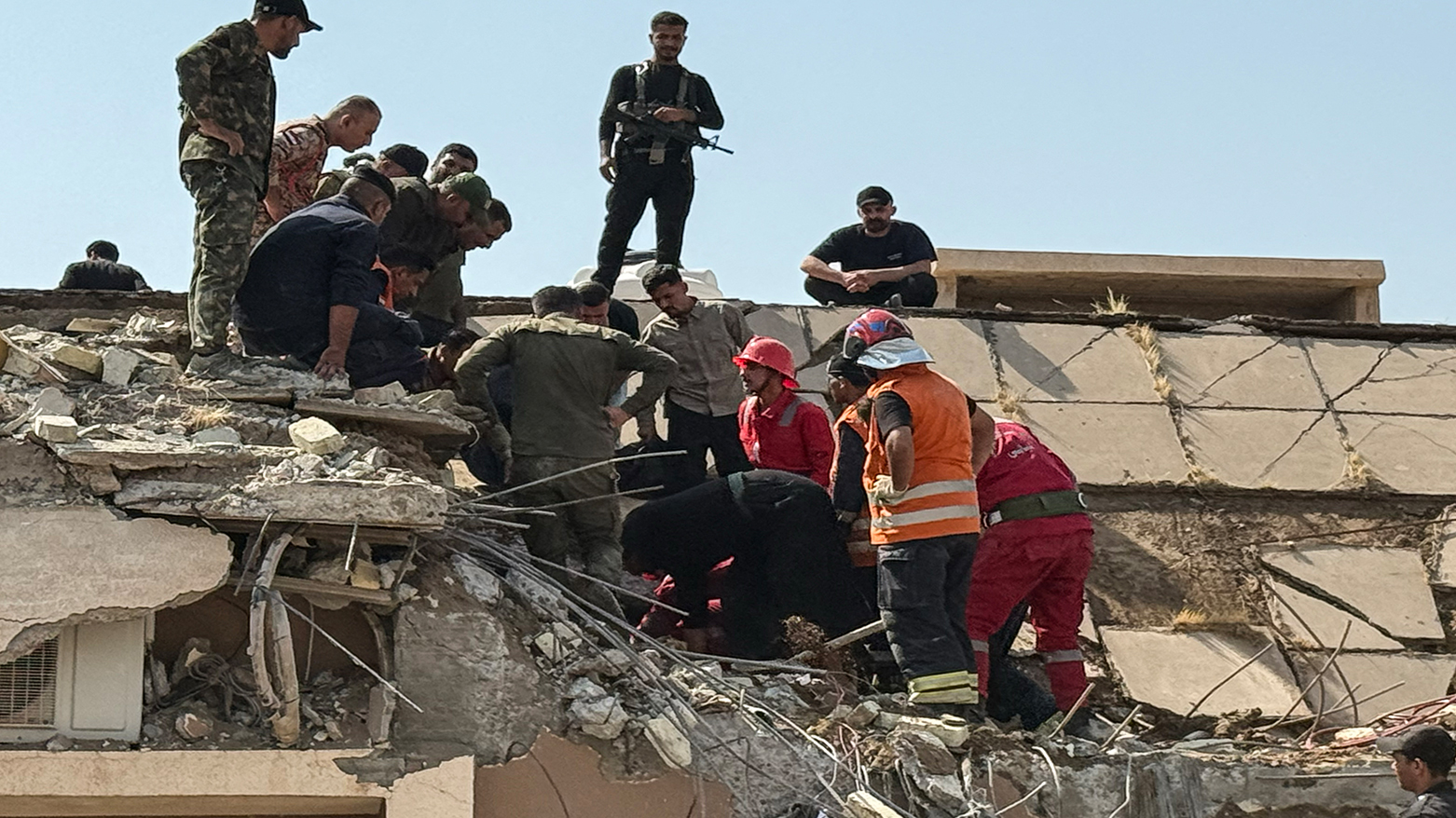
ERBIL (Kurdistan24) — The United States and Saudi Arabia carried out coordinated strikes on Wednesday targeting positions belonging to Iraq's Hashed al-Shaabi, also known as the Popular Mobilization Forces (PMF), an umbrella organization that includes several powerful Iran-backed armed factions accused of repeatedly attacking US interests across Iraq and the wider Middle East.
The strikes put renewed focus on the PMF, a state-recognized force whose origins trace back to Iraq's war against the Islamic State (ISIS) but whose most influential factions have evolved into key players in the regional confrontation between Washington and Tehran.
The PMF was established in 2014 after Iraq's highest Shia religious authority, Grand Ayatollah Ali al-Sistani, issued a fatwa calling on Iraqis to take up arms against ISIS as the extremist group rapidly captured large parts of the country.
While thousands of volunteers from across Iraq joined the mobilization effort, several established pro-Iran armed groups also answered the call. Many of these factions had previously fought US forces following the 2003 US-led liberation operation that overthrew the dictator Saddam Hussein and maintained close military and ideological ties with Iran.
The force received significant training and support from Iran, with its battlefield operations closely coordinated by General Qasem Soleimani, the late commander of the Quds Force—the foreign operations branch of Iran's Islamic Revolutionary Guard Corps (IRGC).
Soleimani was killed in a US drone strike near Baghdad International Airport in January 2020.
In 2016, Iraq passed legislation formally integrating the PMF into the country's security apparatus. A year later, the force played a major role alongside the Iraqi military and the US-led international coalition in defeating ISIS and recapturing territory seized by the militant group.
Despite its formal incorporation into the Iraqi state, the PMF remains a diverse network comprising dozens of factions, including several powerful Iran-backed militias that the United States designates as terrorist organizations.
Some of these groups have been accused of operating with considerable autonomy while benefiting from government funding and salaries.
Over the past decade, the alliance has expanded its political and military influence. Several affiliated groups have secured seats in Iraq's parliament, while senior commanders—including the PMF's top leadership—have been subjected to US sanctions.
A number of the most influential PMF factions are also members of the Islamic Resistance in Iraq, a coalition that has claimed responsibility for hundreds of drone and rocket attacks targeting US military facilities in Iraq and elsewhere in the region during the ongoing Middle East conflict.
These factions publicly declare allegiance to Iran's so-called "Axis of Resistance," a regional network that includes Lebanon's Hezbollah, Hamas in Gaza, and Yemen's Houthi movement.
Among the most active groups are Kataeb Hezbollah, which has long led attacks against American personnel and facilities in Iraq and has lost several senior commanders in US strikes over the years.
Other prominent factions include Kataeb Sayyid al-Shuhada and the Harakat al-Nujaba (al-Nujaba Movement).
While some of these organizations maintain a presence at PMF installations, they also operate independent military infrastructure, including bases, weapons depots, and facilities believed to manufacture drones.
Security analysts say the groups primarily rely on explosive-laden drones to conduct attacks but also possess rockets and are believed to have access to short-range ballistic missiles, making them among the most capable non-state armed actors in Iraq and a central component of Iran's regional network of allied militias.