New Kurdistan24 Documentary Explores the Meaning of Sacrifice Beyond Conflict
Kurdistan24's new documentary 'Roots of Sacrifice' examines the Kurdish experience through the enduring values of sacrifice, resilience, identity, and national renewal, connecting historical tragedies with the lives of today's Peshmerga families.
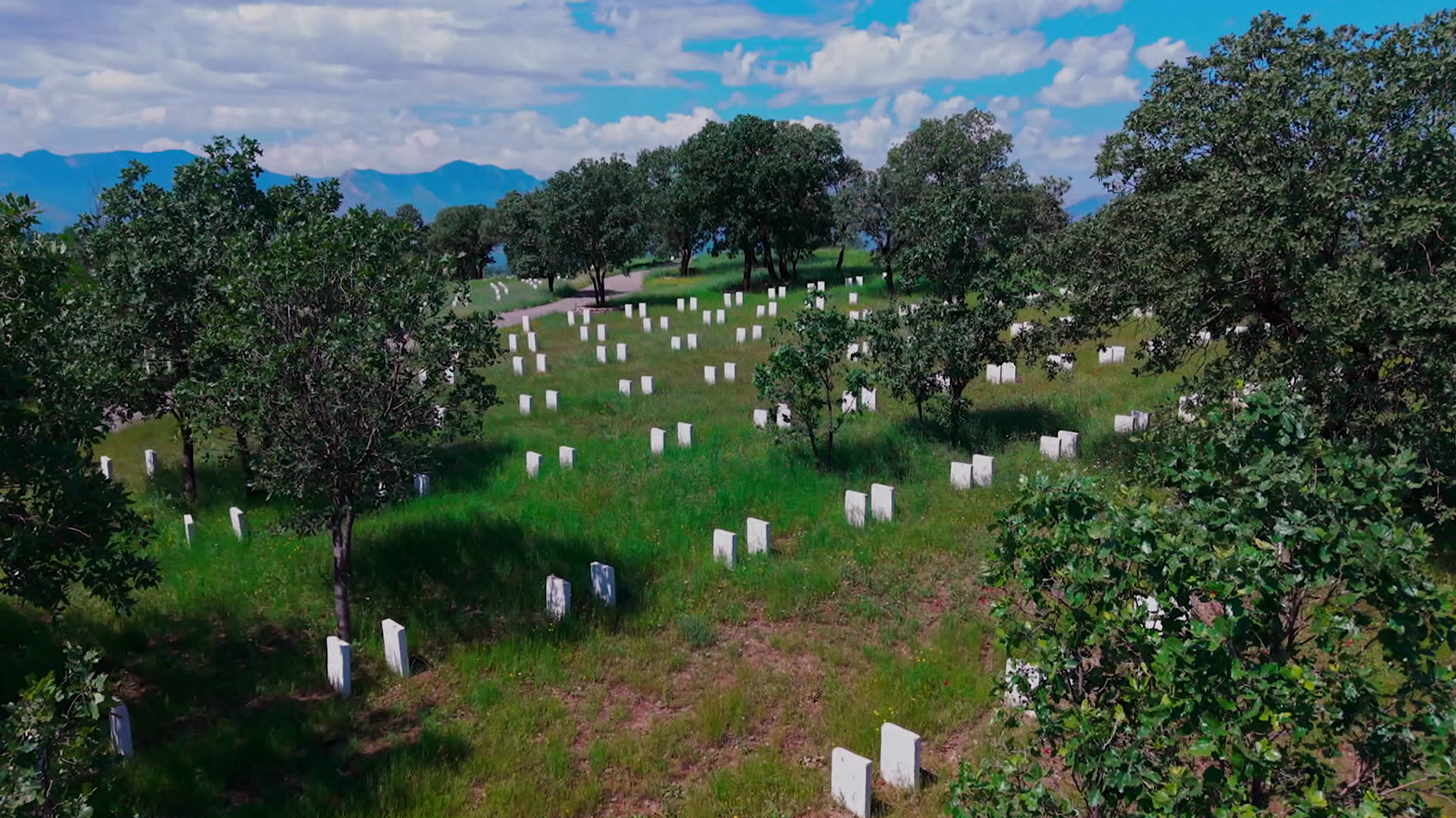
ERBIL (Kurdistan24) - History often measures nations through wars, political turning points, and treaties. Roots of Sacrifice, Kurdistan24's latest documentary, approaches the Kurdish experience from a different direction. Rather than concentrating solely on chronology or military events, the production asks what sacrifice has meant across generations and how that idea continues to shape Kurdish identity long after the battles themselves have ended.
Released around the anniversary of the Barzani Anfal campaign, the approximately 20-minute documentary positions remembrance not as an exercise in revisiting tragedy alone, but as an exploration of the values that have enabled Kurdish society to endure repeated attempts at destruction while preserving its cultural and national identity.
Producer Ali Fakher, speaking to Kurdistan24 English and in a Kurdistan24 interview about the film, described the project as an examination of the philosophical and human dimensions of sacrifice rather than a conventional historical account.

"The documentary 'Roots of Sacrifice' is far more than a mere historical chronicle," he said, explaining that it seeks to understand sacrifice as an enduring expression of devotion to homeland, identity, and dignity.
That perspective becomes the documentary's organizing principle.
The Anfal campaign, the chemical bombardments, the sacrifices of Peshmerga fighters, and the story of Halabja are presented not as isolated chapters of suffering but as interconnected moments in a broader national experience.
Together they illustrate how successive generations have responded to violence with persistence rather than surrender.
For Fakher, the homeland represents more than territory.
As reflected in the documentary's narrative, it is portrayed as a moral and spiritual inheritance whose preservation has demanded extraordinary sacrifices over decades. Against that vision stands what he characterizes as an "opposing worldview built upon coercion, destruction, and the erasure of identity."

The documentary argues that these competing visions extend beyond military confrontation. They concern fundamentally "different understandings of humanity" itself, one seeking "domination," the other grounded in "dignity, cultural continuity, and the determination to protect a people from disappearance."
Central to that narrative is what Fakher describes as the Barzan movement's tradition of "humanity and culture-building."
Rather than portraying Kurdish resistance solely through armed struggle, the documentary explores how resilience was also cultivated through education, ethics, community, and the preservation of collective memory.
According to the producer, these qualities enabled Kurdish society to emerge from repeated catastrophes without abandoning its aspirations for a better future.
That emphasis distinguishes Roots of Sacrifice from productions that focus exclusively on documenting atrocities. Fakher said one of the documentary's principal aims was to move beyond mourning by highlighting the capacity of Kurdish society to rebuild after the devastation of Anfal, chemical attacks, and years of conflict.
He explained that the project seeks to demonstrate how renewal can emerge from profound loss, presenting resilience as an active force rather than a passive consequence of survival.

The documentary's structure reinforces that message through four interconnected narrative pillars. It examines the Barzani Anfal campaign, the legacy of chemical attacks, sacrifice on the frontlines, and Halabja's transformation from a symbol of catastrophe into a community striving toward recovery and modern life.
Instead of treating these stories separately, the film presents them as parts of a continuous historical journey. Memory becomes the thread linking different generations, showing how experiences once regarded as distinct chapters continue to influence contemporary Kurdish society.
One of the documentary's most notable creative choices is its effort to bridge historical tragedy with the experiences of today's Peshmerga families. Fakher said this approach was intended to demonstrate that contemporary sacrifice cannot be understood apart from the century-long struggle that preceded it.
Among the stories featured is the family of Martyr Shahab, where three successive generations experienced different forms of sacrifice, from the Anfal era to later conflicts and, most recently, Shahab's own death while serving Kurdistan.
Another follows the family of veteran Peshmerga Kak Muzaffar, who was disabled after being wounded during the war against ISIS before later losing his son.
For Fakher, these accounts illustrate continuity rather than coincidence. They show how commitment to Kurdistan has often passed from one generation to the next, becoming part of family history as much as national history.

The producer also recalled conversations held during filming that ultimately remained outside the final cut because of the documentary's limited running time. Although some relatives chose not to appear on camera, they described sacrifice not in political terms but through deeply personal expressions of love, responsibility, and devotion to country.
One story left a particular impression.
Fakher recounted the account of a young Peshmerga who returned to duty before his leave had ended despite his wife's request that he remain home for two more days. He never returned, losing his life shortly afterward.
For the producer, such moments reveal the human choices that often lie behind the broader narrative of national sacrifice.
These intimate experiences ultimately reinforce the documentary's larger message. Rather than defining Kurdish history solely by persecution, Roots of Sacrifice portrays identity as something continually renewed through memory, resilience, and an enduring sense of collective purpose.
In doing so, the documentary offers audiences more than a reflection on the past.
It presents remembrance as a living responsibility, one that connects the victims of Anfal, survivors of Halabja, generations of Peshmerga, and young Kurds who continue to inherit both the burdens and aspirations of those who came before.
As Fakher observed, the film ultimately invites viewers on what he describes as a moral and spiritual journey. Its central argument is not simply that sacrifice shaped Kurdish history, but that preserving dignity, identity, and historical memory remains essential to shaping Kurdistan's future.
|
Summary Kurdistan24's documentary Roots of Sacrifice presents Kurdish history through the enduring ideals of sacrifice, identity and resilience. Producer Ali Fakher says the film links Anfal, Halabja and today's Peshmerga families to show how remembrance continues to shape Kurdistan's future. |