Iran Warns States Against Supporting U.S. Military Efforts as Regional Tensions Deepen
Iran's Khatam al-Anbiya Headquarters warned regional governments against serving as a "defensive shield" for the United States as renewed U.S. military threats add to an increasingly volatile Middle East security environment.
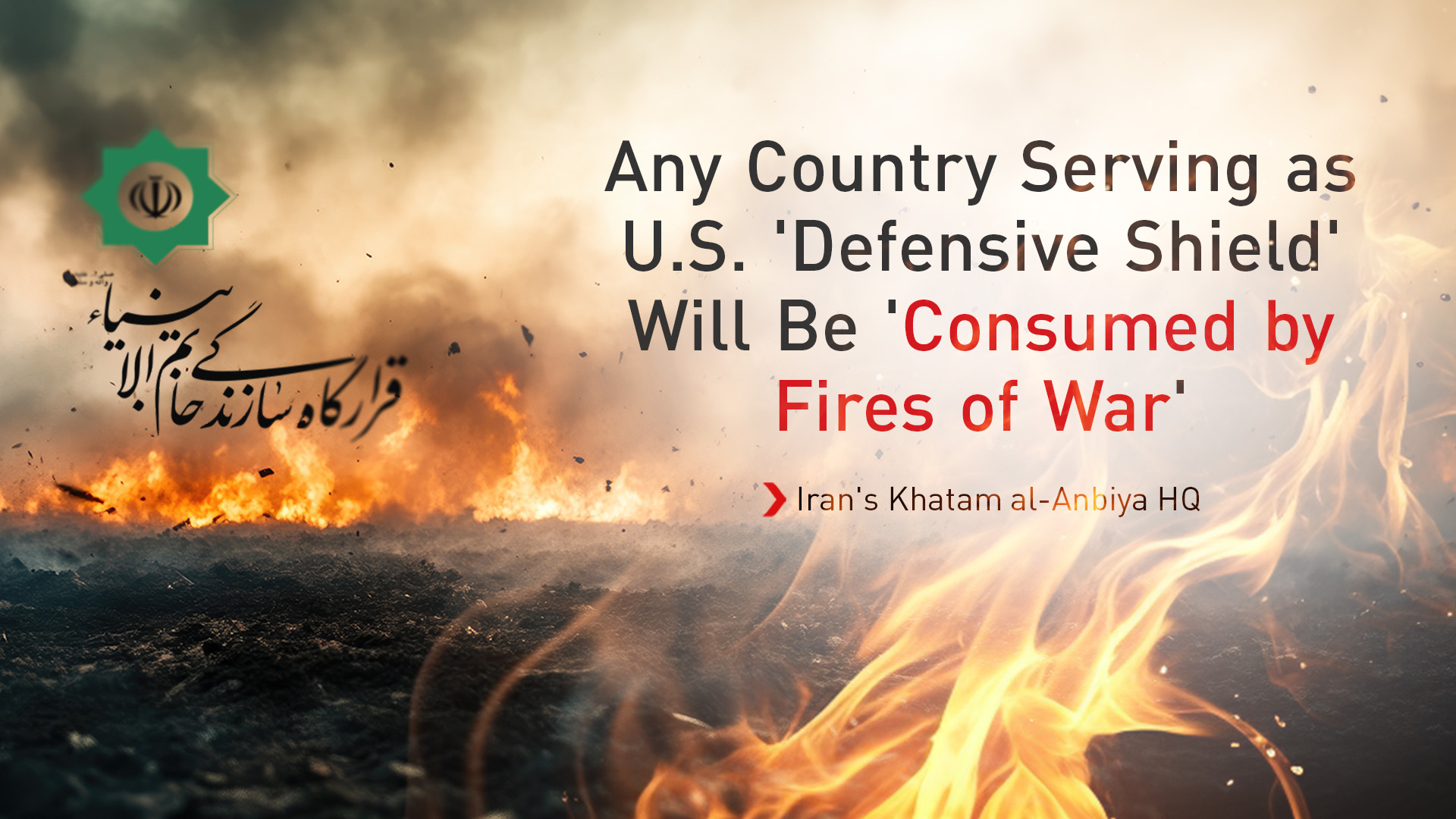
ERBIL (Kurdistan24) - Iran's Khatam al-Anbiya Central Headquarters has issued one of its strongest warnings in recent weeks to neighboring countries hosting American military assets, cautioning that governments acting as a "defensive shield" for the United States could find themselves drawn into a broader regional conflict.
The statement, delivered Saturday by Ali Abdollahi, commander of the Khatam al-Anbiya Central Headquarters, comes at a moment of heightened military and diplomatic tension.
It follows fresh warnings from U.S. President Donald Trump, who said Washington would hit Iran "very hard" if hostilities continue.
According to Agence France-Presse (AFP), U.S. media have also reported that the Trump administration has been considering additional military operations, including potential strikes on Iranian energy infrastructure, although AFP noted that no final decision had been announced.
Together, the two developments underscore how rhetoric from both Washington and Tehran has intensified following months of conflict, with each side signaling resolve while regional governments weigh the implications for their own security.
Abdollahi's statement was directed not only at the United States but also at Gulf countries that host American military forces or provide logistical support for U.S. operations.
His remarks suggested that Iran views such partnerships as extending Washington's military reach while increasing the exposure of regional states to the consequences of confrontation.
"The United States is utilizing their capital, wealth, critical infrastructure, and strategic resources as a defensive shield for its military presence," Abdollahi said, arguing that Washington prioritizes "its own military capabilities and the security of Israel over the well-being of the region."
He urged governments across the region to reassess their relationships with the United States, warning that failure to do so could carry significant risks.
"Otherwise," he said, "any country that positions itself as a defensive shield for the United States will be consumed by the flames of war."
The statement reflects a familiar element of Iran's strategic messaging: seeking to discourage deeper security cooperation between Washington and regional partners by portraying American military deployments as a source of instability rather than protection.
Abdollahi also argued that the recent conflict had demonstrated what he described as a shift in the regional balance of power.
He credited Iran's armed forces and the so-called "Axis of Resistance" with altering military dynamics, while accusing the United States and Israel of relying on infrastructure and resources belonging to regional states to sustain their operations. Those assertions reflect Iran's official position and have not been independently verified.
His remarks arrived as Washington continued to signal the possibility of additional military action.
According to AFP, Trump said during a Cabinet meeting at Camp David that the United States would respond forcefully to Iran, declaring, "We'll be hitting him very hard."
AFP also reported that U.S. media outlets cited unnamed officials as saying Washington had been examining options for renewed strikes, including attacks on energy-related infrastructure.
The reports further indicated that Israel and the United States had discussed possible coordinated operations, though no authorization had been publicly confirmed.
Iranian officials have also sought to frame potential attacks on the country's energy sector as part of a broader effort to undermine civilian life rather than solely degrade industrial capacity.
Speaking on Saturday, Government Spokesperson Fatemeh Mohajerani said strikes on refineries, fuel depots, pipelines and power facilities were intended to disrupt the daily lives of Iranians, arguing that energy security had become inseparable from national security during the current conflict.
Mohajerani said Iran's oil sector had endured what she described as its most difficult period in recent weeks, citing strikes on the South Pars facilities and the Tehran refinery that she said had reduced domestic fuel production.
She also acknowledged mounting pressure on fuel distribution, saying attacks on storage facilities in Tehran and Alborz had diminished storage capacity and damaged fuel transmission infrastructure serving the capital and northern provinces.
According to the spokesperson, damage to refineries and fuel depots has complicated transportation of petroleum products across the country, while naval restrictions and wartime trade disruptions have further constrained imports, placing additional pressure on gasoline supplies.
"In this environment," Mohajerani said, "the gasoline supply process must be re-evaluated within the framework of managing the imposed war and safeguarding the nation's energy security."
Her remarks complement Tehran's broader messaging that critical infrastructure has become a central front in the conflict, reinforcing Iranian assertions that attacks on energy facilities carry consequences extending beyond military objectives to the country's economy and civilian resilience.
Against that backdrop, Iran's warning serves not only as a response to Washington but also as a message to governments across the Gulf that maintain longstanding defense partnerships with the United States.
The broader regional landscape helps explain why Tehran's language carries significance beyond bilateral relations with Washington.
As the Associated Press (AP) has reported, the conflict has increasingly spread across multiple theaters, illustrating how military pressure in one area can trigger responses elsewhere.
The Strait of Hormuz remains central to that dynamic because of its importance to global energy shipments and because it has become a focal point of confrontation between Iran and the United States.
AP reported that Iran-backed groups operating across the region have become increasingly active as tensions have intensified.
In Yemen, Houthi forces have expanded pressure on Saudi Arabia and shipping routes linked to the Red Sea.
Elsewhere, Iraq has emerged as another arena where competing U.S. and Iranian interests intersect, with armed groups aligned with Tehran and American forces operating in close proximity.
Jordan has also been drawn into the crisis through Iranian missile attacks linked to the broader confrontation, while Egypt has faced security concerns following a drone attack on vessels near one of its Mediterranean ports.
In Lebanon, AP noted that a fragile ceasefire involving Hezbollah has largely held, but the situation remains sensitive as negotiations over security arrangements continue.
Taken together, those developments illustrate how the confrontation has expanded well beyond direct exchanges between the United States and Iran.
Regional governments increasingly find themselves balancing strategic partnerships with Washington against the risk that their territory, infrastructure or military facilities could become entwined in a wider conflict.
For Gulf states in particular, that balancing act has become more complex.
Many host American bases or maintain extensive defense cooperation with the United States, yet they have also sought to preserve diplomatic channels with Tehran and avoid becoming direct participants in regional hostilities.
It is within that context that Abdollahi's latest statement appears designed to reinforce Iran's deterrence messaging.
By linking American military partnerships with the prospect of regional escalation, Tehran is signaling that the security calculations of neighboring states are inseparable from the broader U.S.-Iran confrontation.
As both capitals continue to exchange increasingly forceful warnings, the political temperature across the Middle East remains elevated.
While Washington has emphasized its readiness to respond militarily and Tehran has warned against regional cooperation with U.S. operations, the latest statements highlight how the confrontation is extending beyond the two adversaries themselves, placing neighboring states at the center of an increasingly complex regional security landscape.