Israel Raises Security Objections to Trump-Brokered Hamas Disarmament Deal
Netanyahu's office says Israeli forces will not withdraw from Gaza before Hamas fully surrenders its weapons despite U.S.-backed ceasefire framework
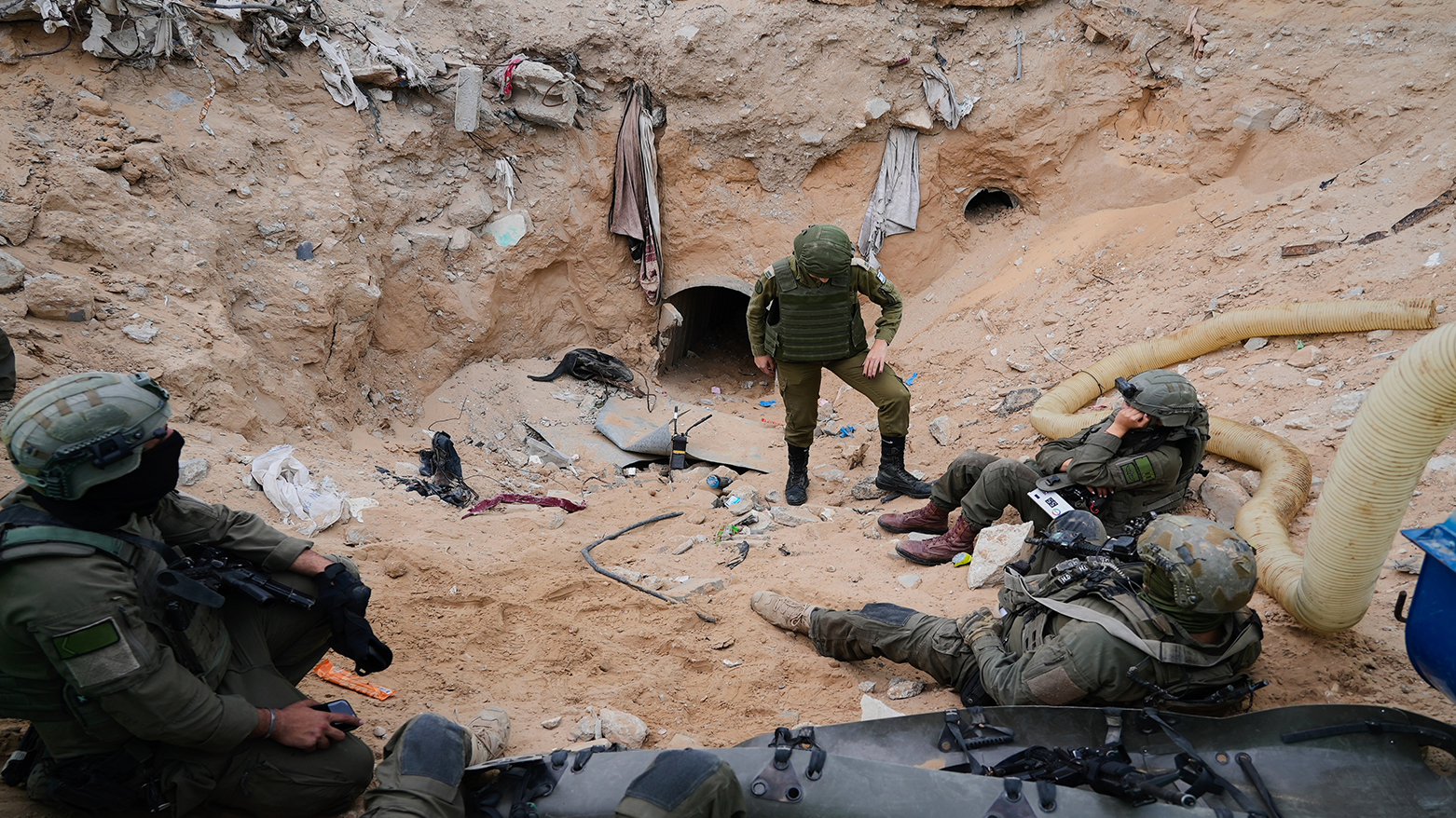
ERBIL (Kurdistan24) — Israel has conveyed "serious security concerns" to the White House over a U.S.-brokered agreement that would see Hamas disarm as part of a phased ceasefire plan, insisting that its forces will not withdraw from Gaza until the Palestinian militant group has completely surrendered its weapons.
The remarks, made by Doron Spielman, spokesperson for Israeli Prime Minister Benjamin Netanyahu's office. Speaking to The Associated Press, Spielman said Israel's intelligence assessment indicates that Hamas remains committed to rebuilding its military capabilities rather than genuinely demilitarizing, despite the group's recent announcement that it had agreed to begin disarming under the U.S.-brokered framework.
"Our assessment is that if we redeploy before Hamas is truly disarmed, it will quickly expand its presence throughout Gaza, rebuild its terrorist infrastructure, once again threaten Israeli communities, and seek to carry out another Oct. 7-style attack," Spielman said, referring to the Hamas-led assault on southern Israel in October 2023 that triggered the war.
"Disarming means physically giving up the weapons. Nothing less," he added.
The comments represent one of the first public responses from Netanyahu's office since U.S. President Donald Trump announced the agreement last week, describing it as a breakthrough toward ending the nearly three-year conflict.
Under Trump's reported 20-point ceasefire plan, Hamas would surrender its weapons, dismantle its extensive tunnel network, and allow the establishment of a new Palestinian technocratic administration in Gaza.
The proposal also envisions a phased withdrawal of Israeli forces, the deployment of an international security force, and the reconstruction of the war-ravaged enclave.
However, Hamas' disarmament has remained one of the most contentious issues throughout negotiations, repeatedly stalling efforts to reach a lasting ceasefire.
According to a copy of the agreement obtained and verified by The Associated Press, weapons held by the Hamas-run police would be transferred to the U.S.-backed National Committee for the Administration of Gaza after the committee assumes control in the territory.
The agreement further outlines a gradual process to decommission and store heavy weapons, dismantle military production facilities and destroy tunnel infrastructure following the arrival of the Palestinian administration and international forces. These steps would be linked to phased Israeli military withdrawals.
Israeli officials, however, remain unconvinced that the arrangement sufficiently addresses their security concerns.
Spielman said Israel's position is based on intelligence assessments indicating that Hamas continues recruiting fighters, rebuilding its military infrastructure and rearming despite months of negotiations.
While expressing appreciation for Trump's commitment to Israel's security and efforts to secure a durable resolution, Spielman stressed that Israeli military redeployment would only occur after Hamas has verifiably surrendered all of its weapons.
The White House declined to provide additional comment on Sunday regarding Israel's assessment that Hamas continues rebuilding its military capabilities.
According to U.S. officials who briefed reporters on the agreement last week, Israel was consulted throughout every stage of the negotiations and was not being asked to undertake commitments beyond those included in the ceasefire and hostage-release agreement reached last October.
The exact concerns conveyed by Israel to the White House remain unclear.
People familiar with the negotiations told The Associated Press that Israel also communicated reservations through former British Prime Minister Tony Blair, who serves on Trump's Board of Peace.
Among Israel's reported requests is the freedom to continue conducting military operations inside Gaza if necessary.
Another source familiar with the negotiations said Israeli officials also opposed any role for Qatar and Türkiye in verifying implementation of the agreement and insisted that Hamas' confiscated weapons should be destroyed rather than merely stored after collection.
Israel currently controls more than 60% of the Gaza Strip, according to Israeli officials, while much of the territory under its control has been heavily damaged and largely depopulated. Most of Gaza's approximately two million residents remain concentrated in the remaining areas, many living in overcrowded tent camps and devastated neighborhoods.
Political considerations may also complicate implementation of the agreement. Netanyahu faces parliamentary elections in October, with members of his far-right governing coalition urging him to maintain military pressure on Hamas and preserve an Israeli security presence in Gaza, while opposition parties accuse him of failing to prevent the October 7, 2023, attack.
The Hamas-led assault killed about 1,200 people in Israel, most of them civilians, and saw 251 people taken hostage.