Prime Minister Masrour Barzani to Attend 12th Anniversary Ceremony Honoring Sinjar Genocide Victims
Commemoration marks 12 years since the ISIS assault on Sinjar as survivors continue to seek justice, safe return, and lasting stability
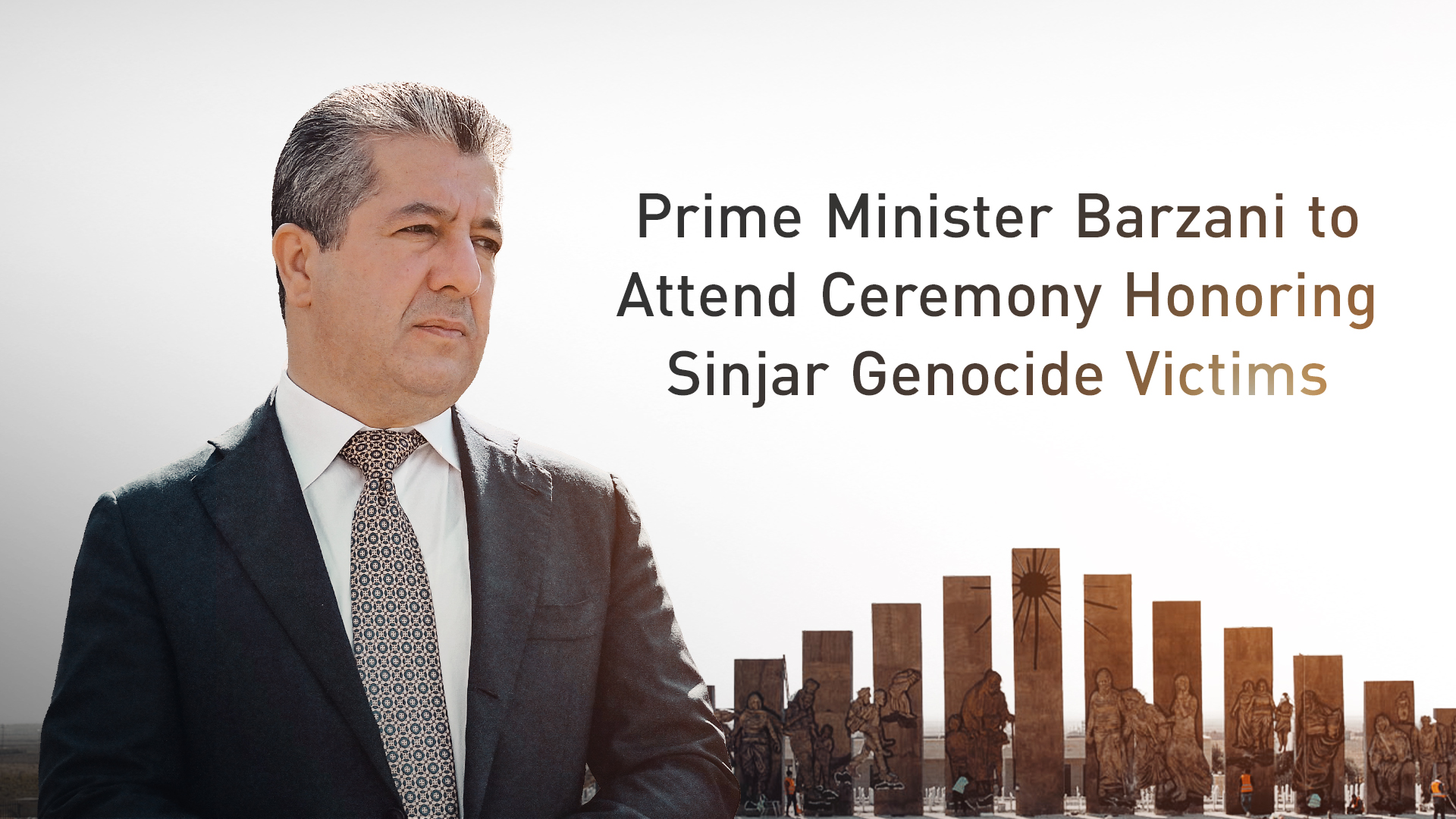
ERBIL (Kurdistan24) - Prime Minister Masrour Barzani is scheduled to attend an official ceremony on Monday marking the 12th anniversary of the Sinjar genocide, commemorating one of the darkest chapters in the history of the Ezidi (Yazidi or Yezidi) community and reaffirming the importance of remembering the victims while confronting the challenges that continue to shape Sinjar's future.
The anniversary comes twelve years after ISIS swept into Sinjar on Aug. 3, 2014, launching an assault that left thousands dead or missing, forced hundreds of thousands from their homes, and inflicted lasting trauma on the Ezidi community. While the ceremony honors those who lost their lives and those who survived, it also highlights the continuing search for justice, recovery, and durable stability more than a decade after the atrocities.
Although ISIS no longer controls Sinjar, many of the conditions created by the genocide remain unresolved. Large numbers of displaced Ezidis continue to live in camps across the Kurdistan Region, thousands of families are still searching for missing relatives, and reconstruction has advanced slowly amid persistent governance and security challenges that have delayed large-scale returns.
The anniversary therefore carries significance beyond remembrance. It reflects an ongoing national effort to preserve the memory of the genocide while drawing renewed attention to the unfinished work of rebuilding communities and restoring confidence among survivors.
The ceremony commemorates the events that unfolded after ISIS captured Mosul and rapidly advanced into Sinjar, overwhelming the district and targeting the Ezidi population through mass killings, forced displacement, and the systematic abduction of women and girls. As villages fell, thousands fled toward Mount Sinjar, which became a refuge for civilians trapped under desperate humanitarian conditions before many eventually reached safety through Rojava and later the Kurdistan Region.
Official figures cited by Kurdistan24 show that more than 5,000 Ezidis were killed during the genocide, while approximately 2,745 children were orphaned. The attack also left widespread destruction across Sinjar, with homes, public infrastructure, and religious sites severely damaged.
Sinjar was liberated on Nov. 13, 2015, when Kurdish Peshmerga forces, under the direct command of President Masoud Barzani and backed by International Coalition air support, recaptured the district. Yet military victory did not bring an end to the humanitarian crisis.
According to Kurdistan24 reporting, many survivors remain unable to return because of damaged infrastructure, limited public services, fragmented security arrangements, and unresolved governance issues that continue to impede reconstruction. Thousands also remain displaced across the Kurdistan Region as efforts to restore normal life have progressed unevenly.
The anniversary likewise underscores the enduring human cost of the genocide. According to the latest figures cited by Kurdistan24, thousands of Ezidis who were abducted during the 2014 assault remain missing, leaving families searching for answers more than a decade later.
For survivors, remembrance remains inseparable from demands for accountability. Displaced Ezidi Bir Tahsin said, "The Iraqi government must seriously intervene to find a fundamental solution to the situation of the Ezidis and end our suffering," while survivor Nuriya Hussein, who is still searching for four missing family members, said, "All I ask and hope for is that they are rescued, or that we learn anything about their fate."
As Prime Minister Masrour Barzani joins the official commemoration, this year's anniversary stands as both a tribute to those who were killed and displaced and a renewed reminder that justice, reconstruction, safe returns, and lasting stability for Sinjar remain unfinished priorities.