Runaki Program Reaches Kifri as Push for 24-Hour Electricity Expands
Implementation teams have begun work in Kifri as the Kurdistan Regional Government expands its flagship Runaki Program, aiming to deliver uninterrupted electricity, reduce reliance on private generators, and modernize public services across the Region.
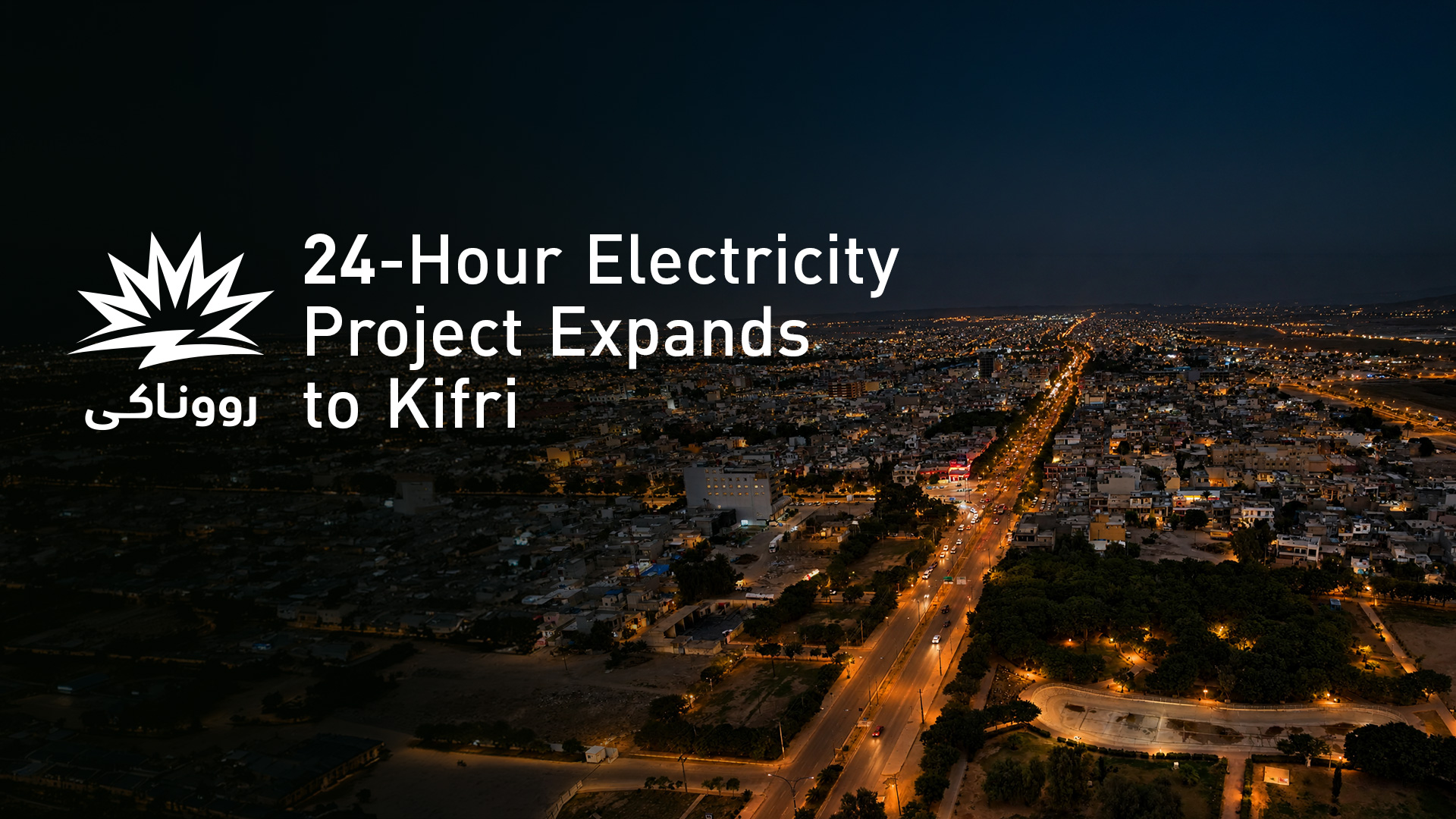
ERBIL (Kurdistan24) - The Kurdistan Regional Government's flagship Runaki Program reached Kifri on Tuesday, as implementation teams began work on what residents and officials view as a significant step toward providing uninterrupted electricity to one of the hottest parts of the Kurdistan Region.
According to a Kurdistan24 reporter on the ground, work officially commenced across the district as crews launched the latest phase of the Region-wide electricity reform, an initiative expected to gradually replace hundreds of privately operated neighborhood generators in Kifri and surrounding communities.
For residents of the Garmiyan Independent Administration, where summer temperatures place exceptional demands on electricity consumption, the arrival of the Runaki Program represents more than another infrastructure project.
It signals the prospect of dependable, around-the-clock electricity after years of balancing public supply with costly private generator subscriptions that often failed to meet household needs during periods of extreme heat.
The transition is expected to unfold gradually as the new system is introduced, with neighborhood generators being phased out as continuous electricity service becomes available.
Local residents told Kurdistan24 that the program arrives at a particularly important time for the district, where electricity demand rises sharply during the summer months.
Many described the cost of relying on private generators as a persistent financial burden, saying the limited amperage typically supplied has often been insufficient to operate cooling appliances for extended periods.
For many households, they said, uninterrupted electricity promises not only greater comfort but also relief from recurring monthly expenses associated with generator services.
The rollout in Kifri follows years of investment that laid the groundwork for the program's expansion into the district.
Over the past seven years, the Kurdistan Regional Government has focused on strengthening electricity infrastructure across remote parts of Garmiyan, extending the national grid to villages that had long faced limited access to reliable power.
According to the KRG, more than 40 remote and mountainous villages within the Garmiyan Independent Administration were connected to the national electricity network despite the logistical challenges posed by difficult terrain and high construction costs.
Those investments ensured that every village in the administration now has access to the public grid, creating the conditions necessary for the Runaki Program to expand beyond larger urban centers.
That earlier infrastructure work has become an important foundation for the current phase of reform.
Rather than introducing isolated improvements, the Runaki Program builds upon an electricity network that has already been extended throughout the district, allowing implementation teams to focus on transitioning communities toward uninterrupted service.
The Kifri rollout also represents another milestone in one of the Kurdistan Regional Government's most ambitious public-service initiatives.
Launched by the KRG's Ninth Cabinet, the Runaki Program aims to provide uninterrupted, affordable electricity to homes and businesses throughout the Kurdistan Region by the end of 2026.
Beyond increasing electricity availability, the initiative seeks to modernize the entire power sector through upgraded infrastructure, smart metering, digital billing systems, and improved management of electricity consumption.
According to the KRG, the broader reform is designed to reduce dependence on neighborhood diesel generators that have long filled gaps in electricity supply while contributing to higher household costs, air pollution, and noise in residential areas.
Government figures indicate that the program has already expanded substantially across the Kurdistan Region.
More than 5.5 million residents and approximately 153,000 businesses now receive uninterrupted electricity through the Runaki Program, while more than 5,900 private neighborhood generators have been retired as additional districts transition to continuous public supply.
Officials say those changes have improved electricity reliability for homes, schools, hospitals, and businesses while reducing environmental impacts associated with diesel-powered generators.
The modernization effort also extends beyond physical infrastructure.
Through the introduction of smart meters, digital billing, and electronic customer services, the KRG says the Runaki Program forms part of a wider strategy to improve public administration, encourage more efficient energy use, and establish a financially sustainable electricity system capable of supporting long-term economic growth.
Reliable electricity is also expected to strengthen the business environment by reducing operating costs for commercial enterprises that have historically depended on expensive backup generators to compensate for inconsistent power supplies.
Environmental improvements have emerged as another defining feature of the initiative.
As neighborhood generators are gradually decommissioned, communities connected to the Runaki Program have reported reductions in emissions and noise pollution alongside improvements in the overall quality of urban life.
The program has also attracted international attention. The U.S. Consulate General in Erbil has described the initiative as an important contribution to strengthening the Kurdistan Region's energy security, while Iraq's Ministry of Electricity has cited Kurdistan's electricity model as an experience worthy of study.
For Kifri, however, the significance of the rollout is measured less in policy than in everyday life.
Residents say dependable electricity would ease the pressures of summer, reduce household expenses, and eliminate dependence on generator schedules that have shaped daily routines for years.
Their enthusiastic response reflects expectations that uninterrupted electricity will improve living conditions across one of the Region's warmest districts.
As implementation teams continue their work, the arrival of the Runaki Program in Kifri marks another step toward the Kurdistan Regional Government's goal of extending 24-hour electricity across the entire Kurdistan Region by the end of 2026.
More broadly, it illustrates how years of investment in grid expansion are now being translated into a wider transformation of public services, bringing continuous electricity, and the prospect of a future less reliant on private generators, to another community.