North Korea Warns Japan Against Military Buildup, Cites 'War State' Transformation
Kim Jong Un's sister says Pyongyang will expand military options as Tokyo strengthens defense posture amid rising regional tensions
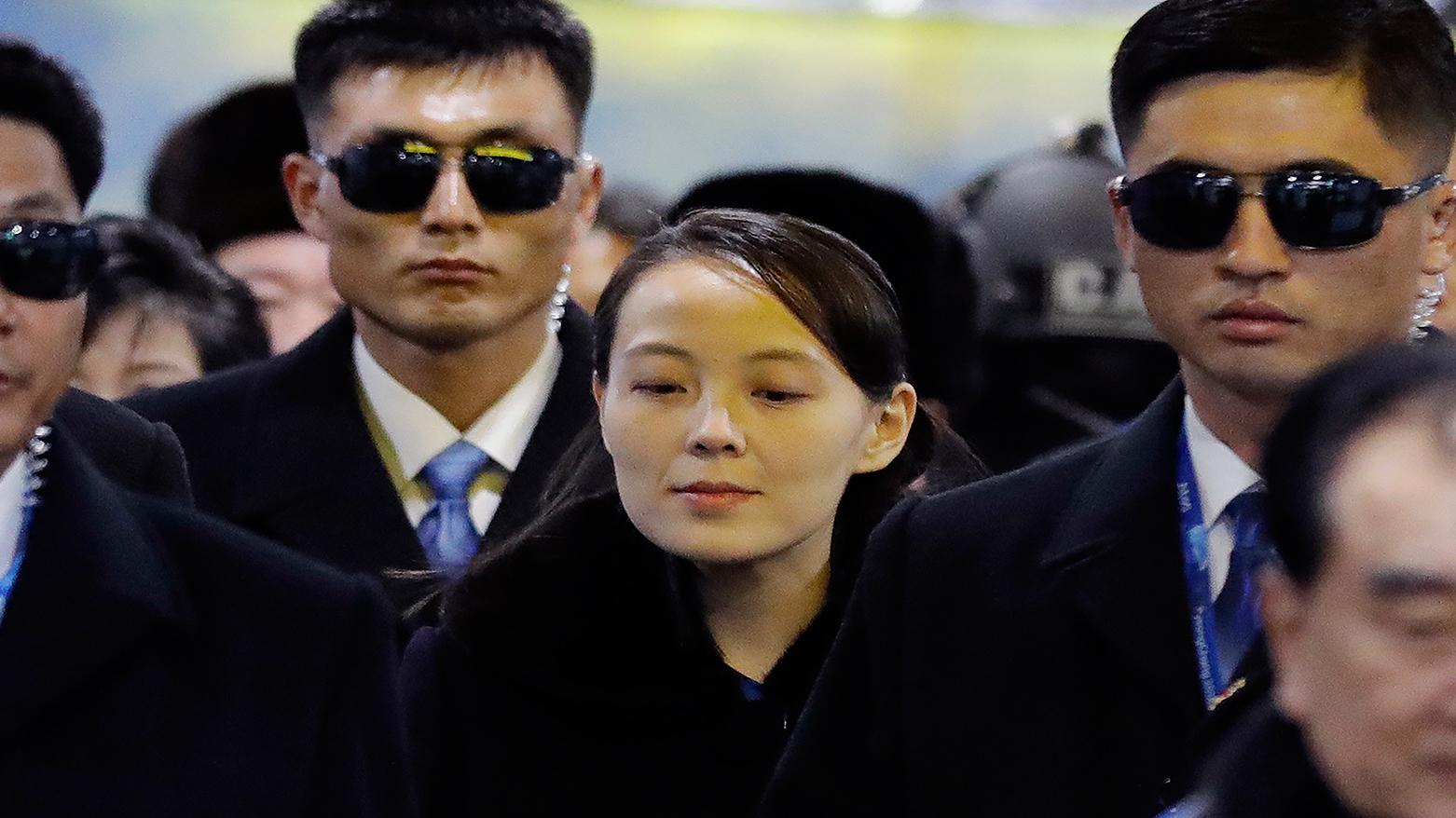
ERBIL (Kurdistan24) — North Korea on Wednesday accused Japan of transforming into a "war state" and warned that Pyongyang would consider additional military measures in response to Tokyo's expanding defense capabilities.
Kim Yo Jong, the influential sister of North Korean leader Kim Jong Un, issued the warning in a statement carried by the state-run Korean Central News Agency (KCNA), criticizing Japan's recent military buildup and closer security cooperation with the United States.
"The leadership will set up additional military options which are obviously due to Japan's transformation," Kim said.
"Japan, a war criminal state, is accelerating its transformation into a war state," she added.
Her remarks came a day after Japanese Defense Minister Shinjiro Koizumi said the country's military must strengthen its capabilities with a "sense of urgency and crisis," following the release of a government defense assessment highlighting growing security threats from China, Russia, and North Korea.
Kim pointed to Japan's recent test launch of U.S.-made Tomahawk long-range cruise missiles and its participation in U.S.-led military exercises in the Philippines in May as evidence of what she described as Washington's support for Tokyo's "dangerous military moves" in the Pacific.
She also accused Japan of seeking to develop the capability to conduct preemptive military strikes.
"Japan is moving to formulate the possession of the capability for preemptive attack," Kim said. "We will never remain a passive onlooker to the military evolution of Japan which may pose a grave threat."
Japan's Ministry of Defense declined to respond directly to Kim's accusations but defended the country's military policy.
"Our defense capabilities remain the bare minimum and are not meant to threaten other countries," the ministry said in a statement to AFP.
"It is not a defense intended to wage wars, but to prevent new wars, strictly based on self-defense and within the framework of our pacifist Constitution and international law," it added.
The ministry also confirmed that Japan conducted its first test of a Tomahawk cruise missile last week and reiterated plans to acquire up to 400 Tomahawk missiles by the end of the 2027 fiscal year.
Japan has gradually expanded its military capabilities in recent years, moving away from the strictly pacifist security posture it adopted after World War II.
Tokyo has increased defense spending, strengthened military partnerships with allies, and deployed missile systems to remote southwestern islands amid growing regional security concerns.
Japan raised its military expenditure by 9.7% to $62.2 billion in 2025, equivalent to 1.4% of its gross domestic product, marking its highest defense spending as a share of GDP since 1958.
The historical legacy of Japan's colonial rule over the Korean Peninsula from 1910 until its surrender in 1945 continues to shape relations between Tokyo and both North and South Korea.
"If the descendants of militarism, who have inherited the genes of cunning and aggression, have seized deadly weapons in their hands, something unpleasant will happen," Kim said in her statement.
China, North Korea's closest ally, has also voiced concern over what it describes as a resurgence of Japanese militarism.
Relations between Beijing and Tokyo have deteriorated further since Japanese Prime Minister Sanae Takaichi suggested in November that military action by China against Taiwan could warrant a response from Japan's armed forces.
China claims self-governed Taiwan as part of its territory and has not ruled out using force to bring the island under its control.
North Korea, meanwhile, has continued to expand its military capabilities and has repeatedly declared itself an "irreversible" nuclear weapons state since denuclearization talks between Kim Jong Un and U.S. President Donald Trump collapsed in 2019 over disagreements on sanctions relief and the scope of Pyongyang's nuclear disarmament.