Record Heat Grips Europe as Wildfires and Drought Intensify
France and Spain have faced their worst fires in living memory this summer
ERBIL (Kurdistan24) — The average temperature across Western Europe reached 21.62C during June and July, surpassing the previous record set in 2022, according to the European Union's global warming monitor’s statement published on Monday
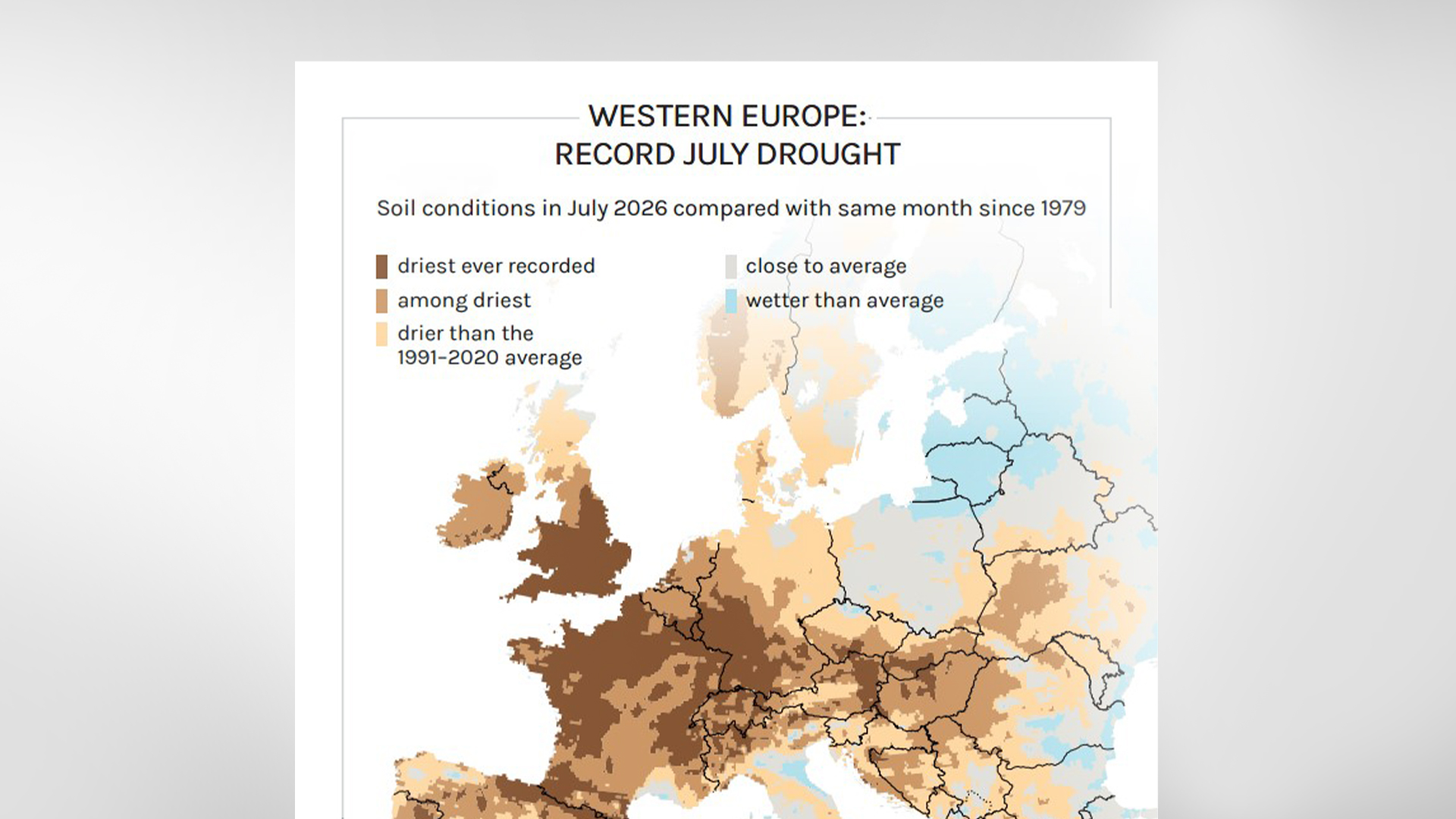
Copernicus said the unusually long-lasting heat has been a defining feature of the summer so far. Soil moisture levels were also significantly lower than they were in July 2022, when Western Europe faced a severe drought.
Samantha Burgess from the European Centre for Medium-Range Weather Forecasts said: “This is a clear example of how climate change is intensifying heat extremes, with heat and drought increasingly reinforcing one another.”
Wildfires Spread Across the Region
The combination of high temperatures and dry conditions has created favorable conditions for wildfires across Europe. France and Spain have faced their worst fires in living memory this summer. Other parts of Europe, as well as northwestern United States and Canada, have also experienced serious fires.
Scientists say extreme weather conditions that increase the risk of fires are becoming more frequent in Europe as the climate changes.
Rivers Fall to Unusually Low Levels
The dry conditions have affected several western and central European countries, including France, Spain, Austria, Hungary, the United Kingdom, Ireland and parts of Iceland. River levels have also fallen unusually low, with the Seine, Rhine and Danube among the most affected.
The situation has disrupted transport, irrigation and energy production in several European countries.
Record Heat Reaches the Oceans
The heat has also reached the world’s oceans, which recorded their highest temperatures for a second consecutive month in July. Global average sea surface temperatures reached 20.96C, breaking the previous record from 2023.
Parts of the Mediterranean and Atlantic were unusually warm. Carlo Buontempo, Director of Copernicus, said the developing of El Nino in the pacific is likely a major factor behind the record temperatures.
"We are now facing a very large El Nino; possibly unprecedented in terms of amplitude. It is clear that the contribution coming from the tropical Pacific becomes quite important," Buontempo told reporters on August 5.
El Nino is the warm phase of a natural climate cycle that raises ocean temperatures in the tropical pacific and can affect extreme weather, including droughts and floods around the world. It also adds heat to a planet already warmed by the burning of fossil fuels.
Global Temperature Continues to Rise
The last 11 years have been the hottest on record. “We have not seen a climate that warm during our lifetime, and very possibly our civilization,” said Buontempo.
He added: “And the main driver for this warming—as we know—are the greenhouse gases”. The oceans absorb most of the extra heat produced by human carbon emissions and help regulate the climate.
However, environmental specialists suggest that warmer seas can also contribute to stronger storms and rainfall and cause coral bleaching. Copernicus uses billions of satellite and weather measurements from land and sea to track the climate, with records dating back to 1940.
The Impact on Europe's Future Budget Planning
Climate change and global warming have always been a crucial issue for the European Union countries during the past couple of decades, topping their meetings and conferences’ agendas. However, having the impacts of this global warming knock their doors very quickly and harshly like this was not clearly foreseen.
France, for example, launched its third National Climate Adaptation plan in 2025 to prepare for a possible 4C rise by 2100. According to France’s ministry for Ecological Transition, the plan includes €300 million for the Barnier Fund, €260 million from the Green Fund and €1 billion in water-agency funding.
Across the EU, the European Commission estimates that around €70 billion a year until 2050 will be needed for climate adaptation, with funding going toward areas such as infrastructure, ecosystems and food security.
The Commission also says climate risks are becoming concerns for Europe’s security and economy.
Environmental experts suggest these impacted European countries should think of investing more in preventive measures, such as allocating more funds to renewable energy, and better management of water resources rather than continuing to spend funds on reactive measures to disasters caused by the climate change, such as allocating additional funds to rescue teams, firefighters, and additional medical teams.
Raz Zaito Toffiq contributed to this article