Türkiye’s New Peace Law Raises Questions Over PKK Leaders and Ocalan
The Turkish Parliament has approved a 12-article law linked to the peace process, while attention now turns to the disarmament timeline, the fate of senior PKK figures
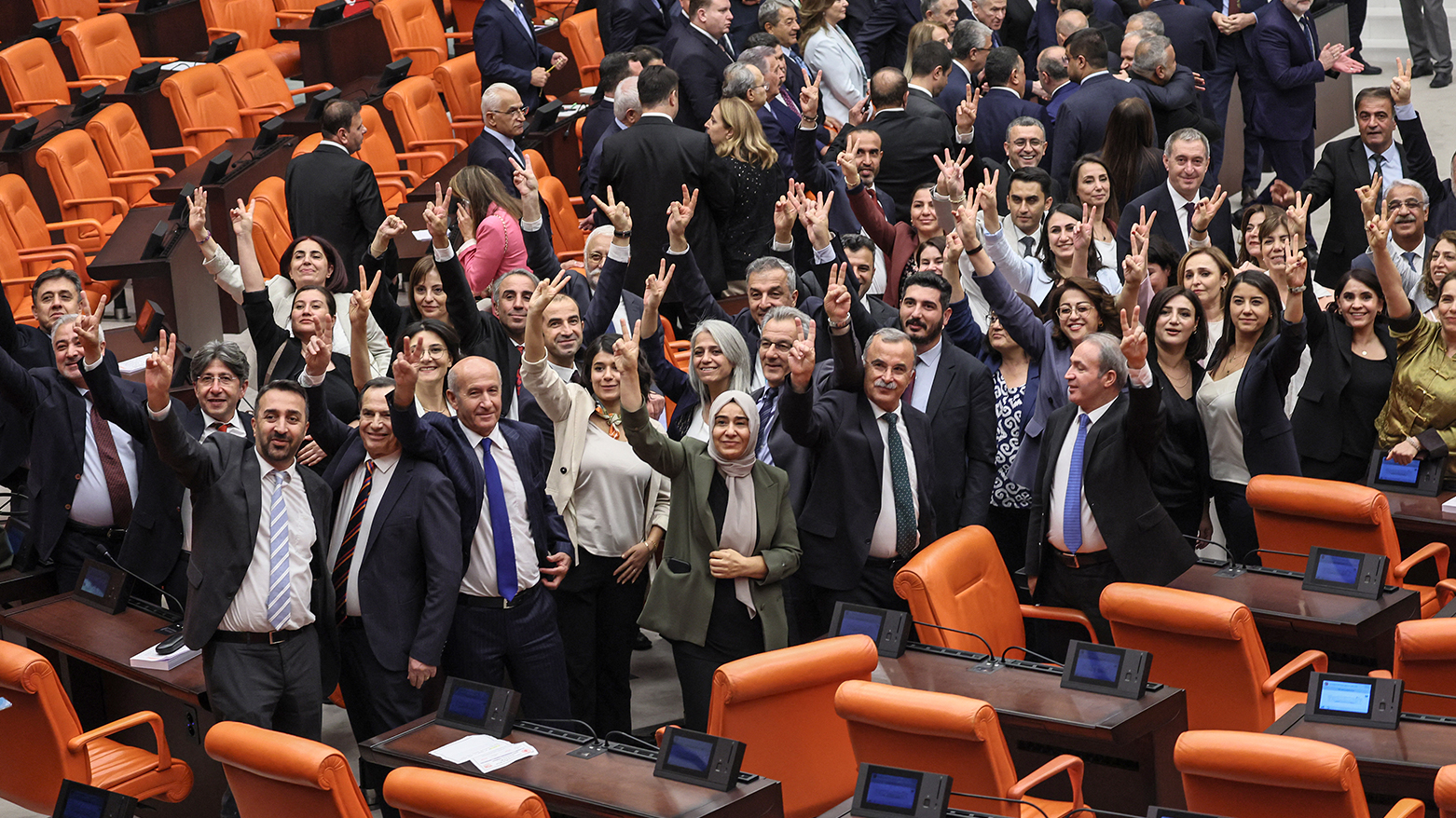
ERBIL (Kurdistan) - Türkiye’s Parliament has approved a special law linked to the peace process and the return of members of the Kurdistan Workers’ Party (PKK), shifting attention toward the country’s security institutions and National Security Council as they determine the timeline for the group’s disarmament process.
According to Turkish news agency T24, the disarmament process is expected to be implemented at an estimated rate of 80 percent over the next two to three months, potentially paving the way for the National Security Council to make a final decision on when the return of armed members can begin.
Under the law, an oversight body will be established under the chairmanship of the vice president and with the participation of the ministers of Justice, Interior, Foreign Affairs and Defense, as well as the head of the National Intelligence Organization (MIT).
The body will be tasked with monitoring developments on the ground in Iraq, Iran and Syria.
According to the same source, more than 800 founders and veteran cadres of the PKK will not be eligible to benefit from the law, particularly those who were sentenced to life imprisonment before 2005 or were convicted of intentional homicide.
In addition, around 300 senior PKK leaders will reportedly be unable to return and are expected to remain in an area of Iraq without carrying out organizational activities.
As the process moves forward, the next stage is also expected to include a possible transfer of Abdullah Ocalan, the imprisoned leader of the PKK, to a new location on Imrali.
The report also said journalists and representatives of civil society organizations could be allowed to visit him.
On Monday, Aug. 10, 2026, following intensive discussions, the Turkish Parliament put the “Law on Strengthening National Solidarity and Social Unity” to a vote.
Of the 562 lawmakers present, 468 voted in favor of the proposal, while 88 voted against it. Six votes were recorded as blank or neutral.
The approval came after a year of work by the commission overseeing the peace process, during which nearly 140 figures were heard and several closed-door meetings were held.
The proposal consists of 12 articles and was submitted under the title “Law Proposal on Strengthening National Solidarity and Social Unity.”
With the law approved, attention now turns to the practical implementation of the disarmament process and the decisions expected from Türkiye’s security institutions and National Security Council.
The coming two to three months are expected to be a key period for determining how much of the disarmament process is implemented and what steps will follow regarding PKK members and Abdullah Ocalan.