Powerful 7.7 Quake Hits Indonesia, Killing 20
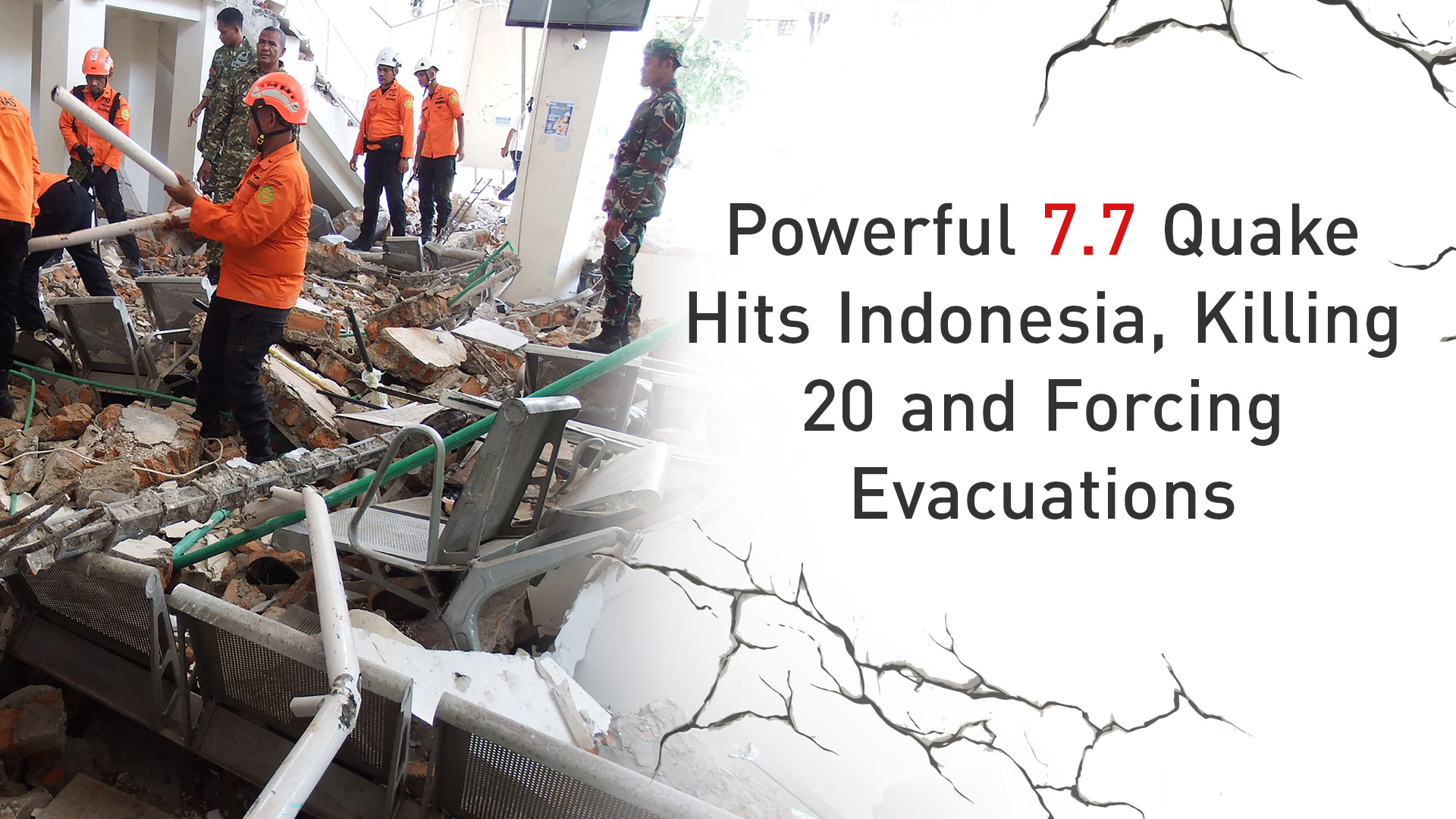
Rescuers search collapsed buildings for survivors after a powerful offshore earthquake triggered tsunami fears and mass evacuations across Flores.
ERBIL (Kurdistan24) - At least 20 people were killed after a powerful 7.7-magnitude earthquake struck off Indonesia's Flores Island on Saturday, sending thousands of residents fleeing to higher ground as authorities initially warned of a possible tsunami.
Rescue teams were searching collapsed buildings and damaged areas for survivors, while landslides cut off several roads and complicated access to some of the hardest-hit communities.
Fathur Rahman, a rescue official, told Agence France-Presse (AFP) that six people were injured and two others remained trapped under rubble.
"Our focus will be on locating the victims who are buried under the rubble," Fathur said, according to AFP.
Residents Flee as Sea Recedes
The shallow earthquake struck off the northern coast of Flores, about 68 kilometers northwest of Ende, according to US and Indonesian authorities.
Residents closest to the epicenter rushed toward higher ground after the sea appeared to retreat, prompting fears that a tsunami could follow the earthquake.
Indonesia's Meteorology, Climatology and Geophysics Agency (BMKG) issued a tsunami warning and urged residents to move away from coastal areas.
The warning was later lifted, but officials continued monitoring sea levels and urged people not to return to damaged structures because strong aftershocks remained possible.
The strongest aftershock recorded so far reached magnitude 6.1, according to the information provided to AFP.
Long lines of residents could be seen leaving affected areas on foot, motorcycles and cars, while some climbed into pickup trucks as authorities worked to move people away from vulnerable coastal locations.
Buildings Damaged, Rescuers Search Rubble
The earthquake caused damage across several towns, although authorities said the full scale of destruction was still being assessed.
Fathur said rescuers had pulled two people alive from debris and recovered at least one body at one site.
In Maumere, resident Lukas Lotar described the moment the earthquake struck.
"The earth suddenly started to shake and I panicked," he told AFP.
He said patients fled a local hospital during the shaking and that he saw cracks appearing in walls.
In Nagekeo, one of the areas closest to the epicenter, residents described widespread panic as buildings shook and people rushed outdoors.
Yohanes Babo, 56, said he was at a market when the earthquake struck.
"The shaking was strong. Thankfully, we were already outside the house," he told AFP.
He said residents were evacuating toward the hills and added that his family had remained safe.
Indonesia's Earthquake History
The latest disaster highlights Indonesia's vulnerability to major earthquakes and tsunamis. The country lies along the Pacific Ring of Fire, a zone of intense seismic activity where several tectonic plates meet.
Flores itself was struck by a devastating 7.7-magnitude earthquake in 1992, which triggered a tsunami and killed around 2,500 people.
Indonesia has also experienced some of the world's deadliest earthquakes and tsunamis in recent decades.
In December 2004, a massive 9.1-magnitude earthquake off Sumatra triggered a tsunami that killed around 220,000 people across the region, including approximately 170,000 in Indonesia.
In 2018, an earthquake and tsunami struck the city of Palu on Sulawesi Island, killing or leaving missing more than 4,300 people. Earlier that year, earthquakes on Lombok and neighboring Sumbawa killed more than 550 people.
Rescue Effort Continues
Saturday's rescue operation was expected to continue as teams reached isolated communities and searched damaged structures.
Authorities faced additional challenges from landslides that blocked roads and disrupted access to some affected areas.
For residents, the initial tsunami warning added to the trauma of the earthquake itself, forcing thousands to leave their homes while aftershocks continued.
Although the tsunami threat was lifted, officials continued to monitor conditions and warned residents to remain cautious around damaged buildings.
The immediate priority remained locating those still trapped and assessing damage across Flores, while emergency authorities worked to provide assistance to communities forced from their homes.
The disaster has again underscored the risks faced by Indonesia's coastal communities, where powerful earthquakes can rapidly become humanitarian emergencies when shaking, landslides and tsunami threats strike simultaneously.