Hezbollah Warns of ‘Appropriate’ Response After Deadly Israeli Strikes in Lebanon
Lebanon’s president says the strikes send a “clear message” about US-sponsored negotiations with Israel, as Beirut prepares for another round of talks in Rome
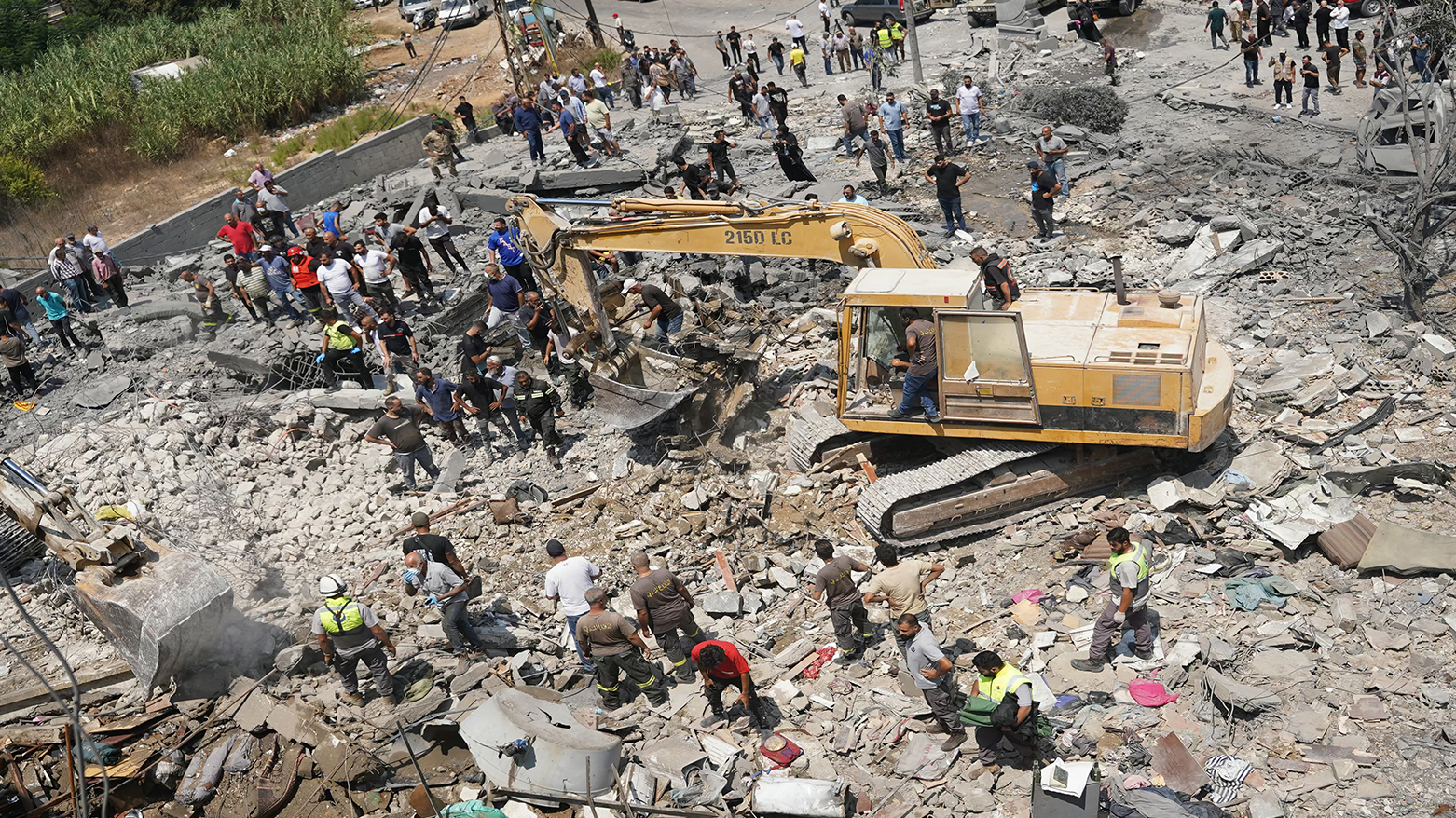
ERBIL (Kurdistan24) — Hezbollah on Saturday warned that Israeli attacks on Lebanon would be met with an “appropriate” response after Israeli strikes killed nine people in the country’s south, while urging Lebanese authorities to abandon what it called “humiliating” negotiations with Israel.
“Israel must clearly understand that its attacks, violations and attempts to impose a fait accompli cannot continue, and will be met with an appropriate response,” Hezbollah said in a statement.
The Iran-backed group also called on Lebanese authorities “not to insist on continuing along the humiliating path of direct negotiations and providing the enemy with free concessions.”
The warning came after Israel carried out a series of airstrikes across southern Lebanon, including a strike on a home in the village of Ansar that killed seven people, among them three children and two women, according to Lebanon’s Health Ministry. Two other people were killed in a separate strike on Deir Zahrani, with nine wounded.
Lebanese President Joseph Aoun condemned what he described as “ongoing Israeli attacks” and repeated violations of the framework agreement between Lebanon and Israel.
The strikes, he said, were a “clear message” about the negotiation process, according to a statement from his office. Aoun said the attacks violated international law protecting civilians and pointed specifically to the deaths of an entire family in Ansar.
Lebanon and Israel are due to hold an eighth round of US-sponsored negotiations in Rome early next month.
Lebanese Prime Minister Nawaf Salam also condemned the strikes, saying those killed in Ansar were not military targets.
“The seven martyrs of the Israeli strike on the village of Ansar are not ‘military infrastructure’ and the women and children who were killed are not military targets,” Salam said.
“Israel must halt this escalation,” he added, warning that it was “extremely dangerous and undermines efforts to consolidate stability in the south.”
Israel says strikes targeted Hezbollah
Israel said its military action was carried out in response to an attack by Hezbollah against Israeli soldiers in the Ali al-Taher Ridge area.
The Israeli army said it had struck “Hezbollah terror infrastructure” in the areas of Nabatieh and Ansar, describing the operation as a response to activity by the Iran-backed group.
Lebanon’s state-run National News Agency reported that Israeli warplanes struck a house on the outskirts of Ansar early Saturday and carried out a series of airstrikes against the Ali al-Taher ridge, a strategic area overlooking Nabatieh.
The agency later reported another strike on Deir Zahrani and said a valley between Ansar and Zarariyeh had also been targeted — the first strike at such a depth into southern Lebanon since the ceasefire two months ago.
An AFP correspondent at the scene in Ansar reported seeing a destroyed building as rescuers worked to recover human remains from the rubble.
The latest violence represents the deadliest Israeli strikes in southern Lebanon since agreements reached in June significantly reduced hostilities between Israel and Hezbollah.
Tensions persist despite ceasefire framework
The renewed escalation comes as Lebanon and Israel work through a US-sponsored framework aimed at consolidating the ceasefire and reducing the risk of another major conflict.
The framework includes the disarmament of Hezbollah, the gradual withdrawal of Israeli forces from southern Lebanon and the deployment of the Lebanese army in the area, initially through designated “pilot zones.”
Despite the reduction in violence, Lebanon has continued to report intermittent Israeli strikes and the demolition of civilian structures in southern towns and villages.
Hezbollah leader Naim Qassem on Friday accused Lebanese authorities of placing undue pressure on the country’s armed forces by implementing provisions of the framework.
Earlier this week, Israeli Defense Minister Israel Katz visited southern Lebanon and vowed that Israeli troops would remain in a so-called “security zone.”
Katz said the Israeli military was “destroying the underground infrastructure” and “destroying all the houses” in the area.
A US State Department official, however, told AFP that “a permanent military presence in south Lebanon is not consistent with the commitments made in the framework.”
Hezbollah became directly involved in the wider Middle East conflict in March when it launched rocket attacks against Israel in support of its Iranian ally. Israel responded with extensive airstrikes and a ground invasion that Lebanese authorities say killed more than 4,300 people.
The June agreements substantially reduced the intensity of the fighting, but the continued Israeli military presence and recurring strikes have kept tensions high and complicated efforts to establish a durable settlement.
The latest strikes and Hezbollah’s warning now threaten to further strain the fragile framework ahead of the next round of US-sponsored negotiations in Rome.