Kurtulmus Sets Three Guarantees for Türkiye's New Peace Framework
Parliament Speaker Numan Kurtulmus says the framework excludes senior PKK figures and gives fighters six months to surrender weapons, as Ankara moves to implement its new peace legislation.
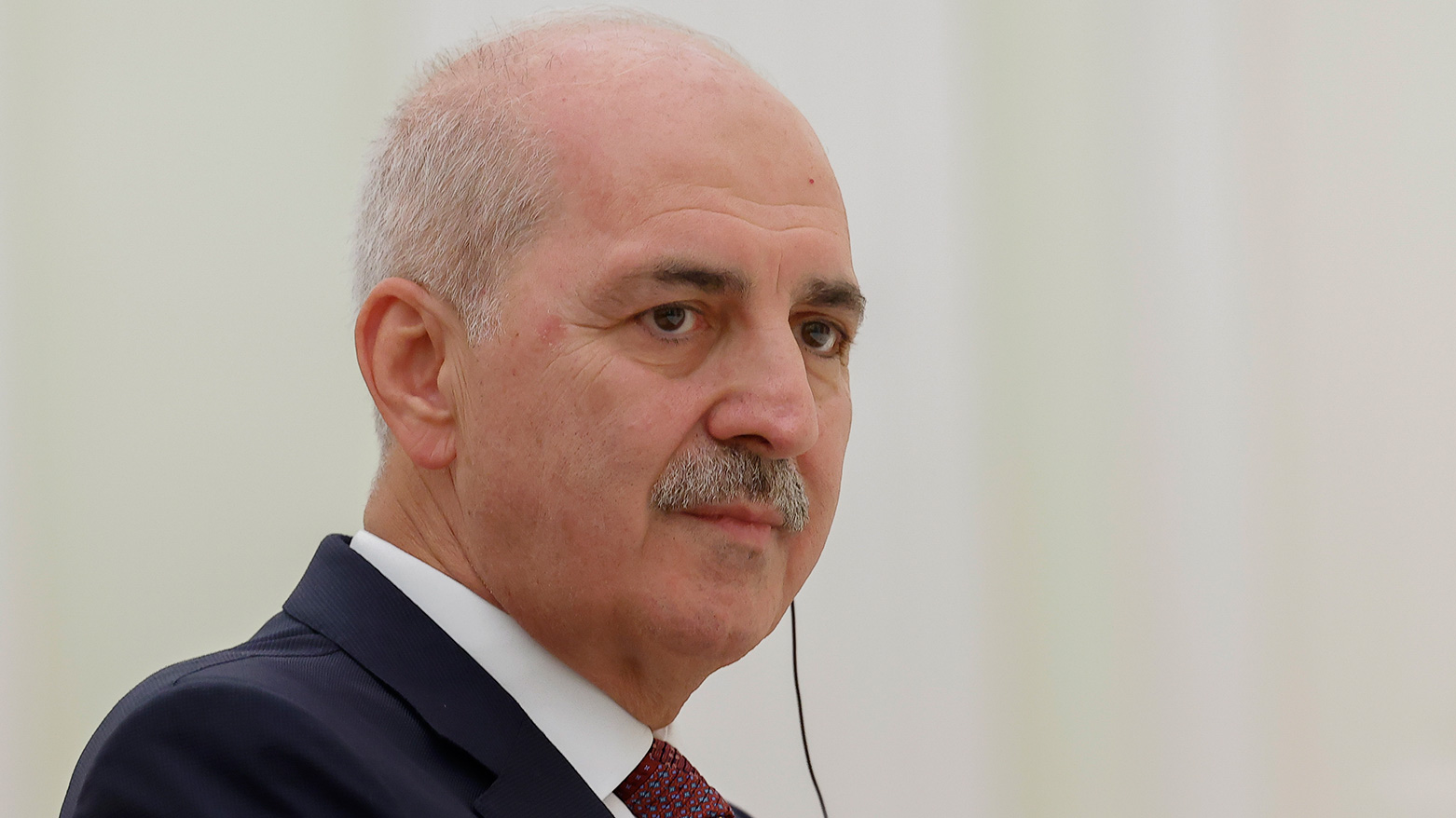
ERBIL (Kurdistan24) - Türkiye's new legal framework for ending armed activity linked to the Kurdistan Workers' Party (PKK) contains three "strong guarantees" that Ankara says will prevent the process from becoming an open-ended amnesty, Turkish Parliament Speaker Numan Kurtulmus said.
Kurtulmus said the law applies only to individuals who actually surrender their weapons, provides a limited period for compliance and definitively excludes the organization's senior leadership and prisoners held on İmralı Island.
His remarks come days after Türkiye's Parliament approved the framework law by a large majority, moving the country's latest peace initiative from political negotiations into a phase centered on implementation, verification and disarmament.
Three Conditions at the Center
Kurtulmus said the first guarantee is that no PKK member can benefit from the legislation without physically laying down their arms.
The second is the temporary nature of the law. According to the speaker, those eligible will have a six-month window to surrender their weapons and cease armed activity.
The third, which Kurtulmus described as the most important, is the exclusion of the organization's senior leadership and prisoners on İmralı.
He said the legislation therefore does not establish a general amnesty and instead creates a controlled legal mechanism tied directly to the dissolution of armed activity.
Kurtulmus also stressed that the process is being designed as a Turkish initiative rather than one supervised by a foreign power.
"No international party is involved as a third-party observer," he said, emphasizing that the process would be overseen through Türkiye's own institutions and political representatives.
Ankara Seeks a Controlled Transition
The speaker said the broader objective was to eliminate armed groups, end separatist rhetoric and prevent outside actors from exploiting regional divisions.
Türkiye's Parliament passed the "Strengthening National Unity and Social Integration" bill on Aug. 10. The vote received 467 votes in favor, according to the supplied report, with support from President Recep Tayyip Erdoğan's Justice and Development Party (AKP), the Nationalist Movement Party (MHP), the pro-Kurdish DEM Party and other opposition lawmakers.
The legislation followed months of work by a parliamentary commission that consulted political and public figures as part of the country's new peace process.
The parliamentary vote was a significant institutional step, but the hardest questions now concern implementation: who qualifies, how weapons are surrendered, how compliance is verified and what happens to individuals excluded from the law.
DEM Party Sees a Broader Political Opening
DEM Party Co-Chair Tuncer Bakırhan has argued that the legislation could affect a much broader legal field than the number of people who surrender weapons.
Bakırhan said approximately 125,000 case files could eventually be affected, including some 75,000 ongoing investigations and another 50,000 confidential investigations.
He said approximately 3,900 prisoners could be released once the framework is implemented, while people serving life sentences for certain intentional killings committed before 2005 would initially remain outside its scope.
Bakırhan also said the DEM Party plans to hold its general congress in the autumn and expects Selahattin Demirtaş, the jailed former leader of the party's predecessor, as well as other senior figures living abroad, to attend.
Demirtaş has remained in prison since 2016 and continues to be one of the most prominent figures in Türkiye's Kurdish political movement.
His possible participation in a future party congress would give the political process a highly visible dimension, particularly if the new legal framework ultimately expands space for imprisoned or politically restricted figures to return to public life.
Implementation May Matter More Than the Vote
For the DEM Party, passage of the law is only the beginning.
In earlier remarks, party co-chair Tülay Hatimoğulları called for the National Security Council to prepare and publish the necessary decision in the Official Gazette without delay.
She described the legislation as an initial step toward peace but warned that implementation would be decisive.
That view reflects one of the central political tensions surrounding the framework. Ankara presents the legislation primarily as a mechanism for dismantling the armed structure, while Kurdish political actors have argued that durable peace must also involve broader political and democratic reforms.
The disagreement is not necessarily over whether armed conflict should end. Rather, it concerns what should follow the end of the armed phase.
Öcalan Remains the Hardest Question
The role and legal status of Abdullah Öcalan, the imprisoned founder of the PKK, remain among the most sensitive unresolved issues.
Öcalan issued a landmark call in February 2025 urging the organization to disarm and pursue democratic political means. Since then, his role in the peace process has remained a major point of contention.
The legislation does not provide a direct mechanism for changing his legal status. Turkish officials have said that Öcalan is outside the scope of the framework, although they have also acknowledged his potential political relevance to the broader process.
The Kurdistan Communities Union (KCK) has taken the opposite view. Senior official Mustafa Karasu argued that the initiative cannot succeed without Öcalan's direct and effective participation, saying that no major step can be completed without his involvement.
The difference highlights a broader divide between Ankara's institutional approach and the PKK-linked movement's view of how the process should be negotiated.
Erdogan's Broader Political Message
The legislation also fits into a broader political shift in President Erdoğan's recent messaging.
In comments highlighted by Kurdistan24, Erdoğan referred to Kurds as "our brothers" and praised the Kurdistan Region for maintaining what Ankara views as a responsible position amid wider regional tensions.
He also said Türkiye would continue supporting stability in Syria and announced plans to visit Damascus, adding another regional dimension to Ankara's evolving Kurdish policy.
The combination of domestic peace legislation, expanded regional diplomacy and a more conciliatory public vocabulary toward Kurdish communities represents a notable change in tone.
Yet Erdoğan's previous attempts to resolve the Kurdish conflict have also demonstrated how quickly political initiatives can collapse when trust breaks down or when security concerns return to the center of the agenda.
From War to Verification
Kurtulmus's emphasis on verification reflects that history.
The three guarantees he outlined are designed to answer a basic question that has complicated previous peace efforts: how can Türkiye ensure that the transition from armed conflict to political activity is real and irreversible?
The six-month deadline is intended to create a defined window. The requirement for actual weapons surrender creates a measurable condition. And the exclusion of senior PKK leaders from the legal framework draws a clear boundary around who Ankara believes can benefit from the law.
For the government, these mechanisms are intended to prevent the process from becoming an unconditional pardon.
For Kurdish political actors, however, the question is whether the framework can eventually move beyond the narrow issue of disarmament and address the political conditions underlying the conflict.
A Test for the Peace Process
The new law therefore marks an important transition, but not a conclusion.
Türkiye has moved from years of political debate toward a formal legal structure for ending armed activity. Parliament has acted, the government has laid out conditions and Kurdish political actors are pressing for rapid implementation.
The next phase will determine whether those pieces can fit together.
Kurtulmus's three guarantees make Ankara's position clear: weapons must be surrendered in practice, the process has a strict timetable and the senior leadership will remain outside the framework.
For the DEM Party and other Kurdish political actors, the challenge is equally clear: ensuring that the end of armed conflict leads not only to security but to a broader political settlement.
Whether Türkiye's latest initiative becomes a durable peace process will depend on what happens after the parliamentary vote, when the guarantees become procedures, the procedures become decisions, and those decisions begin to affect the lives of prisoners, political parties and communities across the country.