Iraqi Militia Leader Denounces US 'Hegemony' Over Iraq's Economy
Kata'ib Sayyid al-Shuhada chief Abu Ala al-Wala'i calls for independent banking and trade networks as Baghdad faces pressure to bring armed groups and economic policy under state control.
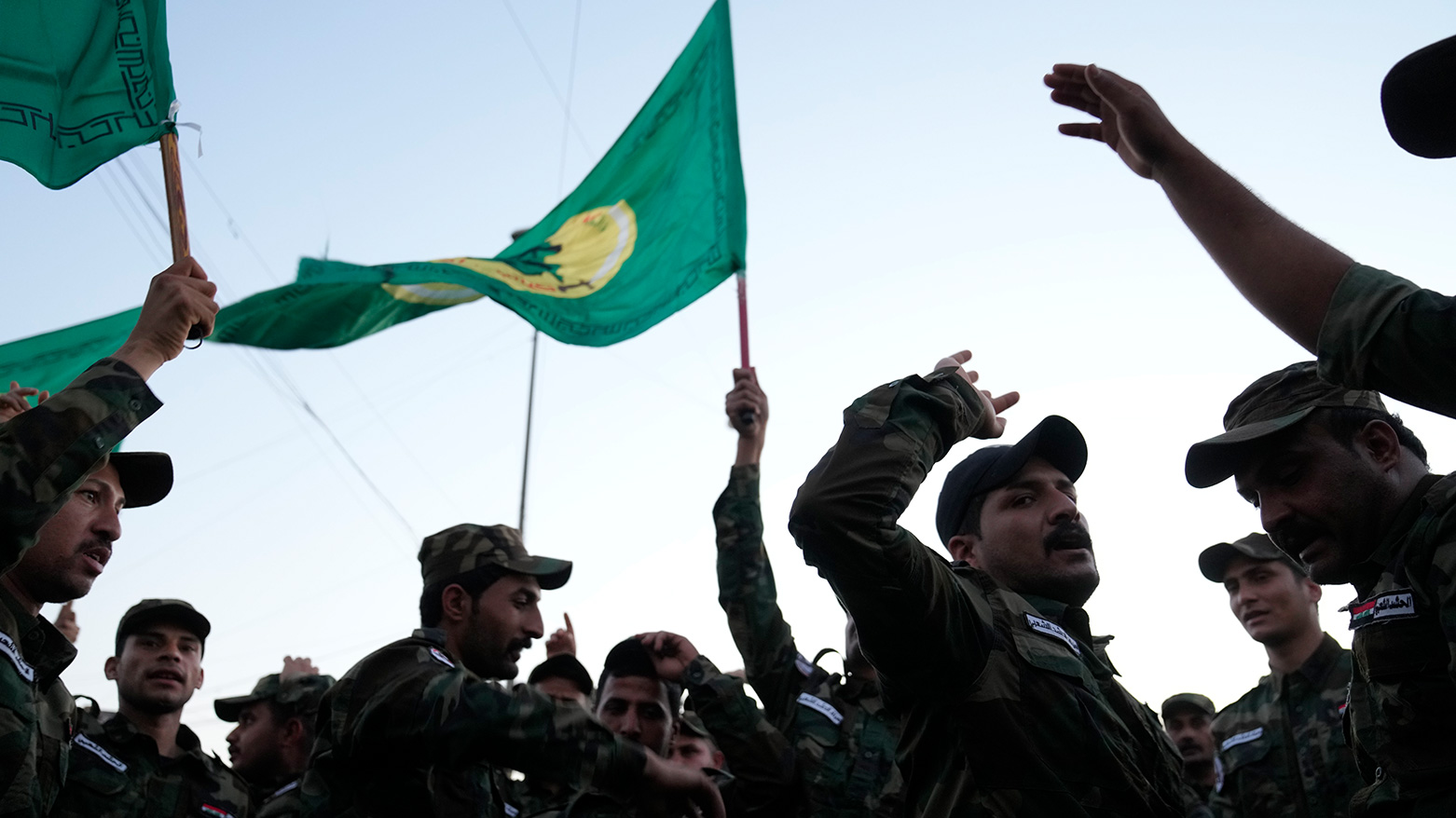
ERBIL (Kurdistan24) - Abu Ala al-Wala'i, secretary-general of Kata'ib Sayyid al-Shuhada, has accused the United States of exercising excessive control over Iraq's economy and financial system, calling on Baghdad to build independent banking and trade networks.
In a statement posted on X on Sunday, Aug. 16, al-Wala'i framed economic independence as a central component of national sovereignty, arguing that territorial control alone is insufficient if Iraq remains dependent on external powers for financial and economic decisions.
"Sovereignty is not completed merely by controlling territory, but by owning political, economic, and financial decision-making, free from the hegemony of any external power," he wrote.
His remarks come as Iraq faces a separate but closely connected dispute over the future of armed groups and the state's authority over weapons. Baghdad is pressing ahead with a Sept. 30 deadline to bring weapons under state control, while some Iran-aligned factions continue to resist the policy or attach conditions to compliance.
Al-Wala'i Calls for Financial Independence
Al-Wala'i described US influence over Iraq's economy as one of the country's most serious shortcomings, accusing Washington of exercising control over Iraqi wealth and resources.
He questioned whether Iraqis should accept a situation in which the country treats access to its own wealth "as if it were a handout bestowed upon it," rather than a sovereign right.
The militia leader called for the diversification of Iraq's markets, banking relationships and trade routes, arguing that greater economic autonomy would reduce the ability of external powers to pressure Baghdad.
His statement did not provide a detailed alternative banking or monetary framework, but the political message was clear: economic sovereignty, in his view, must accompany political and territorial sovereignty.
The remarks also come against the backdrop of longstanding US influence over Iraq's international financial system, including restrictions on banks and oversight of dollar transactions. That influence has made financial policy an increasingly sensitive issue in Baghdad-Washington relations.
Economic Sovereignty Meets the Arms Dispute
Al-Wala'i's economic criticism is closely intertwined with his broader position on Iraq's security policy.
His faction has been among the armed groups that have resisted US military influence in Iraq and the region. Washington has designated Kata'ib Sayyid al-Shuhada as a terrorist organization and has accused al-Wala'i of involvement in attacks against US interests.
In April, the US Rewards for Justice program offered up to $10 million for information concerning al-Wala'i, according to the supplied report.
Against that backdrop, his call for economic independence also functions as a political argument against what he views as wider US influence over Iraq.
At the same time, Baghdad is attempting to establish that the Iraqi state, not individual armed factions, should control decisions involving security, foreign relations and the use of Iraqi territory.
That creates a growing tension between the government's approach to sovereignty and the interpretation promoted by some armed factions.
Retaliation Is Delayed, Not Abandoned
The same tension was apparent in al-Wala'i's recent statements regarding retaliation for attacks on Popular Mobilization Forces positions.
In an earlier statement cited by Kurdistan24, al-Wala'i said that retaliation by the so-called Islamic Resistance had been postponed but not abandoned.
He described retaliation as an "ideological and national duty," while acknowledging a temporary delay following appeals from political figures, particularly Badr Organization leader Hadi al-Amiri.
The distinction was significant.
The armed factions had agreed to postpone a planned response, creating space for diplomatic efforts, but al-Wala'i made clear that the underlying commitment to retaliation remained intact.
His position placed him between political calls for restraint and the more confrontational stance of factions that view military retaliation as essential to their identity and deterrence strategy.
Baghdad Seeks to Prevent a Wider Escalation
The Iraqi government has been moving in the opposite direction.
Prime Minister Ali Falih al-Zaidi has repeatedly stated that Iraqi territory should not be used to launch attacks against neighboring countries, while Baghdad has strengthened security coordination with Saudi Arabia and other regional governments.
The government has also raised the readiness of military and security forces amid concerns over possible attacks against Saudi and US interests.
For Baghdad, controlling armed activity is therefore not only a question of domestic law. It is also central to Iraq's attempt to prevent itself from being pulled deeper into regional conflicts.
This is where the weapons debate intersects with al-Wala'i's economic argument.
The government presents sovereignty as the ability of state institutions to determine security, foreign policy and economic policy. Armed factions such as Kata'ib Sayyid al-Shuhada have a broader interpretation, in which sovereignty includes resistance to foreign influence and maintaining independent capabilities to confront external threats.
The Deeper Problem: Parallel Power
An analysis previously published by Kurdistan24 described Iraq's challenge as extending beyond the presence of the International Coalition.
Over the past two decades, weapons that were initially justified as necessary to fight ISIS or oppose foreign forces have also become sources of political leverage.
The incorporation of many armed formations into the Popular Mobilization Forces has complicated the distinction between official state forces and factions with independent political and ideological identities.
The result is what analysts describe as a structural duality: an armed group can be part of the state security architecture while retaining significant autonomy in practice.
That duality makes the government's Sept. 30 deadline particularly consequential.
Even if US forces complete their withdrawal, the underlying dispute over who controls armed formations will remain.
Economic Networks Add to the Challenge
The struggle over weapons also has an economic dimension.
Iraq's armed networks have developed influence over parts of the country's political economy, including commercial activity, border crossings and informal revenue streams.
This means that bringing weapons fully under state authority could have consequences far beyond military structures.
It could also challenge the economic networks that support political influence.
That is why Baghdad's effort to establish a state monopoly over force is unlikely to be resolved solely through a legal decree. It would require stronger financial oversight, more transparent institutions and the ability to prevent armed organizations from operating parallel economic systems.
Al-Wala'i's latest statement highlights precisely how deeply those issues are connected.
Political Ads Expose the Divide
The dispute has recently entered the public sphere through competing political advertisements.
A federal government-backed video campaign sought to persuade armed groups and their supporters that Iraq's army and security forces are strong enough to protect the country, ending with the message "From Weapons to Life."
The PMF responded with a video emphasizing military strength through images of armed personnel and tactical formations.
The contrast was stark.
The government campaign portrayed state institutions as the guarantor of security and normal civilian life. The PMF production relied instead on imagery designed to reinforce the power and discipline of armed formations.
The competing messages illustrated the larger political struggle over who should be regarded as the ultimate guarantor of Iraq's security.
A Sovereignty Dispute With Regional Consequences
The stakes extend beyond Iraq's borders.
Saudi Arabia has expressed concern over possible attacks launched by Iran-aligned groups from Iraqi territory, while the United States continues to pressure factions it considers threats to its personnel and interests.
Iran, meanwhile, has reportedly urged some Iraqi armed factions to refrain from attacking Saudi Arabia and pursue political channels instead.
Those competing pressures place Baghdad in a difficult position.
The government must maintain relations with Iran, Saudi Arabia and the United States while preventing Iraqi territory from becoming a battlefield for their broader confrontation.
Al-Wala'i's statements show that the armed factions have not abandoned their own strategic interpretation of Iraq's place in the region.
The Test Ahead
Al-Wala'i's attack on US financial influence therefore forms part of a much broader argument about what Iraqi sovereignty should mean.
For the government, sovereignty requires centralized control over weapons, territory, foreign policy and state finances.
For al-Wala'i and similar factions, sovereignty also means resisting what they describe as Western political and economic domination, even when that means preserving independent military capabilities.
The September deadline will test whether those competing definitions can coexist.
If Baghdad succeeds in consolidating state authority over weapons while strengthening its economic and financial independence, it could begin dismantling the parallel structures that have shaped Iraqi politics for years.
If it fails, the dispute is likely to continue moving between the military, political and economic arenas.
For now, al-Wala'i's message is unmistakable: the battle over Iraq's sovereignty, in his view, is not only about who controls the gun. It is also about who controls the money.