KRG Accelerates Agricultural Modernization as Exports Expand
Qaraman Qadir, spokesperson for the Ministry of Agriculture and Water Resources, told Kurdistan24 that the use of no-till farming has expanded significantly across the Kurdistan Region.
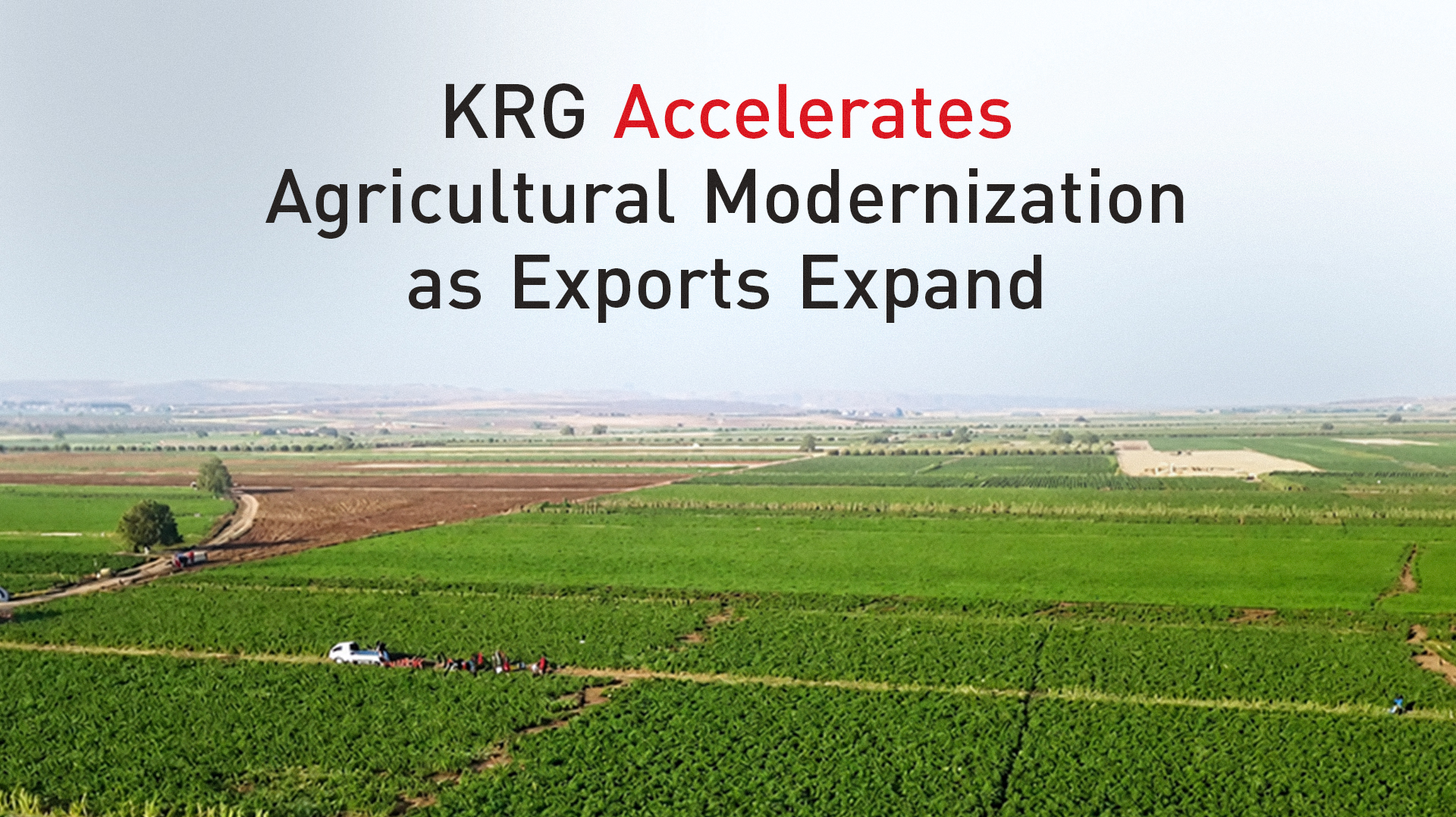
ERBIL (Kurdistan24) – The Kurdistan Regional Government’s (KRG) Ministry of Agriculture and Water Resources is intensifying efforts to modernize the agricultural sector by adopting advanced farming and water-management technologies aimed at increasing domestic production and reducing costs for farmers.
On Sunday, Qaraman Qadir, spokesperson for the Ministry of Agriculture and Water Resources, told Kurdistan24 that the use of no-till farming has expanded significantly across the Kurdistan Region. In some areas, land cultivated using the technique has increased from 30 dunams to 300 dunams.
No-till farming reduces production costs, helps retain soil moisture, and can improve the quality of agricultural products, according to Qadir.
The Ministry is also promoting smart agriculture and aquaponics as part of broader efforts to modernize farming practices and improve productivity.
Qadir said the Kurdistan Region has moved beyond simply meeting domestic demand and is now exporting significant quantities of agricultural products. Tomatoes, figs, grapes, and other produce are supplied to markets in central and southern Iraq and exported to Turkey, Jordan, and the United Arab Emirates.
The government is also prioritizing the development of the food-processing industry, with plans to increase the number of facilities used to process and dry agricultural products. The initiative is intended to reduce losses for farmers during peak harvest periods and add value to locally produced goods.
Water conservation is another key component of the modernization drive. The government is introducing technologies such as “WaterBox,” which officials view as a major development in the Region’s agricultural sector and a potential alternative to conventional drip-irrigation systems.
Agriculture and industrial development have been among the key priorities of the KRG’s ninth cabinet. As a result, the share of investment directed toward agriculture has increased from 1.8 percent to 10 percent.
At the same time, measures to facilitate business activity have resulted in the licensing and establishment of more than 11,100 companies and the opening of 1,257 new factories, developments that have contributed to the expansion of domestic agricultural and industrial production.
The ninth cabinet has also supported farmers through the establishment of 30,000 greenhouses and 319 cold-storage facilities, helping strengthen domestic production and reduce post-harvest losses.
These measures have contributed to the Kurdistan Region exporting tens of thousands of tons of agricultural products to international markets for the first time, marking a significant step in the government’s efforts to strengthen the agricultural sector and expand its role in the regional economy.