Global Leaders Salute President Barzani on His 80th Birthday
From Washington to Ottawa and Brussels, 49 political, diplomatic and military figures sent birthday messages praising President Masoud Barzani's leadership, Peshmerga partnership and role in the Kurdistan Region.
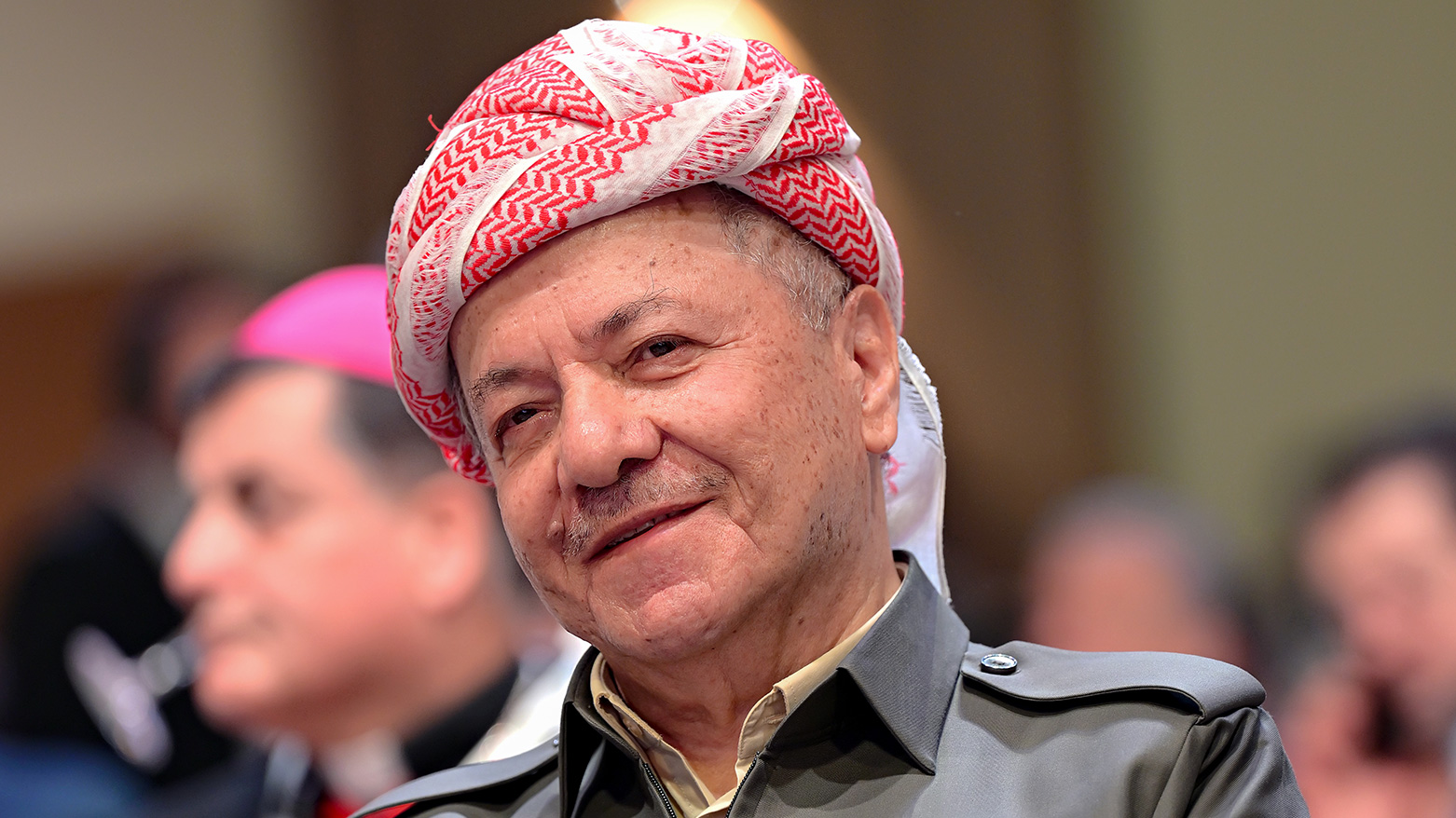
ERBIL (Kurdistan24) - Political leaders, diplomats, military commanders and former senior officials from the United States, Canada and Europe have marked President Masoud Barzani's 80th birthday with messages praising his leadership of the Kurdish people, his partnership with the United States and the role of the Peshmerga in defeating ISIS.
The birthday messages, gathered by Kurdistan24 Washington, D.C. Bureau Chief Rahim Rashidi, brought together 49 interviewees and contributors, offering a broad cross-section of views from people who worked with President Barzani during some of the defining episodes in Iraq and the wider Middle East.
Their remarks repeatedly returned to several themes: the US-Kurdistan partnership, the Peshmerga's role in the fight against ISIS, President Barzani's decades in Kurdish politics, the development of the Kurdistan Region, and the political relationships he cultivated internationally.
US Senators Praise a Long Alliance
A number of sitting US senators used their messages to emphasize the durability of the relationship between Washington and the Kurdistan Region.
Sen. Mike Lee of Utah thanked President Barzani for his friendship with the United States and wished him a happy birthday.
Sen. Bill Cassidy of Louisiana described Kurdistan as a longstanding ally and praised the Kurdish people as "tough people in a tough section of the world."
Sen. Angus King of Maine, who called President Barzani a friend, offered a characteristically brief message: "Just keep going."
Sen. Rick Scott of Florida also sent birthday greetings, while Sen. Jeanne Shaheen of New Hampshire recalled the work carried out by the United States, Iraq and the Kurds as allies.
Sen. Mark Warner of Virginia highlighted President Barzani's advocacy for the Kurdish people over several decades and described Kurdish areas of Iraq as among the most stable parts of the Middle East.
Sen. Kevin Cramer of North Dakota pointed particularly to President Barzani's cooperation with Washington in the campaign against ISIS and terrorism, saying that his leadership represented a source of hope during a difficult period.
Sen. John Kennedy of Louisiana went further in discussing the Kurdish-American relationship. He praised the Kurdish people's contribution to defeating ISIS and said Americans should remember that Kurdish forces stood with the United States when their assistance was needed.
Sen. James Lankford of Oklahoma emphasized the relationship's economic dimension, mentioning trade, investment, construction and continued international engagement with the Kurdistan Region.
Sen. Elissa Slotkin of Michigan recalled meeting President Barzani during the ISIS war and specifically remembered his efforts to secure financial support for the Peshmerga. She said his intervention helped draw attention in Congress to the need to ensure Peshmerga fighters were paid.
Sen. Chris Van Hollen of Maryland spoke of continued solidarity between Americans and Kurds, describing the relationship as one grounded in friendship and shared interests.
Sen. Chris Coons of Delaware also thanked President Barzani for years of leadership and partnership, saying many in Congress continue to wish him well.
Sen. Tim Kaine of Virginia kept his message simple, describing Kurds as great friends of Americans and offering birthday greetings.
Former US Officials Recall Years of Cooperation
Several former American officials who served in Iraq, the wider region or the US government described President Barzani as a strategic partner over decades.
Former US Energy Secretary Chris Wright praised President Barzani's leadership and expressed appreciation for the Kurdish people.
Former Assistant Secretary of State for Near Eastern Affairs David Schenker congratulated President Barzani on reaching 80, calling it a remarkable milestone and wishing him many more years.
Matthew Zais, who served at the White House during the first Trump administration, recalled meeting President Barzani for the first time and described his leadership of the Kurdish people as “legendary.”
Former US Senator Norm Coleman of Minnesota praised the Peshmerga for helping defeat ISIS and called for the United States to speak more openly about the importance of its relationship with Kurdistan.
Former US Army Deputy Secretary Joe Reeder, who served in the Clinton administration, emphasized his long relationship with the Kurdistan Regional Government and praised President Barzani's leadership of the Peshmerga and cooperation with the US military.
Former US Ambassador to Iraq John Negroponte recalled numerous meetings with President Barzani and described him as patriotic, athletic and deeply committed to his country.
Former US Ambassador to Iraq Stu Jones said President Barzani played a crucial role during his time in Iraq and specifically credited his leadership in the fight against ISIS.
Former Ambassador Zalmay Khalilzad recalled traveling with President Barzani to Washington for a meeting with President George W. Bush. He remembered presenting President Barzani to thye then-U.S. President Bush as a leader with a similar determination and willingness to make decisions.
Former US Ambassador to Iraq Alina Romanowski described her meetings with President Barzani as substantive and candid, noting that the two sides did not always agree but consistently sought practical solutions. She specifically recalled President Barzani traveling to Baghdad to explain the importance of maintaining the US presence in Iraq.
Doug Silliman, former US ambassador to Iraq and president of the Arab Gulf States Institute, remembered visiting President Barzani in Barzan and praised the decision to place the Peshmerga at the forefront of the campaign against ISIS.
Jen Gavito, former Deputy Assistant Secretary of State for Iraq, praised President Barzani as a strong and committed American partner, recalling her time working in Erbil to strengthen relations between Baghdad, the Kurdistan Region and Washington.
Victoria Taylor, a director at the Atlantic Council and former State Department official, described President Barzani as wise and thoughtful and said he continued to play an important role for the Kurdish people.
Joey Hood, who served as US chargé d'affaires in Iraq, recalled meeting President Barzani in 2017 and praised his calmness, wisdom and command of Arabic.
Chris Hill, a former senior US diplomat, recalled conversations with President Barzani in Erbil and said he learned extensively about Kurdistan and Iraq through those encounters.
James Jeffrey, the former US ambassador to Iraq and Türkiye and former special envoy for Syria, delivered one of the most extensive assessments. He praised President Barzani's role in Iraq's post-2003 political development, the creation and strengthening of the Kurdistan Regional Government and the campaign against ISIS.
Jeffrey said President Barzani's decision to commit the full weight of the Peshmerga against ISIS in 2014 helped save Iraq and potentially the wider Middle East. He also praised the Kurdistan Region as a pillar of regional stability.
Military Leaders Highlight the Peshmerga
Former military commanders also used their messages to recall periods of close cooperation with President Barzani.
Gen. Jim Jones, former US Marine Corps commander and national security adviser, recalled meeting President Barzani in northern Iraq in 1991 and working with him during the aftermath of the Kurdish uprising. He described President Barzani as a leader who sought peace and prosperity for his people.
Gen. Jay Garner, who commanded US forces in northern Iraq in 1991, offered perhaps the most personal tribute. He recalled meeting President Barzani 35 years ago and praised his leadership during the difficult period after the destruction of thousands of Kurdish villages.
Garner said the Kurdistan Region's transformation from the devastation he witnessed in 1991 into its present form represented an extraordinary achievement.
Gen. David Petraeus, former commander of US Central Command and former CIA director, recalled first meeting President Barzani in 2003. He praised his "extraordinary lifetime of service," his Peshmerga leadership, his defense of the Kurdish people and his role in building the Kurdistan Region.
Col. Myles B. Caggins III, a former US Army officer and spokesman for the Coalition against ISIS, highlighted the long partnership between American soldiers and Kurdish Peshmerga. He said President Barzani had left a strong legacy among US military personnel and wished him a long life.
North American and European Voices
The messages extended beyond Washington.
Former Canadian Prime Minister Stephen Harper recalled his 2014 visit to Erbil during the ISIS war. He praised the Peshmerga's role in rolling back ISIS and highlighted what he described as the Kurdistan Region's religious tolerance and protection of minorities, including Christians and Ezidis.
Ahmed Hussen, a Canadian member of Parliament and chair of the House of Commons Foreign Affairs Committee, praised President Barzani's contribution to democracy, human rights and religious tolerance in the Kurdistan Region.
Ziad Aboultaif, a Canadian parliamentarian, recalled meeting President Barzani in Erbil and said he had been impressed by his leadership and concern for minorities.
Mani Hussaini, a Norwegian parliamentarian originally from Qamishlo, recalled meeting President Barzani and praised his support for Kurds in northeastern Syria. He wished him health and a long life.
Jeffrey van Orden, a former British Army brigadier general and European Parliament member, described President Barzani as a central figure in Kurdish politics for more than half a century and praised his long-standing pursuit of greater autonomy.
Van Orden also offered a more nuanced historical assessment, saying President Barzani's 2017 independence referendum had achieved overwhelming popular support but generated significant diplomatic difficulties before relations with regional partners were rebuilt.
A member of the European Parliament, whose name was not identified in the supplied material, recalled visiting Erbil and praised President Barzani as a symbol of Kurdish strength, dignity and political aspiration.
Long Friendships, Personal Memories
Some of the messages were less about policy and more about personal relationships.
Ross Perot Jr., who said he has known President Barzani for more than 19 years, described him as a warm and genuine friend and a remarkable leader.
Robert Palladino, a former US consul general, remembered President Barzani's warmth and leadership during a period when diplomatic meetings were held under COVID-19 restrictions.
Newt Gingrich, former speaker of the US House of Representatives, called for the continued strengthening of relations between the United States and the Kurdistan Region.
Mike Pompeo, former US secretary of state and CIA director, offered a broad tribute based on years of cooperation with President Barzani. He credited him with attracting investment, helping develop Erbil and strengthening US security interests, saying America was "better off, more secure" because of that partnership.
Robert F. Kennedy Jr., US secretary of Health and Human Services, also sent birthday greetings, emphasizing the longstanding ties between Americans and Kurds.
Mike Waltz, a former congressman and current US ambassador to the United Nations in the supplied message, praised President Barzani's decades of partnership, strength and leadership and his commitment to peace and stability.
George Whitesides, a US congressman from California, recalled visiting Kurdistan and praised the partnership against ISIS and extremism.
Sen. Mike Lee, Sen. Rick Scott, Sen. Angus King, Sen. Bill Cassidy, Sen. Mark Warner, Sen. Kevin Cramer, Sen. John Kennedy, Sen. James Lankford, Sen. Elissa Slotkin, Sen. Chris Van Hollen, Sen. Chris Coons, Sen. Jeanne Shaheen and Sen. Tim Kaine collectively reinforced the message that the relationship with Kurdistan extends across the US political spectrum.
A Birthday Viewed Through History
The messages arrived as President Barzani reached 80, a milestone that also reflects more than five decades of Kurdish political history.
His career stretches from the Peshmerga struggle of his youth through the Kurdish uprising of 1991, the formation of the Kurdistan Region's political institutions, the post-2003 restructuring of Iraq, the war against ISIS and the 2017 independence referendum.
Peter Welch, US senator from Vermont, praised the courage of the Kurdish people and expressed his desire for close US-Kurdish relations.
David Schenker, Matthew Zais, Norm Coleman, Peter Welch, Alina Romanowski, James Jeffrey, Jay Garner and others repeatedly framed President Barzani's leadership through the lens of a relationship that has evolved over decades.
For supporters, the messages amount to an international acknowledgment of President Barzani's place in Kurdish political history. For many of the American figures interviewed, his legacy is inseparable from the Peshmerga's role in defeating ISIS and from the Kurdistan Region's emergence as an important political and economic actor in Iraq.
The messages also reveal how President Barzani is viewed abroad: simultaneously as a Kurdish nationalist leader, a regional political negotiator, a partner to Western governments and a figure whose decisions have often affected the wider balance of power in the Middle East.
From the US Senate to military command rooms, diplomatic missions, the Canadian Parliament, European institutions and private-sector circles, the central message was broadly consistent.
"Happy birthday, President Barzani."
At 80, the tributes suggest that many of those who have worked with him see his political legacy not as confined to one party, one government or one generation, but as intertwined with the modern history of the Kurdistan Region and its relationship with the wider world.