KRG Minister: Kurdistan Chooses Construction Over Destruction
Transport and Communications Minister Ano Abdoka says attacks on Erbil will not derail development, as he outlines disputes with Baghdad over 5G, internet regulation, Korek Telecom, international data transit and public transport.
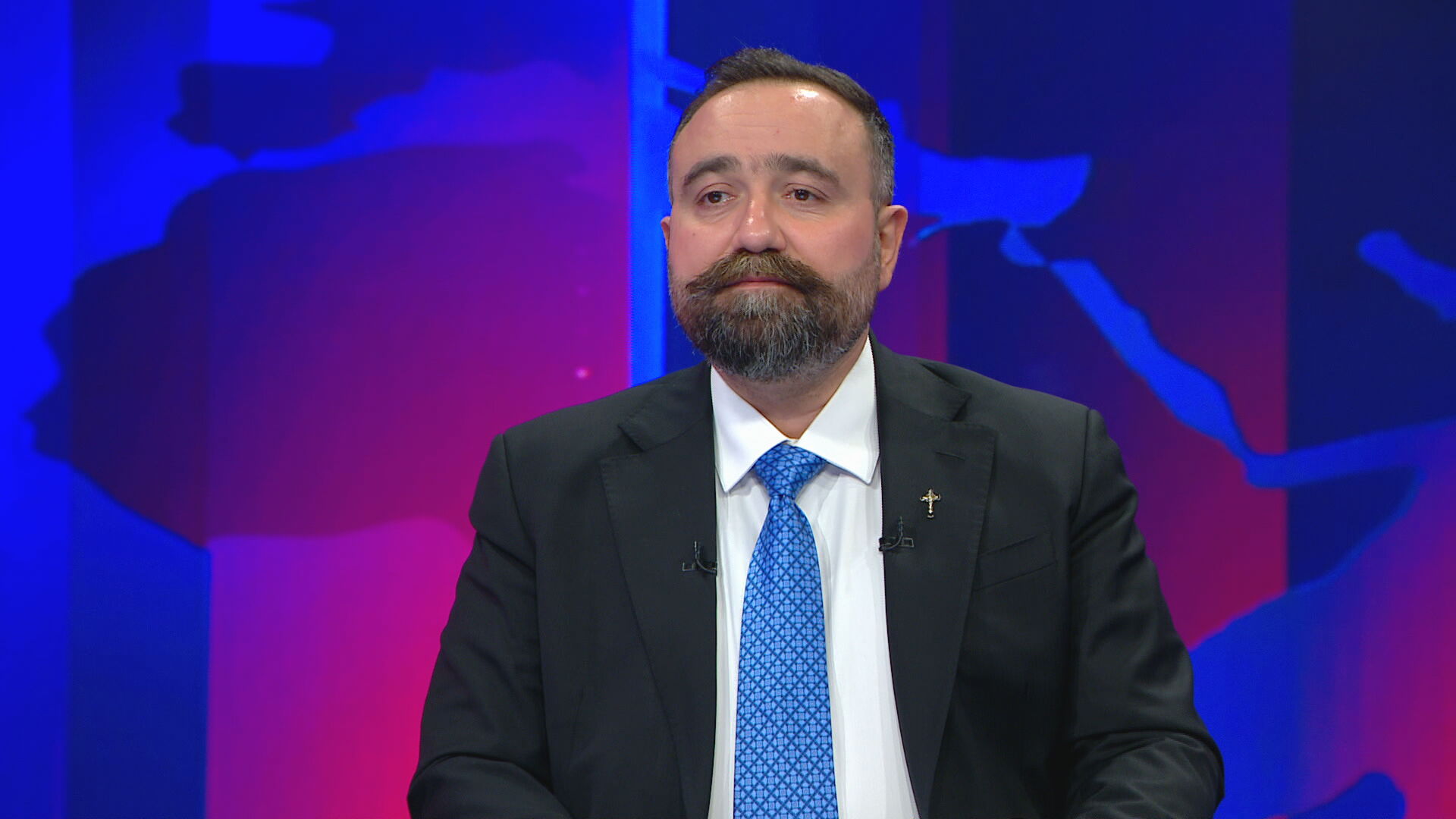
ERBIL (Kurdistan24) - Kurdistan Regional Government Minister of Transport and Communications Ano Abdoka has portrayed the Kurdistan Region's development agenda as a direct contrast to the forces threatening its institutions, while outlining a series of unresolved disputes with Baghdad over telecommunications regulation, 5G deployment, Korek Telecom and other strategic infrastructure.
Speaking to Kurdistan24's Basi Roj program with Zhino Mohammed, Abdoka condemned recent drone attacks targeting the Kurdistan Region and Prime Minister Masrour Barzani's private office before turning to the ministry's work on communications, internet services and transportation.
His central message was that the Region's response to instability should be continued development.
"The work of the Prime Minister, Mr. Masrour Barzani, is to build dams and reservoirs. His work is paving streets and roads. His work is launching the 'Runaki' program and the 'MyAccount' banking project," Abdoka said.
"Masrour Barzani means construction; Masrour Barzani means stability; Masrour Barzani means strong institutions, and Masrour Barzani means a stronger Kurdistan."
Abdoka said the attacks represented a threat not only to the Kurdistan Region but also to Iraqi sovereignty, democracy and regional stability. He argued that the Region had consistently pursued neutrality amid wider Middle Eastern conflicts.
"Instead of building drones, we built roads and bridges. Instead of building drones, we built water dams. Instead of building drones, we launched the 'Runaki' electricity project," he said. "This is Kurdistan, and that is the other side."
The minister also pointed to broad condemnation of the attacks from political, religious and international circles, saying Christian churches and religious leaders had joined calls against targeting Kurdistan's institutions.
Baghdad Talks Leave 5G at the Center of Dispute
Abdoka said a KRG delegation recently spent three days in Baghdad meeting senior federal officials and the Communications and Media Commission (CMC) in an effort to resolve longstanding disagreements between Erbil and Baghdad.
The delegation met with Federal Supreme Court President Faiq Zidan, Communications Minister Mustafa Sanad, other officials and CMC representatives, according to Abdoka.
He said the two sides agreed to establish joint committees to resolve disputes on telecommunications and internet regulation.
One of the most important disagreements concerns licensing and regulatory authority over internet companies operating in the Kurdistan Region.
Abdoka rejected Baghdad's position that companies in the Region should obtain their licenses from federal authorities, arguing that telecommunications regulation falls within the Region's legal jurisdiction.
He said the KRG Ministry of Transport and Communications has operated under laws dating back to 1993, culminating in Kurdistan Parliament's Law No. 19 of 2015.
"Every license granted in the Kurdistan Region is a legal license issued in accordance with the laws of the Ministry of Transport and Communications," Abdoka said.
He urged the federal government to judge the Region's telecommunications sector by its results, arguing that internet services in Kurdistan are faster and cheaper than in central and southern Iraq.
Erbil Says It Has Been Ready for 5G for Years
The minister said the Kurdistan Region has been technically prepared to launch 5G for some time but has held back at Baghdad's request.
According to Abdoka, Kurdistan launched 4G services in 2012-2013, while federal Iraq began doing so several years later.
He said the Region's hardware, software and backbone infrastructure for 5G are already ready, but that Baghdad has delayed deployment so the two sides can launch the service simultaneously.
"For the past two and a half years, Baghdad has been delaying the launch of 5G," Abdoka said. "The software, hardware, and backbone network infrastructure for 5G technology in Kurdistan are entirely ready."
He said Baghdad had previously promised that both sides would proceed together, but infrastructure differences across Iraq had delayed the federal rollout.
Abdoka characterized the dispute as a regulatory and infrastructure issue rather than a disagreement over whether 5G itself should be introduced.
Kurdistan Seeks Role in International Internet Transit
Beyond 5G, Abdoka highlighted a potentially larger strategic project involving international internet traffic.
The Kurdistan Region, he said, is geographically positioned along an important route connecting Europe to the Gulf. International fiber-optic cables can pass through Türkiye, the Kurdistan Region and Iraq before continuing toward Gulf countries.
He said the Region already has the infrastructure necessary for such a transit network, but that implementation depends on readiness and coordination on the federal side.
"The infrastructure in the Kurdistan Region has been ready and complete for a long time; we are just waiting on the Iraqi side," Abdoka said.
He presented the project as a potential opportunity for both sides, arguing that it could transform Iraq into a regional communications corridor while bringing economic benefits to the country.
Korek Telecom Dispute Needs a Joint Legal Review
The minister also offered a detailed response to the longstanding controversy surrounding Korek Telecom, one of the Region's largest telecommunications companies.
Abdoka argued that Korek suffered a major setback when what he described as 3.2 million subscribers were transferred to another company following the creation and licensing activities of the federal communications regulator.
He said the resulting dispute had produced years of court cases and governmental decisions, creating complicated financial and legal claims involving multiple institutions.
Abdoka rejected suggestions that the issue could simply be reduced to tax disputes or political pressure.
He argued that the priority should be protecting subscribers while also ensuring the state receives any money legally owed to it.
"The primary victim and the true stakeholder is the citizen and consumer," he said.
The minister called for punitive measures against the company to be suspended temporarily and for a joint committee involving judicial, government, ministry and CMC representatives to review the accumulated files.
"A fair solution means granting the company its full legally entitled rights, and collecting the state's rightful dues from the company in accordance with law and justice," Abdoka said.
Internet Quality, Prices and Family Protection
The minister also defended the overall performance of Kurdistan's internet market while acknowledging that users have legitimate expectations about service quality.
He said the ministry receives complaints and follows up on providers through its legal and regulatory departments.
One issue he identified is the reluctance of some residents to allow additional telecommunications towers to be installed in their neighborhoods.
Abdoka said companies need additional towers in densely populated areas to increase network capacity and improve speeds.
He also highlighted the Region's "Family Package," which he said offers lower-cost internet while requiring providers to block pornography, gambling and other content considered harmful to families.
According to Abdoka, telecommunications has also become a major source of employment for young people, with thousands working across internet, fiber, wireless and telecommunications companies.
From Internet to Public Transport
Abdoka said the ministry's agenda extends beyond telecommunications into the modernization of transportation.
He said the KRG has already taken steps to regulate the taxi sector, including issuing security identification cards, introducing standardized markings and conducting background checks in coordination with security authorities.
The next stage, he said, will be the introduction of taximeters for taxis across the Kurdistan Region.
"Regulating the taxis was the first phase," Abdoka said. "We will soon begin implementing the taximeter project for all taxis across Kurdistan to regulate fares and protect both the passenger and the driver."
He also announced that the contract for Erbil's City Bus project has been signed, with routes and station designs prepared.
The project is intended to create a modern public transport network in Erbil and potentially other cities, providing an alternative to private vehicles and conventional taxi services.
A Broader Message From Erbil
Across the interview, Abdoka repeatedly returned to the distinction he drew between development and destruction.
His argument was that the Kurdistan Region's political response to security threats should be measured against the infrastructure and public services it continues to build: roads, dams, electricity networks, digital banking, telecommunications systems and public transportation.
At the same time, the minister made clear that significant disagreements remain between Erbil and Baghdad over regulatory authority, telecommunications licensing and infrastructure coordination.
The proposed joint committees could become an important mechanism for resolving those disputes without turning them into broader political confrontations.
For Abdoka, however, the larger objective is straightforward: ensuring that institutional disagreements do not prevent residents of the Kurdistan Region — and eventually those elsewhere in Iraq — from benefiting from faster communications, better transport and modern infrastructure.
His message from the interview was ultimately less about any single ministry file than about competing models of what the Region represents.
"Kurdistan has not attacked any party, state, or entity," he said. "All our work is focused on building."
As the Region faces continuing security pressure, Abdoka argued that this development agenda is itself part of the answer.
"We will prevail," he said. "Kurdistan will prevail, and Kak Masrour will prevail."