Iraq Opens First Satellite Ground Station Since 2003
Iraq has launched its first satellite ground station since 2003 to support security agencies, aviation, remote-area internet and domestic data routing.
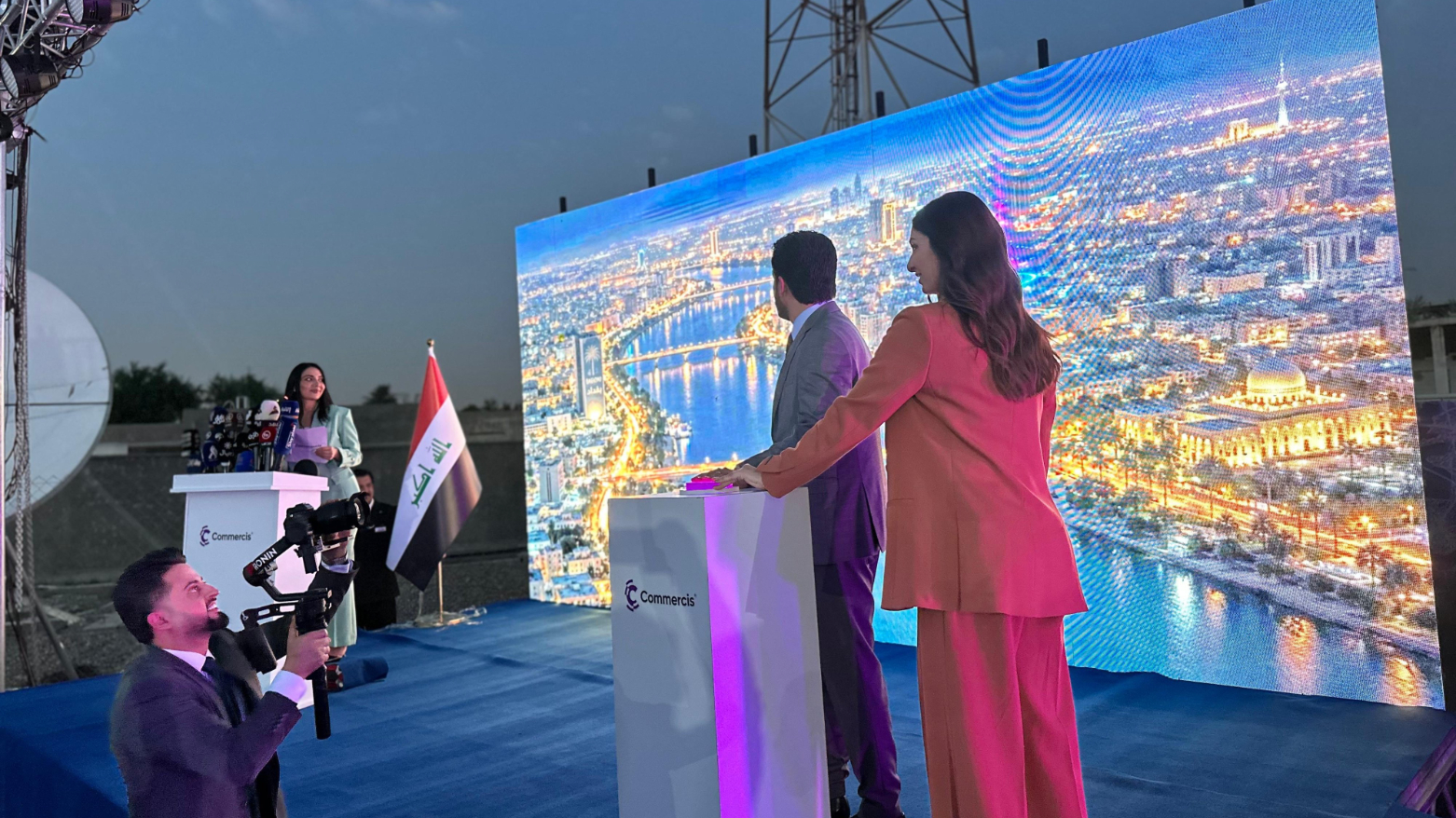
ERBIL (Kurdistan24) - Iraq has launched a national satellite ground station designed to provide secure communications for government agencies, aviation services and remote areas, while allowing more data to be routed and stored inside the country rather than through infrastructure abroad.
Communications Minister Mustafa Sanad announced the project on Sunday, describing the station as a central component of Iraq's broader move toward satellite communications.
Speaking at the launch conference, Sanad said satellite development would have limited value without the ground infrastructure needed to receive and manage communications.
"This project is the most important component of our project toward satellites, as satellites would be of no benefit without this station," he said, according to reporting by Iraqi News Agency correspondent Hassan al-Fawaz.
Sanad also linked the project to what he described as Iraq's effort to strengthen communications and data sovereignty.
He said the ministry was seeking to translate that concept into practical telecommunications policy by developing local applications and keeping more Iraqi data within the country.
The minister said the project required coordination among several state institutions, including the Communications and Media Commission, the Ministry of Digital Economy and Governance and other relevant authorities.
He also credited previous ministers, government advisers and the General Company for Telecommunications and Informatics with contributing to a project that had been under development for years.
Sanad said the initiative was not newly conceived but had required technical adjustments and the resolution of outstanding problems before it could proceed.
The station is the first satellite teleport ground station established in Iraq since 2003, according to Ali Yassin, Director General of the General Company for Telecommunications and Informatics.
Yassin told INA that the facility is operated entirely by Ministry of Communications personnel and will support a range of civilian and security applications.
Those include satellite internet, television broadcasting, communications for security and military agencies, air-navigation services and connectivity for remote areas where terrestrial infrastructure may be limited.
The station has also been connected to the ministry's fiber-optic network, allowing satellite and terrestrial communications to operate as an integrated system.
Yassin said primary and backup fiber routes have been established so that communications can shift to an alternative connection if the main route is interrupted.
Iraq's Counter-Terrorism Service is the first customer to use the new infrastructure.
According to Yassin, the service has subscribed to 10 megahertz of satellite capacity, with the option to expand that amount.
He said the ministry had received additional requests and encouraged government institutions and both public- and private-sector users to obtain satellite services through the Iraqi National Teleport.
Wael al-Khalidi, Deputy Executive Director of British company Commercis Group, said the station has three principal objectives, including providing VSAT satellite communications to provinces and remote cities and strengthening what Iraqi officials describe as information security and sovereignty.
He said the system could change how sensitive government communications are handled.
For agencies operating in remote areas, satellite links had previously been routed through ground stations outside Iraq. With the new domestic station, al-Khalidi said information from users such as the Counter-Terrorism Service can now be brought down inside Iraq.
He said other institutions likely to benefit include the Federal Police, Customs Police and Border Police, whose personnel often operate far from fixed communications infrastructure.
Commercis also expects the network to expand.
Al-Khalidi said additional satellite ground stations could be established in cooperation with the Communications Ministry if suitable locations are identified.
Potential sites outside Baghdad or in other provinces would be assessed on technical and administrative grounds, including available land and population density.
Larger, less densely populated areas could allow the installation of bigger satellite dishes and other infrastructure, he said.
Sanad said foreign customers had also contacted Iraqi authorities regarding satellite-related services, indicating that the government sees potential for the project to grow beyond its initial domestic users.
For now, the new station gives Iraq a locally operated connection between satellite communications and its existing fiber-optic network, with government officials presenting it as both a practical communications project and part of a broader effort to keep sensitive information infrastructure inside the country.