Iran Cuts Little Zab Flow, Disrupting Water Supply in Qaladze
Parts of Qaladze lost water service after Iran restricted the Little Zab River, forcing crews to rebuild a barrier supplying the key Khas Water Project.
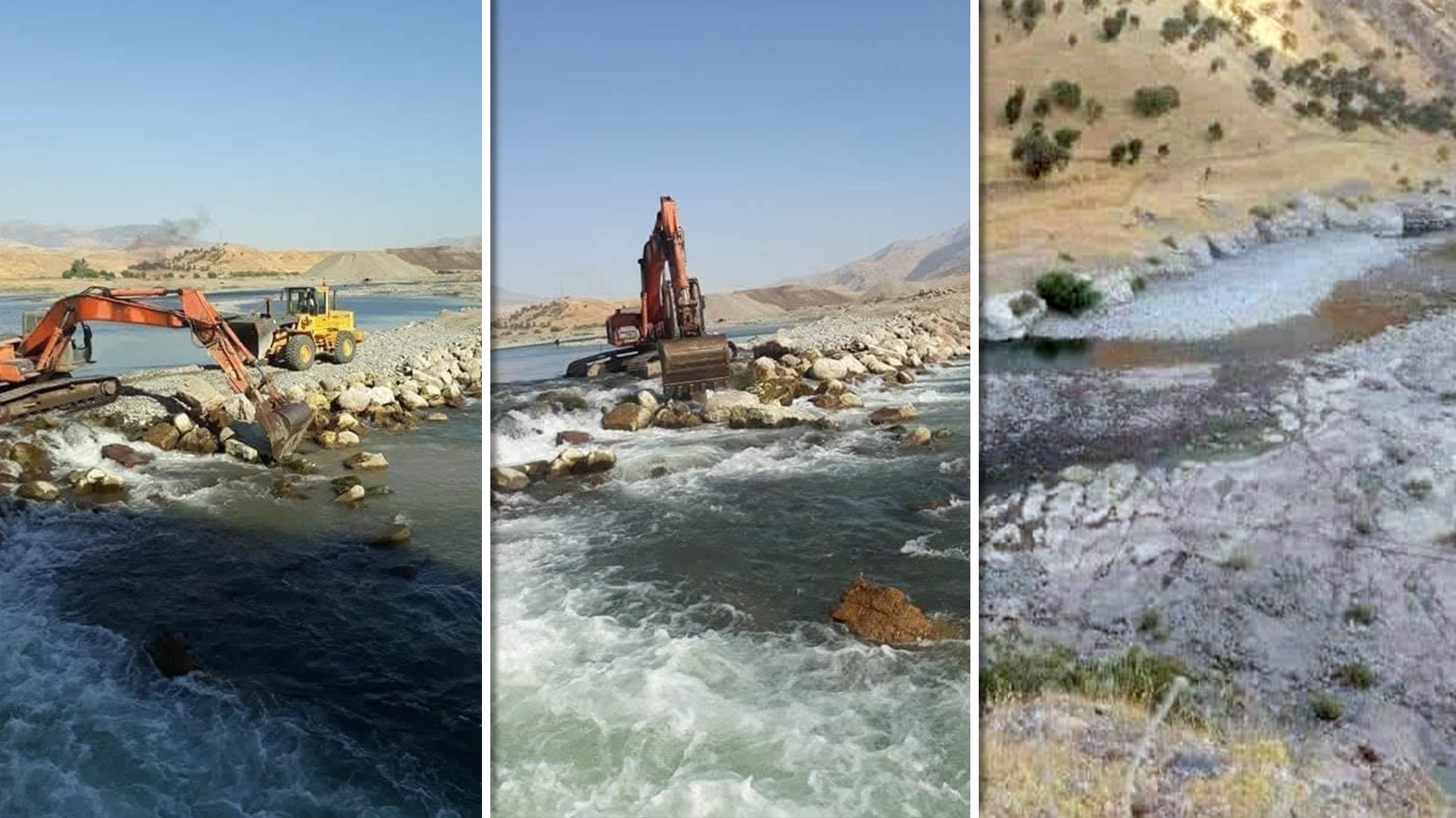
ERBIL (Kurdistan24) - Several neighborhoods in Qaladze are facing temporary water shortages after Iran cut the flow of the Little Zab River into the Kurdistan Region, forcing a major local water project to suspend operations while crews work to restore sufficient water levels.
The restriction began overnight through Iran's Kolase Dam in the Sardasht border area, sharply lowering the Little Zab and disrupting the Khas Water Project, which supplies more than 80% of residents in central Qaladze.
Marf Mahmoud, Director of Water Distribution in Qaladze, told Kurdistan24 on Saturday that water could not be distributed to several neighborhoods because municipal teams were rebuilding a temporary gravel-and-sand barrier across part of the river.
"Since Saturday morning, we have been unable to distribute water to Qaladze's neighborhoods because our teams are busy rebuilding the barrier on the Little Zab," Mahmoud said.
The barrier is used to pool sufficient water near the Khas project and support water distribution. According to local officials, large releases from Iran periodically wash the structure away, requiring crews to reconstruct it when river levels subsequently fall.
In previous years, higher natural water levels meant such temporary measures were not always necessary.
Iran routinely restricts the Little Zab several times during the year, particularly during this period, to meet water requirements at the Kolase Dam. The latest reduction, however, has had a more immediate impact because of the conditions surrounding the temporary barrier and the lower volume reaching the intake point.
Mahmoud said authorities expected distribution to resume within hours once the barrier was rebuilt and enough water had accumulated for the Khas project to operate.
He added that relatively high rainfall this year has strengthened local water sources feeding the Little Zab, reducing the risk of a complete shortage. The Khas project can also draw from those internal sources.
The Qaladze Water Department separately said the Khas project had temporarily stopped operating because of the sudden decline in the river's level.
While some residents have continued receiving water, several neighborhoods remained without service on Saturday as teams worked to refill storage tanks and restore distribution.
Officials expect the immediate disruption to be resolved by the end of the day, provided sufficient water can be collected behind the rebuilt barrier.
The episode nevertheless highlights Qaladze's dependence on the Little Zab for municipal water supplies and the vulnerability of local distribution infrastructure to changes in cross-border river flows.