Nepal Issues New Flood Warning After Reported Dam Burst in Tibet
Nepal warned rescuers and residents to move to higher ground after receiving reports that a dam upstream in Tibet had burst, raising fears of another flood.
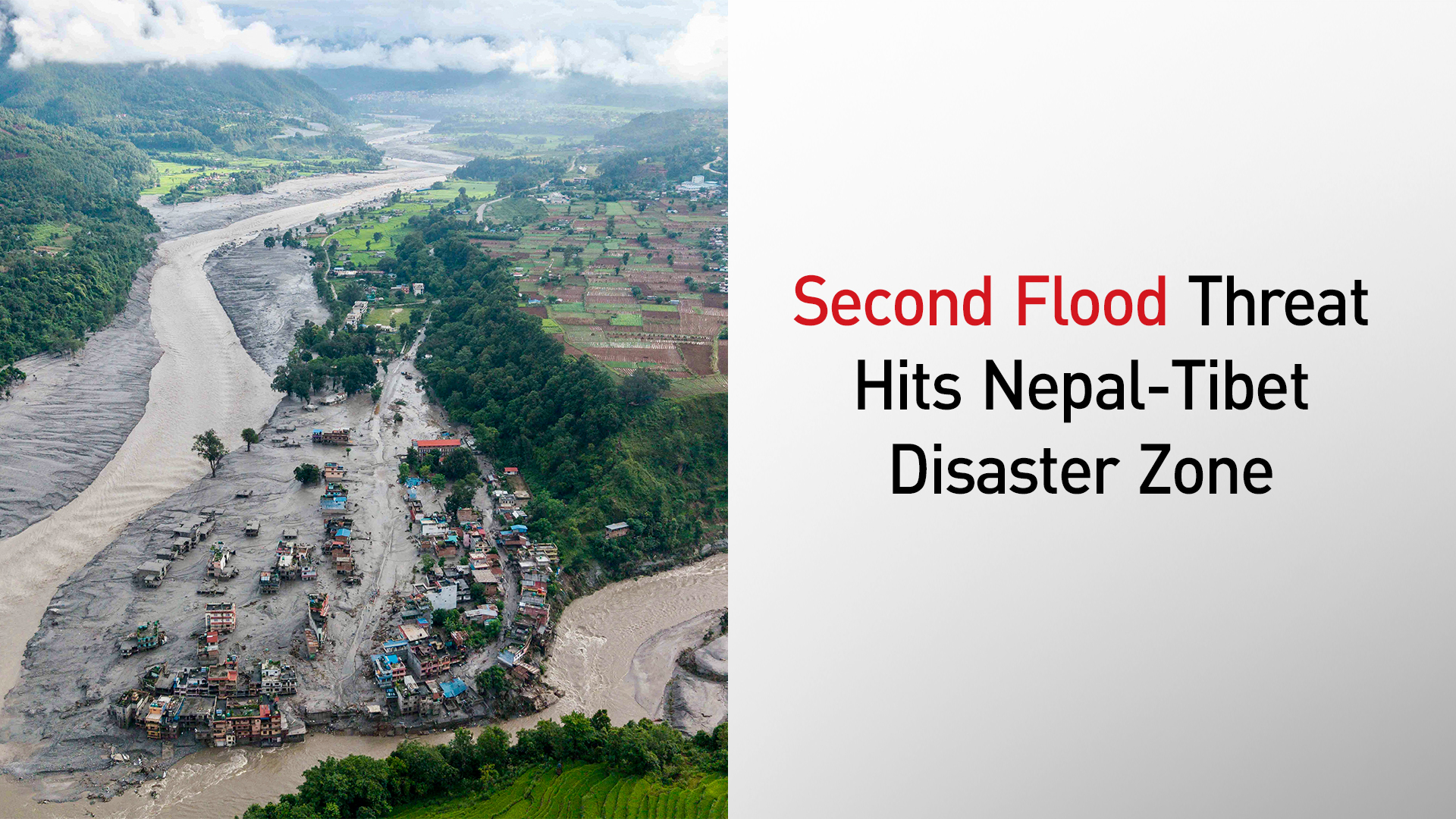
ERBIL (Kurdistan24) - Nepalese authorities issued an urgent warning Friday for rescuers and residents to move to higher ground after receiving information that a dam upstream in Tibet had burst, raising fears of a second major flood two days after a catastrophic glacier collapse killed hundreds of people across the Nepal-Tibet border region.
"Information has been received that a water dam has burst again on the Tibetan side," Nepalese police said in a statement.
"All security personnel, rescue workers, and the general public deployed in rescue and relief operations are requested to remain alert and immediately move to a safe location/report the incident," the statement added.
The warning came as thousands of emergency personnel were still searching devastated Himalayan valleys where at least 543 people have been confirmed dead in Nepal and three more in Tibet.
More than 1,400 people remain missing across the border region, including hundreds of foreign tourists and religious pilgrims.
Authorities had already warned Thursday that the danger of additional flooding had not passed.
Large deposits of mud, rock and debris left by Wednesday's disaster had blocked parts of the river system upstream near the Nepal-China frontier, trapping water and creating concern that a barrier lake could fail suddenly.


Rescue teams waded through mud on August 27, 2026 searching for more than 1,400 people missing after flash floods and landslides struck the Nepal-Tibet border on August 26, 2026, sweeping entire villages away. (AFP)
Second flood risk had already been flagged
Nepalese technical authorities said Thursday that additional downstream water flows could not be ruled out, while Chinese officials also warned about an unstable barrier lake near the confluence of rivers in Tibet.
The latest police alert suggests that the feared secondary event may now have occurred, although Nepalese authorities described the dam burst as information they had received from the Tibetan side and did not immediately provide further independent confirmation or details about the scale of the release.
The warning is particularly dangerous for rescue teams working inside river valleys and mud-covered settlements already destabilized by the first flood.
Wednesday's disaster destroyed bridges, damaged nearly 40 kilometers of roads and buried buildings and vehicles beneath thick debris.
Some bodies were recovered hundreds of kilometers downstream.
The Nepalese army has been using helicopters to evacuate survivors from inaccessible areas, while Chinese authorities mobilized hundreds of rescuers, boats and other emergency resources on the Tibetan side.
Glacier collapse triggered first disaster
The original catastrophe was caused by a glacier collapse, according to the US Geological Survey.
The USGS initially registered seismic activity in the region as an earthquake but later concluded that the signal had been generated by a massive glacial collapse and debris flow.
That event sent an extraordinary volume of water, ice, rock and mud through the Bhote Koshi and Trishuli river systems.
Researchers at the Kathmandu-based International Centre for Integrated Mountain Development said water levels on the Trishuli River rose by as much as nine meters within about 30 minutes at one monitoring point.
The torrent devastated settlements across several Nepalese districts and struck the Gyirong border area in Tibet.
Nepal's Tourism Board has said hundreds of foreigners remain missing, many of whom had been traveling to or from Mount Kailash in Tibet.
The continuing instability means search-and-rescue operations are now being conducted under the threat of another sudden surge.
Authorities have urged residents, police and relief workers near vulnerable river corridors to prioritize evacuation to safe ground rather than remain in exposed areas.
With the first disaster already leaving at least 543 people dead across Nepal and Tibet, Friday's warning underscores that the emergency remains active.
The immediate concern is no longer only locating the missing, but protecting rescue teams and survivors from a possible second flood cascading through the same valleys already devastated two days earlier.
Death toll was updated on Friday, Aug. 28, 2026, at 01:57pm.