U.S. Says It Has Gained Upper Hand in Strait of Hormuz
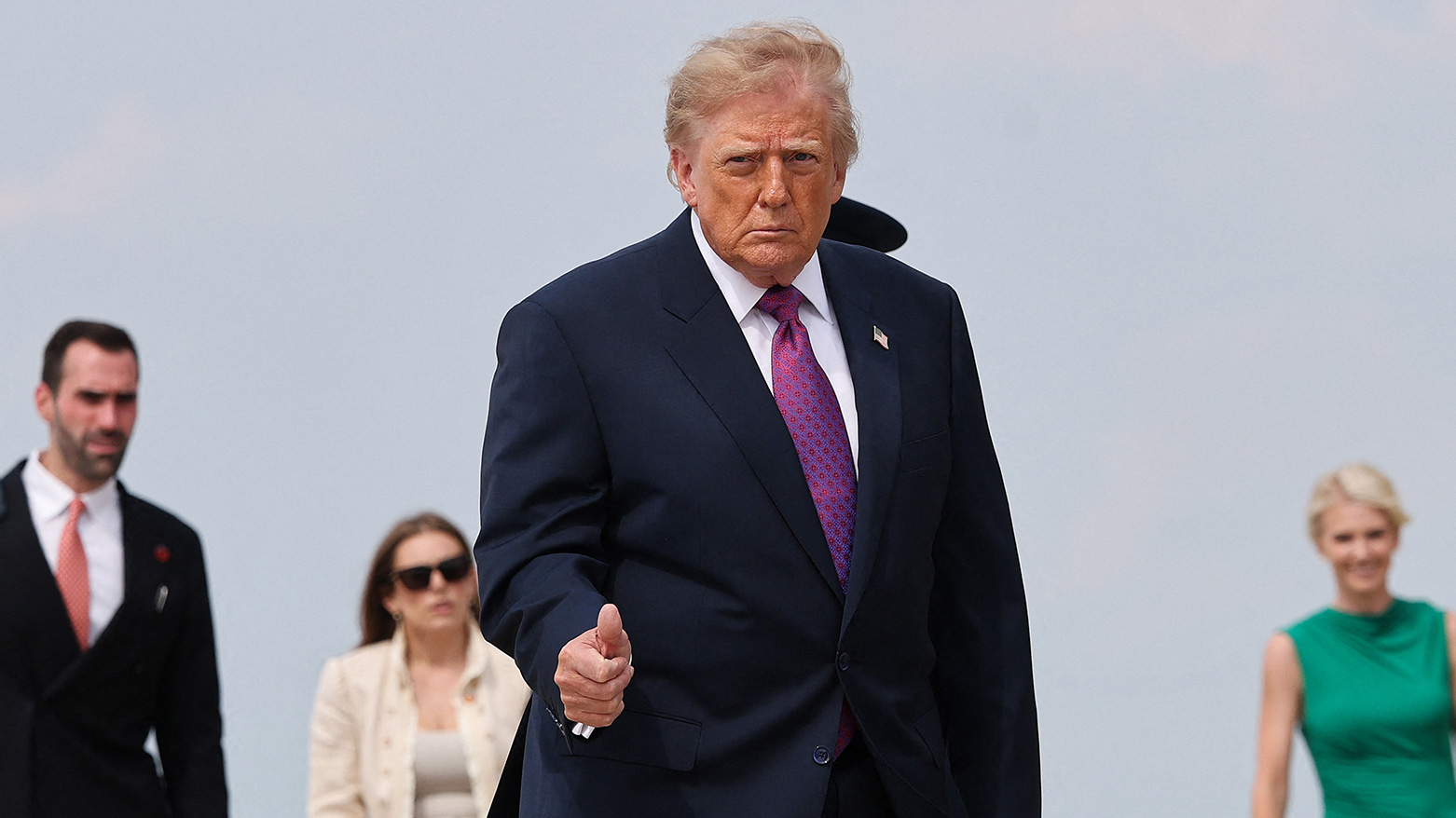
President Donald Trump, speaking to Axios on Thursday, offered an emphatic assessment regarding Strait of Hormuz, saying, "That sucker is open."
ERBIL (Kurdistan24) - The United States says it has significantly weakened Iran's ability to control the Strait of Hormuz and reopened internationally recognized shipping lanes, potentially altering the balance of leverage six months into a war in which the strategic waterway has become one of Tehran's most powerful bargaining tools.
Reporting Friday for Axios, Barak Ravid cited U.S. officials who said a combination of military strikes, mine-clearing operations, armed escorts and a renewed blockade of Iranian ports had steadily reduced Iran's capacity to disrupt commercial shipping over the past two months.
President Donald Trump, speaking to Axios on Thursday, offered an emphatic assessment: "That sucker is open."
"The Iranian response is very mild. They don't want us to go back at them. That's the whole ball game. The rest doesn't matter," President Trump told Axios in a phone interview on Thursday.
U.S. Central Command has made a similar claim.
In a video statement reported separately by Kurdistan24, CENTCOM commander Adm. Brad Cooper said internationally recognized shipping lanes in the strait had been cleared of Iranian sea mines and were open to commercial traffic.
Read More: CENTCOM Says Strait of Hormuz Fully Cleared of Iranian Sea Mines
But commercial activity remains well below prewar levels, and independent tanker trackers have questioned some of the shipping figures cited by U.S. officials. Reports of vessels still being struck by projectiles have also underscored that passage through the strait is not yet risk-free.
The conflicting assessments illustrate the broader strategic question confronting Washington and Tehran: whether the United States has genuinely broken Iran's grip on the world's most important energy chokepoint, or merely created a partially functioning corridor that still depends on extensive military protection.
From missile war to battle over Hormuz
When the U.S.-Israel war against Iran began in late February, Washington's publicly stated objectives centered primarily on degrading Iran's missile capabilities, weakening its military infrastructure and preventing Tehran from developing a nuclear weapon.
Six months later, the Strait of Hormuz has become one of the defining issues of the conflict.
Aamer Madhani of The Associated Press reported Friday that the war has already stretched far beyond the brief campaign Trump initially predicted, while Washington has increasingly shifted from intensive military strikes toward economic warfare, naval pressure and efforts to reopen Gulf energy routes.
Before the war, roughly 130 vessels reportedly crossed the strait each day and around one-fifth of global oil supplies moved through the waterway.
Iran moved quickly to exploit that vulnerability.
According to Ravid's Axios report, U.S. and Israeli officials say Iran's early wartime actions included placing naval mines in the principal international shipping lane and threatening tankers attempting to cross.
Attacks and the danger posed by mines sharply reduced commercial traffic and drove oil prices significantly higher during the early months of the conflict.
The economic impact helped turn Hormuz from a secondary concern into a core U.S. war objective.
A June memorandum of understanding between Washington and Tehran was intended in part to reopen the strait and establish a path toward broader negotiations.
That arrangement ultimately collapsed.
U.S. builds protected maritime corridor
After the diplomatic framework faltered, Washington increasingly pursued a unilateral military solution.
Ravid reported that U.S. forces, working with the United Arab Emirates, established protected passage through the southern part of the strait, providing air cover and intercepting Iranian drones and cruise missiles aimed at vessels.
The United States also conducted a sustained bombing campaign against Iranian military capabilities linked to attacks on shipping.
A separate mine-clearing operation involved U.S. Navy divers, Navy SEALs, unmanned systems and private contractors, according to Axios.
CENTCOM has now declared the recognized lanes clear of Iranian mines.
Kurdistan24 reported Friday that Cooper said the combined operation had neutralized maritime threats and reopened the routes to international traffic.
CENTCOM also says U.S. forces continue to enforce a blockade against Iranian ports while protecting commercial vessels crossing Hormuz.
Axios cited U.S. officials as saying more than 200 objects suspected of being mines had been removed or investigated, although only 11 were ultimately identified as actual mines.
U.S. officials also claimed that 20 to 30 tankers have recently been moving through the southern channel each night, carrying approximately nine million to 10 million barrels.
Those levels would represent a substantial recovery, though still only around half of prewar oil flows.
Claims face scrutiny
The U.S. assessment is not universally accepted.
Ravid noted that oil-market specialists and independent tanker trackers have questioned whether the volume of traffic is as high as Washington says.
AP similarly reported that Trump said 24 vessels had passed through the waterway on Wednesday, far below the approximately 130 daily crossings before the war.
The continued occurrence of security incidents also complicates claims that the strait has returned to normal.
Ships have periodically reported being struck or threatened, indicating that Iran retains some capacity to impose risk even if its ability to prevent passage has weakened.
That distinction matters because reopening Hormuz is not simply about whether individual tankers can pass under military escort.
A fully functioning global energy corridor requires commercial shipping companies, insurers and energy traders to believe that transit is sufficiently predictable and secure to resume routine operations.
Washington hopes to expand traffic substantially by mid-September, according to Axios, with a goal of restoring roughly 60 to 70 percent of prewar oil exports.
The United Arab Emirates, Bahrain and Kuwait are already participating in the U.S.-supported system, while Saudi Arabia is expected to join. Washington also hopes Qatar will begin moving liquefied natural gas through the protected route.
Iran signals diplomacy - with conditions
The apparent U.S. gains coincide with renewed Iranian interest in diplomacy.
AFP reported Friday that Iranian Foreign Minister Abbas Araghchi said negotiations remained possible, but only if Washington abandoned what Tehran regards as coercive pressure.
"Putting diplomacy back on track isn't impossible," Araghchi wrote on X, while insisting that pressure would not force Iran into concessions.
Tehran has engaged intensively with regional mediators this week.
Pakistan's army chief traveled to Iran, Oman's foreign minister held talks in Tehran concerning arrangements for Hormuz, and Qatar's prime minister arrived Thursday for further discussions.
Iran and Oman have been working on proposals for a temporary shipping corridor and eventual arrangements governing navigation through the strait.
Tehran nevertheless continues to insist that full reopening must be tied to implementation of commitments it says Washington abandoned under the June memorandum, including sanctions relief and the lifting of the U.S. counter-blockade.
Iranian lawmaker Esmail Kowsari warned Friday that the strait would remain restricted if Washington failed to honor those commitments.
The result is a widening gap between the two sides.
Washington increasingly believes it can reopen much of Hormuz without accepting Iran's conditions, while Tehran insists that permanent maritime stability requires a negotiated political settlement.
Washington believes leverage has shifted
U.S. officials cited by Axios believe that changing conditions in Hormuz have strengthened Washington's negotiating position.
Trump, however, has publicly expressed little urgency about returning to talks.
AP's Madhani reported that the president said Thursday the United States was not seeking a meeting and claimed Iran was under mounting economic and military pressure.
At the same time, White House envoy Steve Witkoff remains in contact with Qatar and other intermediaries, indicating that diplomatic channels have not closed.
Washington is also intensifying its economic campaign.
The administration has announced what it calls "Operation Economic Outcast," designed to isolate Iran commercially and threaten countries and companies continuing to trade with Tehran.
Read More: US Treasury Chief Unveils 'Operation Economic Outcast' Campaign Against Iran
Whether that pressure will force Iran to compromise remains uncertain.
Analysts cited by AP noted that Tehran has decades of experience adapting to sanctions, while China remains Iran's most important commercial partner and crude buyer.
That leaves Hormuz at the heart of the confrontation.
If Washington can restore large-scale Gulf exports while simultaneously blocking Iran's own maritime trade, Tehran's greatest wartime source of economic leverage would be significantly reduced.
If Iran can continue imposing enough risk to keep commercial traffic depressed, however, it retains a tool capable of transmitting the costs of the war to global energy markets.
Six months into the conflict, the battle over Hormuz has therefore become a measure of much more than maritime control.
It is increasingly the arena in which both sides are testing whether military and economic pressure can change the terms of an eventual settlement.
For now, the United States says momentum has shifted decisively in its favor. Iran, while signaling that diplomacy remains possible, is insisting that it will not negotiate on Washington's terms alone.