Carney Rejects Trump's 'Lake America' Order: 'Lake Ontario Always'
Trump ordered U.S. agencies to rename Lake Ontario "Lake America," prompting immediate rejection from Canada amid an escalating bilateral trade dispute.
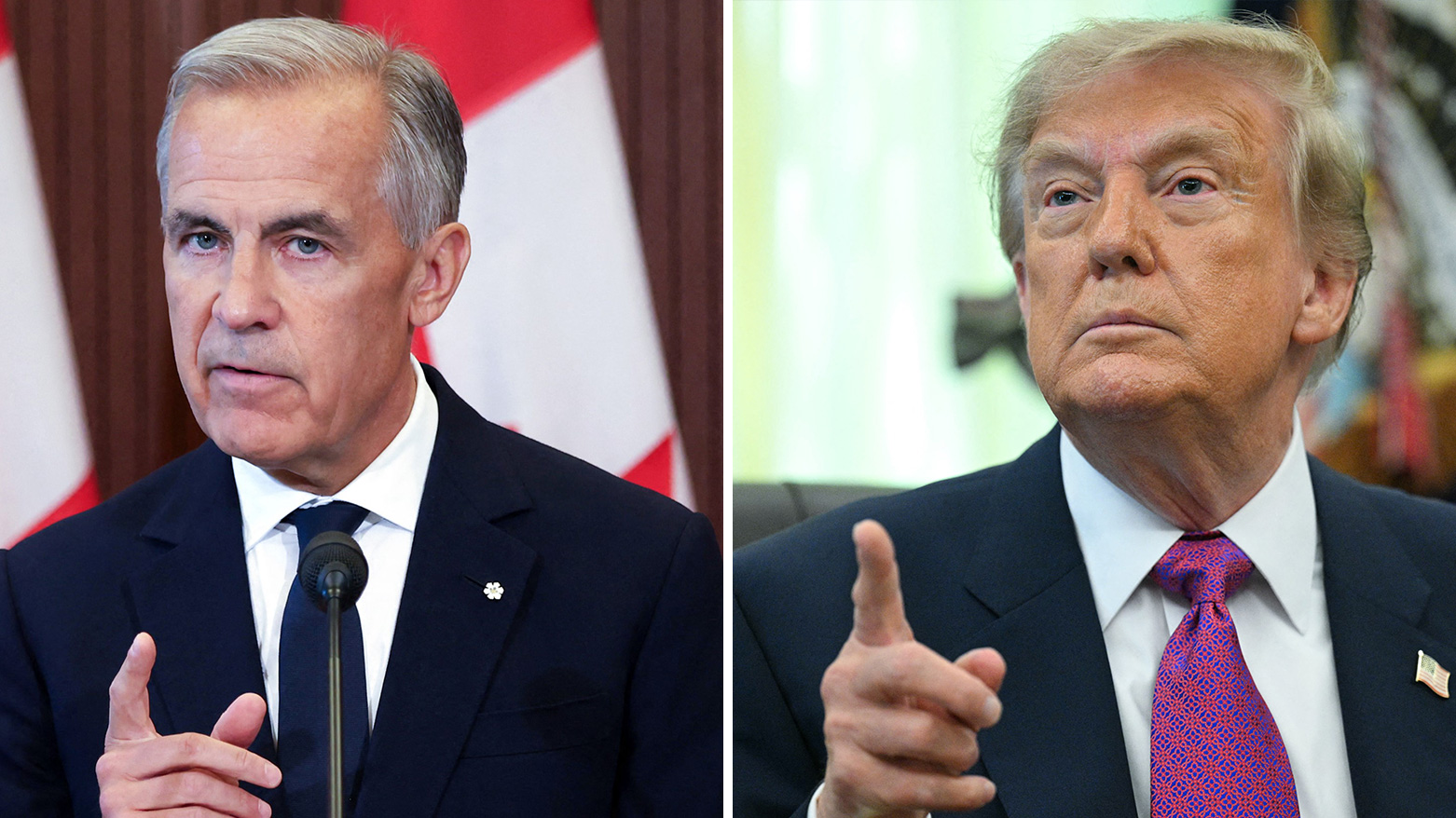
ERBIL (Kurdistan24) - U.S. President Donald Trump has ordered the federal government to rename Lake Ontario "Lake America," opening a new symbolic front in his escalating dispute with Canada as Ottawa rejected the change and insisted the centuries-old name would remain.
Trump signed an executive order Thursday directing the U.S. Department of the Interior to update federal geographic records within 30 days, according to reporting by AFP's Danny Kemp and The Associated Press correspondents Michelle L. Price and Will Weissert.
The order applies to how the United States government refers to the lake. It does not compel Canada or other countries to adopt the new designation.
"We're going to be changing the name of Lake Ontario effective immediately to Lake America," Trump told reporters while signing the order at the White House.
Maps displayed behind the president showed "Lake America" written across the body of water and another slogan declaring, "Making the Great Lakes Even Greater."

Canada rejects name change
Canadian Prime Minister Mark Carney immediately rejected the decision and stressed the Indigenous origins and long history of the lake's name.
"The name Lake Ontario comes from the Wendat word Ontari'io," Carney wrote on X, noting that the name is more than 400 years old and predates both Canadian Confederation and the U.S. Declaration of Independence.
"Canadians also know that naming reality means calling it Lake Ontario – then, now and always," he wrote.
Ontario Premier Doug Ford likewise said Canadians and the wider world would continue using Lake Ontario, while New York Gov. Kathy Hochul said her state would not adopt Trump's new terminology.
Lake Ontario is the smallest of the five Great Lakes by surface area. Its northern and western shores are in the Canadian province of Ontario, while New York borders much of its southern and eastern side.
There is no single international authority with power to impose one universal name on an international body of water, meaning Washington has considerable control over U.S. federal terminology but cannot require Ottawa to follow suit.
Trade tensions form backdrop
The dispute comes as relations between the two neighbors have deteriorated sharply over trade.
AP's Price and Weissert reported that the Trump administration recently imposed 50 percent tariffs on about $20 billion worth of Canadian goods after negotiations collapsed. Canada responded with retaliatory tariffs covering roughly the same value of U.S. products.
Trump linked his increasingly confrontational rhetoric toward Ottawa to what he described as unfair Canadian treatment of the United States.
"The Canadian officials have treated us very badly," Trump told an AFP reporter who questioned why an ally was being targeted.
Carney's government has taken a more openly defiant posture toward Washington as the trade dispute has intensified.
The lake order follows Trump's 2025 decision to direct U.S. federal agencies to refer to the Gulf of Mexico as the "Gulf of America," a name Mexico rejected.
Trump has also repeatedly suggested Canada should become the 51st U.S. state, comments Canadian leaders have dismissed.

More renaming ahead?
Trump suggested Thursday that his geographical renaming campaign might not end with a gulf and a lake.
"We have a gulf and we have a lake. Now all we need is an ocean," he said, floating the possibility of changing U.S. references to the Atlantic or Pacific.
The comments were made partly in jest, but the executive order concerning Lake Ontario is a formal federal action.
AFP's Kemp reported that the order argues the United States has a claim to much of the lake's volume because its deepest section lies on the American side.
Canada has rejected that reasoning as irrelevant to the lake's established identity.
The dispute is therefore unlikely to alter the terminology used internationally, but it adds another highly visible irritant to a relationship already under pressure from tariffs, political rhetoric and broader disagreements over the future of North American trade.
For Washington, the federal change will proceed administratively. For Ottawa, the answer is equally clear: Lake Ontario will remain Lake Ontario.