Khamenei Warns Against Division as Iran Marks Six Months of War
Iran's Supreme Leader Mojtaba Khamenei calls for social unity as new data marks six months since the US-Israel war on Iran began, detailing its toll.
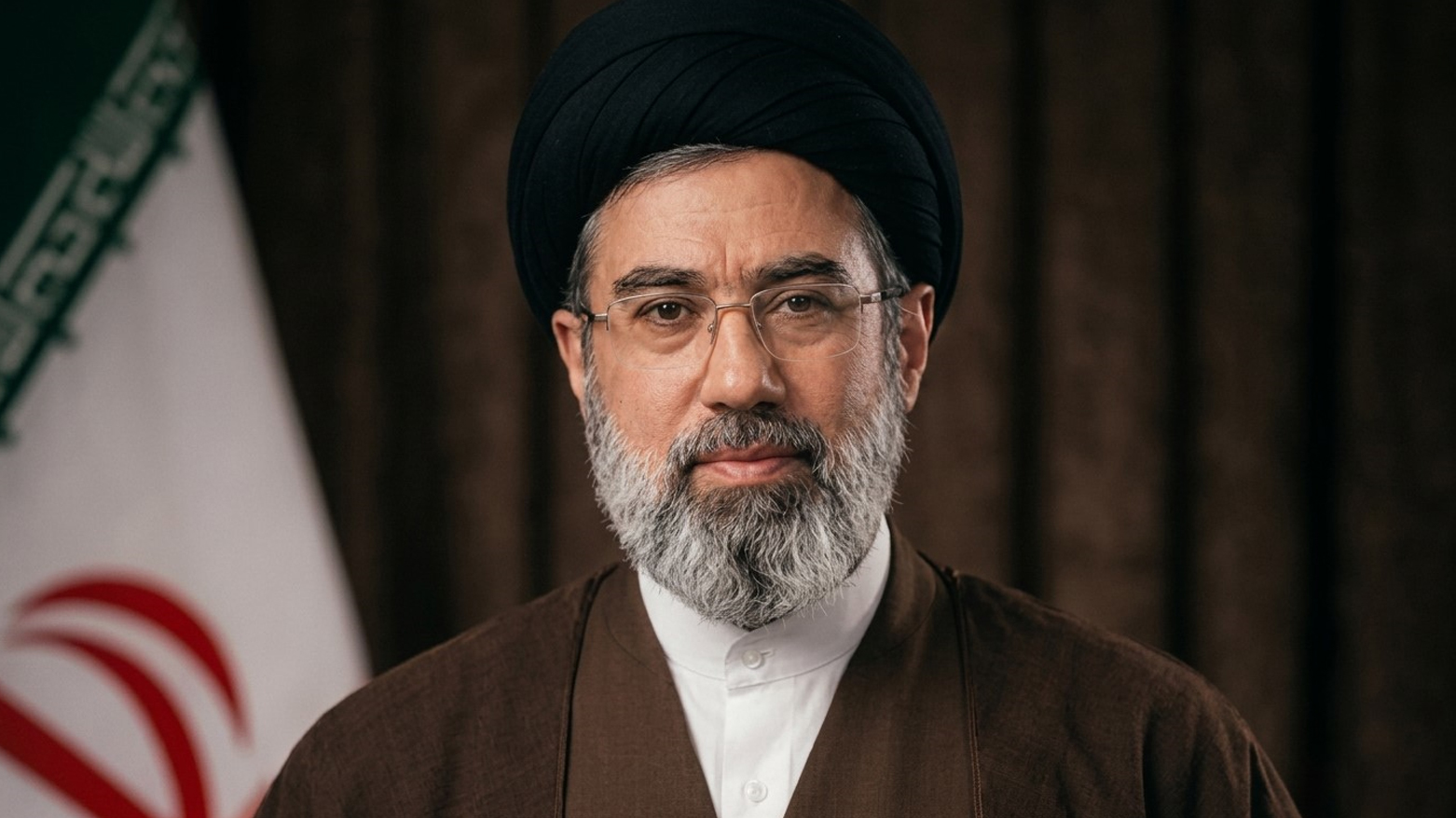
ERBIL (Kurdistan24) - Iran’s Supreme Leader Mojtaba Khamenei called on Iranians and state officials to preserve national unity and social cohesion, warning that rhetoric capable of creating division within society is “strictly forbidden,” as the war involving Iran, the United States and Israel entered its sixth month.
Khamenei delivered the message on Friday on the occasion of State Week, according to the Office of the Supreme Leader of Iran. His call for unity came as a new Associated Press report assessed the conflict six months after joint US-Israeli strikes on Iran began, describing a war whose battlefield and political consequences have diverged sharply from the expectations initially held by Washington and Tel Aviv.
In his message, Khamenei thanked state employees and agency directors, particularly the president, for measures taken despite severe economic sanctions during the war.
He called for the strength and capabilities of the Iranian people to be presented appropriately in the media, arguing that weaknesses and shortcomings should not be exaggerated but addressed through serious plans.
Khamenei also urged immediate action to confront economic problems, including inflation, unemployment and price controls in goods and services markets. He called for a gradual reduction in the role of the dollar in economic transactions and for the implementation of a “resistance economy” centered on domestic production and the organized import of goods not covered by local output.
On social cohesion, Khamenei warned against what he described as “illusory polarization,” including divisions framed as “war or negotiation” and “compromise or warmongering.”
He said such divisions had harmed Iranian society in the past and declared that any action damaging national unity and social cohesion was strictly forbidden.
The message came as six months passed since the joint US-Israeli strikes on Iran began on Feb. 28.
According to the Associated Press report included in the background, the conflict began with the objective of toppling the religious government in Tehran and installing a pro-Western government. However, despite weeks of intensive bombing and the killing of senior commanders, the Islamic Republic survived and moved toward what the report described as a more hardline and entrenched government.
Barbara Leaf, a former US assistant secretary of state for Near Eastern affairs, said Tehran had become more difficult to deal with as its confidence grew during the conflict.
The report said Iran entered the war in its weakest state since Iraq’s 1980 invasion, amid a collapsed currency, the violent suppression of major protests in January, previous attacks on its nuclear and military sites, and the weakening of its regional armed factions.
But following the initial strikes, Iranians rallied to defend their country, ignored US calls to rise up against the government, and Tehran rapidly replaced commanders who had been killed.
Iran also dealt a major blow to the global economy by closing the Strait of Hormuz and striking US bases and energy infrastructure in Gulf countries.
The conflict saw repeated attempts to reach an agreement.
US President Donald Trump agreed to a ceasefire in April and signed an agreement with Tehran in June, but the understanding later collapsed, according to the material provided.
Iran has since insisted on maintaining permanent control over the Strait of Hormuz as a pressure tool in negotiations and a deterrent against future attacks, while remaining unwilling to compromise on its nuclear program.
Yoel Guzansky, an expert at Israel’s Institute for National Security Studies, warned that Tehran’s greatest risk could be interpreting its survival as a final victory and making demands beyond what its leverage could support.
The prolonged closure of the Strait of Hormuz, he warned, also carries consequences for neighboring countries, China and the wider global economy.
The war has also exposed significant strains in the US security umbrella relied upon by Gulf countries for decades.
When Iran responded to the strikes, missiles and drones targeted Gulf countries, including energy infrastructure and desalination facilities, raising concerns among regional leaders about the consequences of a war launched without consultation while their populations faced risks to water and electricity supplies.
Kristian Coates Ulrichsen, a Gulf affairs expert at the Baker Institute, said the absence of a clear political objective and the lack of a backup plan after the failure to topple Iran’s government had shaken regional confidence in Washington.
According to the report, this has pushed countries including Saudi Arabia toward new defense partnerships with Pakistan and Türkiye, although their options remain limited and they cannot fully abandon the US security network.
On the Israeli front, military gains in southern Lebanon have been accompanied by heavy political and diplomatic costs, while the report said Israel has faced growing international isolation.
The material also described what it called a deepening rift between Israel and the United States, with voices from both the Democratic and Republican parties accusing Israel of drawing Washington into another Middle East war.
After 181 days of fighting, the conflict had caused more than 7,900 deaths, according to the figures included in the background material.
Official figures from health ministries and international organizations showed 4,350 people killed and 12,310 injured in Lebanon, while 3,527 people were killed and more than 27,000 injured in Iran.
Across Gulf countries, 28 people were reported killed.
Iranian and allied missile and drone strikes killed 60 Israelis and 18 US soldiers, while the Pentagon reported an additional 757 US soldiers wounded.
Data from the Armed Conflict Location and Event Data Project recorded more than 5,600 strikes during the six-month period. The United States and Israel carried out at least 3,580 air and missile strikes on Iranian territory, while Iran launched 2,053 missile and drone strikes against Israel, US bases and Gulf countries.
The economic consequences have been particularly severe around the Strait of Hormuz.
According to the material provided, average daily shipping traffic through the strait fell from about 100 oil tankers and cargo ships before the war to just seven ships amid bombing, mine-laying and a naval blockade. The International Maritime Organization recorded 70 confirmed attacks on commercial vessels during the six-month period, killing 19 sailors.
The war has also affected global energy markets. Brent crude rose 22%, from $72.48 to $88.58, after reaching a peak of $120.88 on April 30.
The United States was forced to draw heavily on its Strategic Petroleum Reserve, which fell to 289.7 million barrels, or 41% of its storage capacity.
Trump initially predicted that the military operations would last only four to five weeks. Yet six months after the war began, naval restrictions and military tensions have continued.
According to the material provided, Trump said at least 38 times in public remarks, interviews and messages that an agreement to end the war was close.
However, the latest Reuters/Ipsos poll cited in the background showed Trump’s approval rating at 33%, while 65% of Americans expressed dissatisfaction with his policies and 80% believed the war with Iran would continue for a long time.
Six months into the conflict, Khamenei’s message centered on a single demand: preserving unity at home.
But as military confrontation, economic disruption and regional uncertainty continue, the war’s consequences remain far beyond Iran’s borders, with no clear indication that the conflict is approaching a definitive end.