Trump Calls Venezuela Agreement 'Biggest Oil Deal in World History'
Trump announced a U.S.-Venezuela oil deal covering 65 billion barrels of proven reserves, with Caracas projecting $100 billion in private investment.
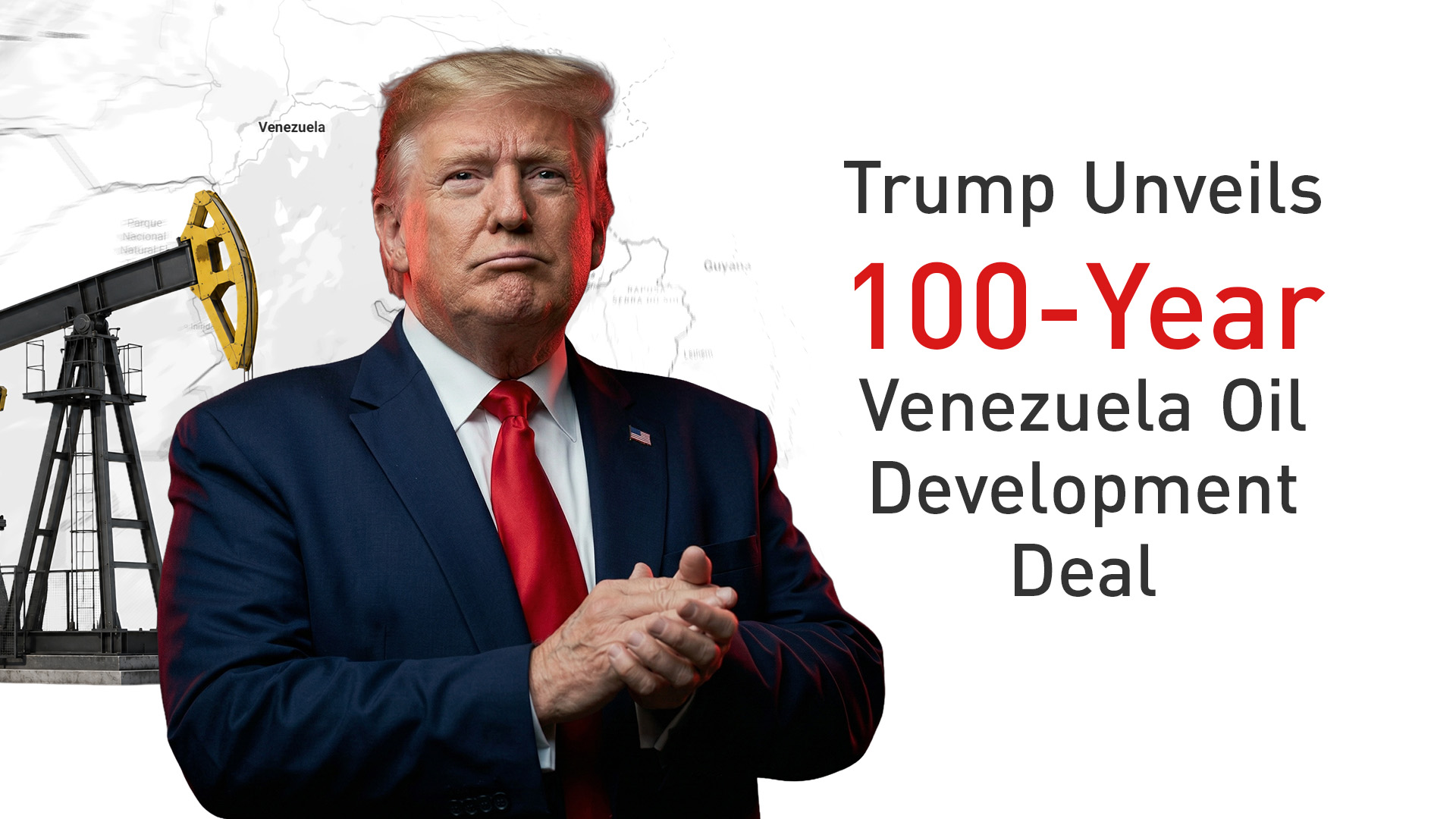
ERBIL (Kurdistan24) - U.S. President Donald Trump announced a sweeping oil agreement with Venezuela that he says will give the United States majority control over more than 65 billion barrels of proven reserves, a deal that could reshape energy ties between Washington and Caracas while requiring tens of billions of dollars in investment before its full potential can be realized.
Trump announced the agreement on Truth Social, calling it "THE BIGGEST OIL DEAL IN WORLD HISTORY" and saying Secretary of State Marco Rubio and Defense Secretary Pete Hegseth had negotiated the arrangement with Venezuela's interim President Delcy Rodríguez and private-sector partners.
The Venezuelan government separately confirmed what Rodríguez described as a "historic agreement."
According to reporting by Associated Press journalists Aamer Madhani, Collin Binkley and Regina Garcia Cano, Caracas said the deal covers 17 oil fields with an estimated proven potential of 65 billion barrels and could attract around $100 billion in investment.
The Venezuelan government estimates the projects could ultimately generate more than $209 billion in tax revenue.
Trump said the agreement would more than double U.S. oil reserves, expand American energy supplies and eventually help reduce gasoline prices.
"This Transaction will greatly strengthen the already growing relationship between Venezuela and the United States," he wrote.
U.S. to hold effective majority stake
The precise legal architecture of the agreement has not yet been fully published.
AP cited a U.S. official familiar with the arrangement as saying Washington would partner with an unidentified private operator to establish a new company in Venezuela to develop the fields.
Rodríguez granted that company development rights lasting 100 years, according to the official, who spoke anonymously because the person was not authorized to discuss the agreement publicly.
The United States would receive what AP described as 55% effective output from the company through a combination of an ownership interest and rights to purchase crude at cost.
If fully implemented, the company would become one of the world's largest corporate holders of proven petroleum reserves, behind Saudi Aramco, according to the same U.S. official.
Oil acquired through the venture would be used partly to replenish the U.S. Strategic Petroleum Reserve and for military requirements.
Trump described the arrangement as costing American taxpayers nothing, though major private investment would be required to rehabilitate and expand Venezuelan production.
Many questions remain
Despite the scale of the announcement, important questions remain about how ownership and control over the reserves will operate in practice.
AFP cited Jorge Piñon, a senior researcher at the University of Texas at Austin's Energy Institute, as questioning how Venezuelan petroleum assets could legally be transferred or controlled by another state.
Among the unresolved issues are whether the arrangement represents an outright asset transfer, a production entitlement or rights that take effect only once crude is extracted.
Those distinctions matter because proven reserves underground are not equivalent to immediately available oil supplies.
Venezuela possesses the world's largest proven crude reserves, estimated by the U.S. Energy Information Administration at roughly 303 billion barrels, or around 17% of the global total.
Yet the country currently produces only a small fraction of the world's oil because decades of underinvestment, damaged infrastructure, sanctions and political instability have weakened its petroleum sector.
Energy analysts therefore caution that the agreement is unlikely to produce an immediate surge in supply or a rapid drop in gasoline prices.
Gas prices add political urgency
The deal comes as Trump faces pressure over energy costs six months into the U.S.-Israel war with Iran.
AP's Madhani, Binkley and Garcia Cano reported that average U.S. gasoline prices stood at about $4.09 per gallon Friday, compared with $3.21 a year earlier.
The Iran conflict has sharply disrupted oil movements through the Strait of Hormuz, historically one of the world's most important petroleum corridors.
Washington has also drawn heavily on the Strategic Petroleum Reserve, which fell below 300 million barrels in early August after declining by more than 100 million barrels since the beginning of the year, according to AP.
Trump is therefore portraying Venezuelan oil as part of a longer-term strategy to increase secure supplies in the Western Hemisphere and reduce domestic fuel costs.
Rubio called the agreement a major benefit for both countries, arguing that private investment could revive Venezuela's energy sector while improving U.S. access to lower-cost crude.
Rodríguez similarly said the agreement could contribute substantially to Venezuela's economic recovery.
Investment risks persist
Convincing major U.S. oil companies to commit capital may nevertheless prove difficult.
American firms have long memories of nationalizations and asset seizures under former Venezuelan President Hugo Chávez, while infrastructure across the country's oil industry remains in poor condition.
AP reported that ExxonMobil CEO Darren Woods earlier described Venezuela as "un-investable," reflecting lingering concerns over legal certainty and political risk.
AFP cited energy analyst John Kilduff of Again Capital as saying the central issue for companies remains the security of their investments.
Chevron, which maintained operations in Venezuela during previous periods of tension, has been increasing production and plans further expansion, according to AFP.
The new agreement follows sweeping political changes in Venezuela after U.S. forces captured former President Nicolás Maduro earlier this year and brought him to the United States to face federal charges, to which he has pleaded not guilty.
Rodríguez subsequently assumed interim leadership and moved to open more of Venezuela's petroleum sector to private investment.
Trump's announcement therefore represents more than an energy transaction. It ties Venezuela's economic reconstruction increasingly closely to U.S. capital and strategic interests while giving Washington access to one of the largest identified petroleum deposits on Earth.
Whether it ultimately becomes the transformative deal Trump promises will depend on the final legal terms, participation by private oil companies and the enormous task of restoring Venezuela's production infrastructure.