Iraqi Lawmaker Praises KRG Development and Anti-Graft Efforts
“I am proud that the Kurdistan Region is experiencing reconstruction, economic development, and significant progress, while its citizens also protect their cities in a civilized manner,” Zaidi said.
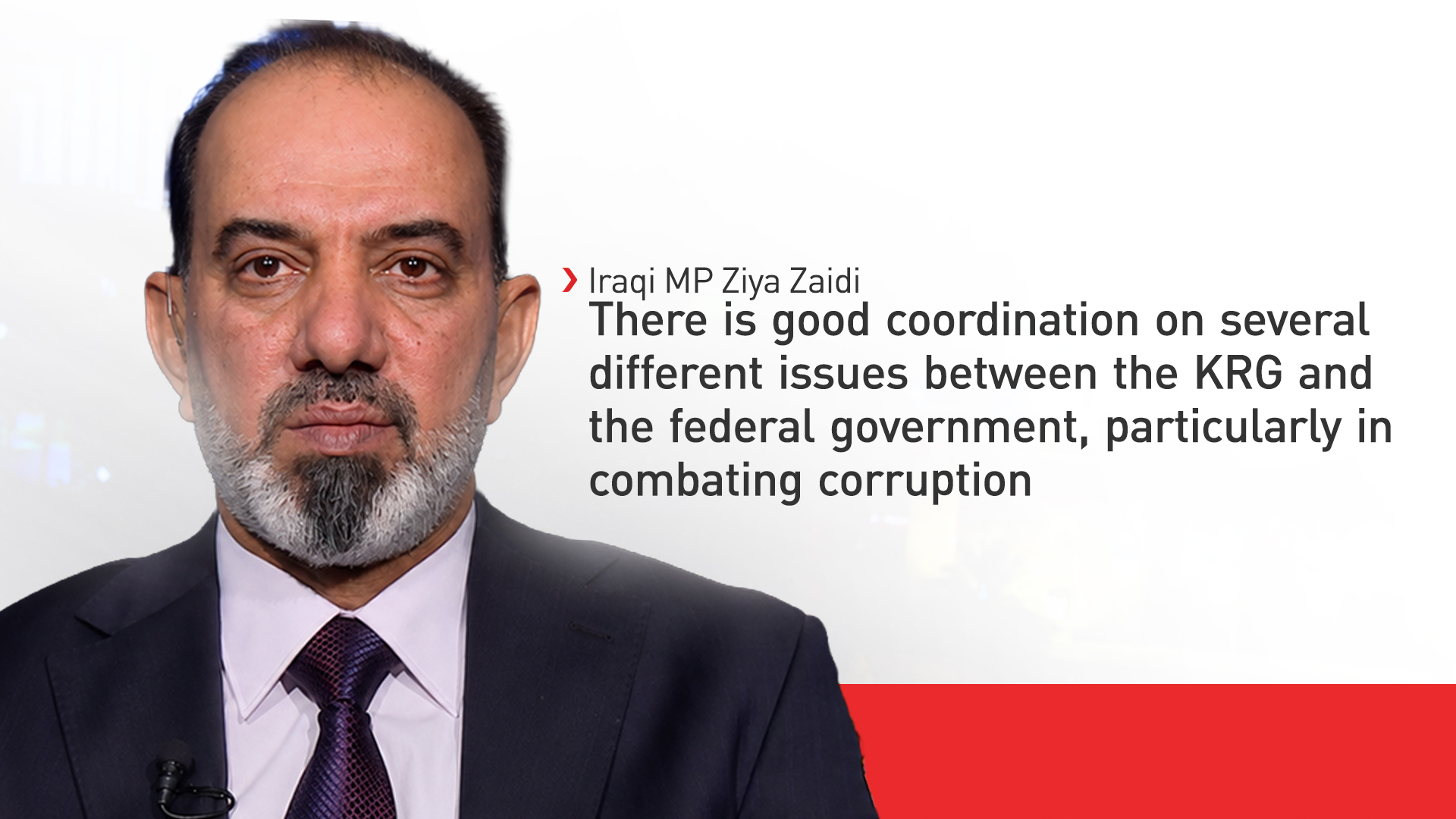
ERBIL (Kurdistan24) — An Iraqi lawmaker has praised the Kurdistan Regional Government’s (KRG) efforts to combat corruption, saying the level of corruption in the Kurdistan Region is significantly lower than in other parts of Iraq and highlighting the Region’s development, security, and stability.
Ziya Zaidi, a member of the Integrity Committee in the Iraqi Parliament, made the remarks Sunday, during an interview with Kurdistan24.
Zaidi said the KRG had adopted measures and procedures to confront financial and administrative corruption, which he credited with contributing to the lower level of corruption in the Kurdistan Region.
“There is good and positive coordination on several different issues between the KRG and the federal government, particularly in combating corruption,” Zaidi said, calling for the cooperation between Erbil and Baghdad to continue.
The Iraqi lawmaker also praised the Kurdistan Region’s economic and infrastructure development, describing its reconstruction and progress as a source of pride.
“I am proud that the Kurdistan Region is experiencing reconstruction, economic development, and significant progress, while its citizens also protect their cities in a civilized manner,” Zaidi said.
He further emphasized the Region’s security and stability, saying these conditions had supported its development and contributed to an environment in which citizens and institutions could make further progress.
Corruption remains a major governance challenge in Iraq, with successive governments pledging to tackle financial and administrative abuses, strengthen oversight, and recover public funds. The Federal Commission of Integrity and Iraqi judiciary have pursued cases involving alleged bribery, embezzlement, misuse of public funds, and abuse of office.
The issue has also been part of the broader relationship between Baghdad and Erbil. Both governments have sought greater institutional coordination on oversight and law enforcement.
In the Kurdistan Region, the KRG has introduced a number of administrative and financial reforms aimed at improving transparency and public-sector management. These have included digitizing government services, strengthening financial controls, and expanding electronic systems for salary payments and government transactions.
The KRG has also pursued broader economic and infrastructure reforms as part of its development agenda. Major projects in electricity, roads, water, agriculture, and digital government services have been launched in recent years, alongside efforts to attract domestic and foreign investment.
Against this backdrop, Zaidi’s comments represent a positive assessment from an Iraqi federal lawmaker of the Kurdistan Region’s development and its approach to combating corruption.
At the federal level, Zaidi said corruption had spread across Iraq’s government institutions, likening its impact on the state to cancer. He said the government and judiciary were taking strict legal measures to confront the problem.
The lawmaker stressed that there would be no “red lines” for those involved in corruption and called for continued cooperation between Baghdad and Erbil in the fight against graft.